
Parkland students could teach Democrats some lessons to counter Trumpism
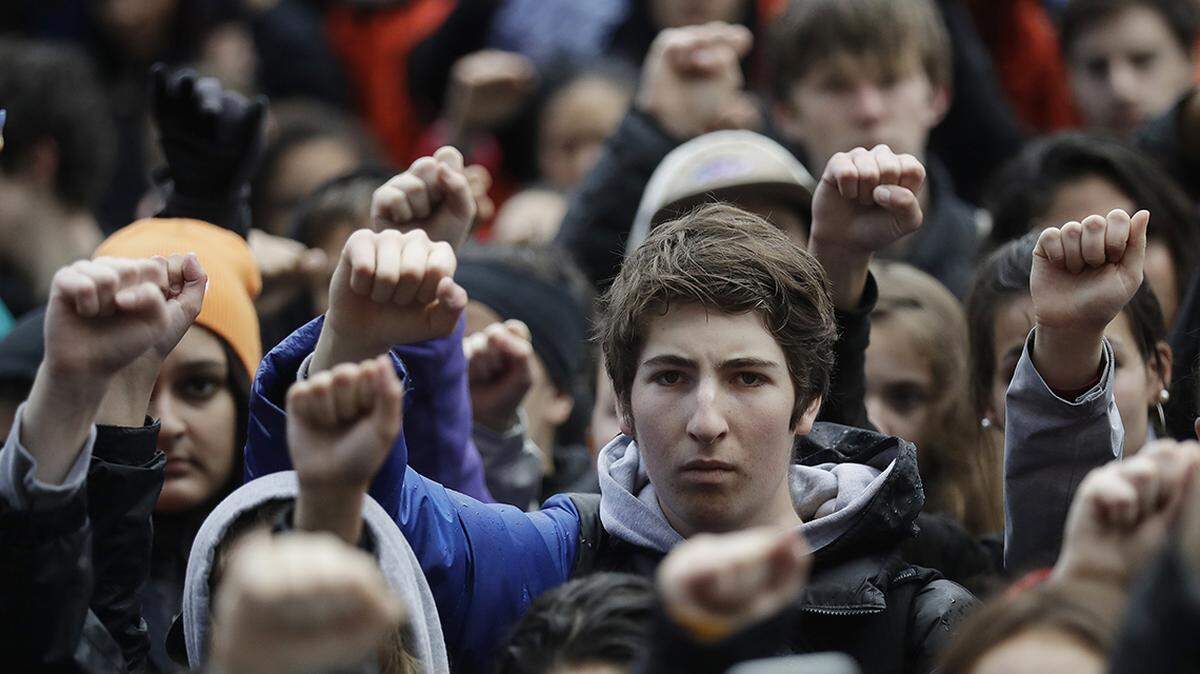
Survivors of the Marjory Stoneman Douglas High School shooting massacre have embarked on their Road to Change tour, slated for 75 stops around the country. Channeling their grief and outrage into strategy and action, the student activists are pushing for new gun control laws while registering young people to vote.
The two-month tour is an example of young people putting aside individual agendas to serve a higher calling. This summer, Parkland students have foregone vacation for vocation.
Their calling extends beyond the right to not be murdered at school. What the students from Parkland are providing is a hopeful look at what a diverse group of young people can accomplish when they rally behind common causes.
Their shared goal is selfless and simple: affecting change through democracy. “At the end of the day,” said Parkland student Cameron Kasky at the tour’s Chicago kick-off, “real change is brought from voting.”
A striking feature of Kasky and his classmates is how much they actually resemble America. The South Florida suburb of Parkland is ethnically and culturally diverse, and the students — black, white and Hispanic; Christian, Jew and Muslim; gay and straight — reflect this melting pot.
This singleness of purpose starkly contrasts what many of these remarkable high school students will encounter when they enter college. The kids from Parkland are the antithesis of the college-centric identity politics that, while understandable, have splintered much of society into siloed micro-factions and have, electorally, cost the country dearly.
While conservatives certainly have their own cliques and fissures, these challenges have overwhelmingly impacted the left. The identity politics practiced by collegiate youth are admirable extensions of liberalism, progressivism and other attributes most associated with the Democratic Party.
The intentions are undeniably good. It’s inspiring and encouraging to see historically oppressed groups stand up and demand equality. The protection of minority rights is among our democracy’s most cherished principles, and from #MeToo to Black Lives Matter to LGBTQ rights, young people have every right to demand America live up to the ideals enshrined in its constitution.
Far from ideal, however, have been the results. Recent years have seen self-defeating cycles of groups standing up for minority rights without the extra, vital step of participating in a broader majority. Identity politics has been high on principled outrage and low on the power to actually do anything about it.
At the least-constructive points along identity politics’ slippery slope, purity tests and micro-aggression policing have hamstrung progressivism — and through it the Democratic Party. It is the worst possible time, as the GOP remains stubbornly cohesive: A full 90 percent of Republicans approve of a president who has expressed overt racism and mused about autocratic powers.
As crucial midterm elections approach, progressives can’t afford to be fractured when this most abnormal of presidents enjoys a shockingly normal approval rating — consistently north of 40 percent. If anyone should be frightened at the thought of four in ten Americans supporting a bigoted, power-hungry president, it’s the diverse young people on campuses fighting for the respect they so obviously deserve but, crucially, have failed to achieve via the ballot box.
Ironically, the answer is back in high school. Specifically Marjory Stoneman Douglas High School.
In their own righteous outrage, the students from Parkland have embraced a tried-and-true yet refreshing strategy. The Road to Change could aptly be renamed Coalition Building 101.
The Parkland kids aren’t speaking as individuals, or as subgroups within subgroups. They are speaking with one voice, toward one goal: registering like-minded voters. And by voters they mean Democrats, knowing full well that the more votes Democrats get, the more likely gun violence will be adequately addressed.
They are more concerned with actual triggers than trigger warnings. They are worried about their lives, not their feelings. They will do what they must — convince, cajole and compromise — to move the needle, however imperfectly.
Theirs is a passionate pragmatism, rooted in the understanding that real change will only come with power. And that power can only be achieved through broad coalitions of voters winning elections and changing laws. The Road to Change is paved with consensus-building — a lesson college students should learn, and fast.
Christopher Dale writes about politics and society and his work has appeared in Salon, The Daily Beast and other outlets. Follow him on Twitter at @ChrisDaleWriter.
This story was originally published July 11, 2018 at 3:25 PM.