In the midst of World Cup doubts, let’s look back at KC2026’s FIFA vision | Opinion
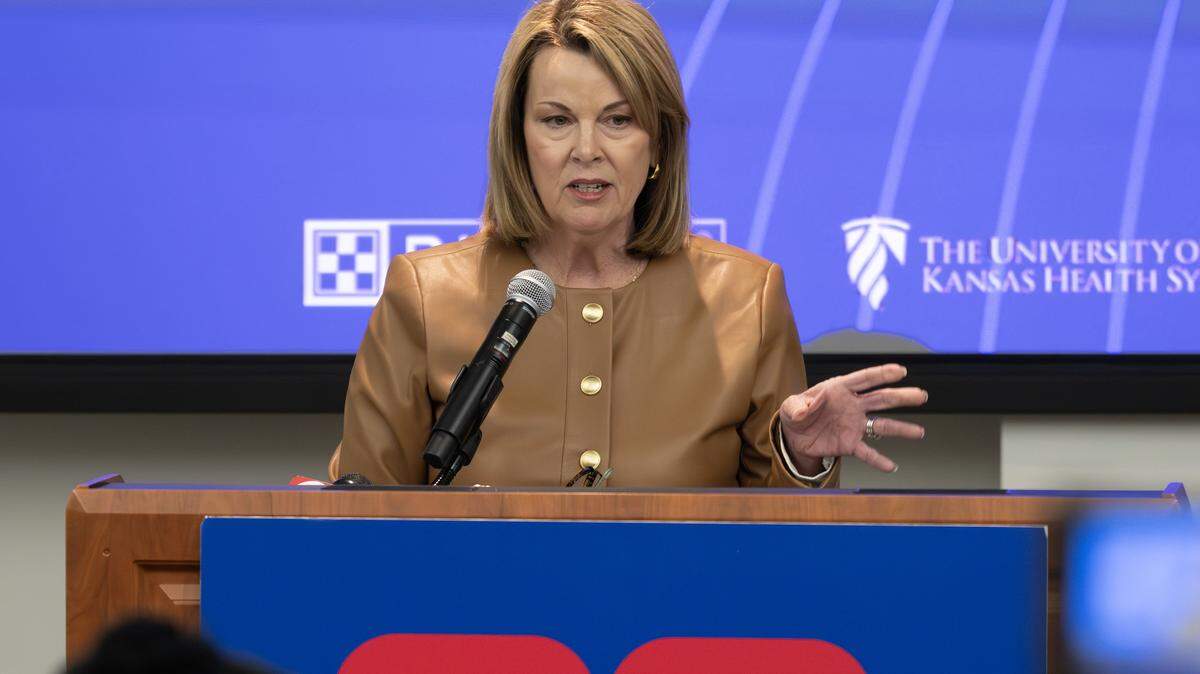
Recently, questions have been raised around the success of the upcoming World Cup matches in Kansas City, and some leaders have tried to quiet those qualms. Kathy Nelson, the president and CEO of Visit KC told The Star that “We didn’t work 10 years for this to be a flop.”
Opinion writer David Hudnall has been investigating hotel and airline data, and the readiness of the jail, to determine whether the opportunity for KC will materialize — and frankly, it hasn’t been looking good.
But let’s go back to the original vision behind the event that will touch nearly every part of the Kansas City metro area. Nearly a year ago to the day, members of The Kansas City Star Opinion team sat down with members of KC2026, the nonprofit created to coordinate the regional effort around hosting the World Cup.
We spoke with Pam Kramer, CEO, and Lindsey Douglas, chief operating officer of KC 2026 on May 5, 2025. Here’s what they told us, starting with Kramer noting, “We’ll be ready, but we’ve got some work to do between now, and I think it’s important because every single day matters, right?” Kramer pointed out the differences between the last time the World Cup was hosted in America.
Pam Kramer: The eyes of the world will be on Kansas City. So we have a tremendous opportunity to show the world who we are and what we’re about. Back in 1994, the World Cup was hosted in the United States. That was the last and only time it has been hosted (here) until now. I worked for Sprint then, now T-Mobile, in corporate sponsorships, and worked on the World Cup sponsorship. So, I was able to travel to all nine U.S. host cities. Soccer was relatively new to me and to the country. I’ve never seen anything like it. It’s hard to convey the enthusiasm, the way you feel it in a city, whether the city is L.A. or Chicago or Kansas City. You’ll know that the World Cup is here.
“So this World Cup will be bigger in additional ways. It’s the largest version of the tournament. So until now the World Cup’s been 32 teams. 2026 the field will be expanded to 48. It’s the first time it’s been played in three countries. And it’s the most host cities — more teams, more cities, more matches. Biggest version of the biggest thing.”
Kramer talked about Kansas City’s competitive advantage:
Kramer: “If you’re not on the coast, you’re coming to Kansas City. … And actually in talking to FIFA originally, our marketing territory in the original bid was defined as a 100-mile radius around Kansas City — where we can sell sponsorships and use the FIFA logo and intellectual property. (But) we went back to FIFA with data from the Chiefs and Sporting Kansas City to show that fans from across the Midwest identify Kansas City as their sports town. And so FIFA has agreed they’ve expanded our market marketing territory to a five-state region: Nebraska, Kansas, Missouri, Arkansas, Oklahoma. We think they’re coming from beyond that, but at a minimum we know that those folks are looking at Kansas City as their World Cup city.”
The Star has reported on the questionable 650,000 attendee number, here’s how Kramer explained that:
Kramer: “The 650,000 visitors. Important footnote here: not all at once. So I think people hear that number and they think that 650,000 people are going to be here for the entirety of the tournament. It will be over the course of the tournament. But based on what FIFA is telling us, we expect international visitors to stay close to 10 days. And least when I think about my own limited international travel, but if I’m traveling internationally, I’m not going for a weekend. I’m going for an extended period of time. So, those visitors will include, of course, the FIFA officials, their contractual guests, their sponsors, their media partners, all of the guests they bring with them. When I was with Sprint for the World Cup, we had 10,000 tickets across the nine cities. So, those sponsors bring a lot of business executives with them as guests.”
We now know there are concerns about travel, and travel fees, as well as immigration policies, that might keep fans away.
Kramer: “I think we’ll continue to adapt if projections change. There’s an important relationship we have with Visit Missouri, with the Kansas Tourism , the Department of Commerce, with Visit KCK, that they’re really marketing to visitors. We’re certainly a partner to them in that and helping tell the story. I think our role is to be ready for the visitors and to maximize the opportunity, right? So, if they come to us and ask us to change what we’re doing or change our focus, absolutely going to work with them on that. I think we will rely on them for guidance on how best to do that.”
What are the requirements and obligations of the host city?
Kramer: “So in addition to the official events, the venues, these are the host city requirements if you will — safety and security — and our role there is really coordination and making sure that there are local and state resources allocated to transportation. We are required to get people from the airport to downtown and to Arrowhead on match day. (But) our board’s objectives go above and beyond that: human rights and sustainability, the fan festival, volunteers — there will be thousands of volunteers. And then not a FIFA requirement, but certainly our board’s expectation and requirement is the economic impact for the region.”
Lindsey Douglas: “On transportation planning: FIFA is very focused on making sure we’re moving people from the airport to downtown, people in and out of the stadium. We are continuing to have conversations with FIFA about any parking that could become available, but we really want to get folks comfortable with the idea of a park-and-ride system and a network of moving people in and out of the stadium. We really need to build out a system that’s going to move folks again from downtown to the stadium. And then we’re also looking at how can this network serve sort of for regional connectivity related to moving people to points of interest in and around the region.”
And about those buses we’ve heard about:
Kramer: “We were the first host city to secure leases for the first bunch of buses — 200 have been secured.”
Douglas: “KCATA, we know, needs to continue to be focused on their current ridership and their customers and that needs to continue to operate during this time. The streetcar needs to continue to operate during this time as well. But that initial 200 buses that Pam mentioned and being first to the market were really a cost advantage for Kansas City.
Kramer: “In this region, we’ve never hosted a Super Bowl. We’ve never hosted an Olympics. So, because of that, we understand the magnitude of the moment.”
So do we. In an editorial, we wrote about what we hoped Kansas City would keep in mind leading up to the World Cup. Let’s believe it will be great.
This story was originally published May 11, 2026 at 1:16 PM.