Kansas City plan to ban alcohol in single-serve containers draws fire | Opinion
Editor’s note: Welcome to Double Take, a conversation from opinion writer David Mastio and editor Yvette Walker, tackling news with differing perspectives and respectful debate.
Yvette Walker: I don’t drink, but I don’t mind if you do, and I do allow alcohol at gatherings at my home. I point this out because it might color what you think about my opinion of the upcoming retail alcohol impact ordinance that is on the Kansas City Council docket. I know my colleague, David Mastio, will disagree with me.
Welcome back to DoubleTake, where David and I will tackle local issues from different perspectives. David and former Star columnist Melinda Henneberger previously launched this column. Readers told us they missed it, so we’re bringing it back.
Today, we’ll talk about whether it’s a good or bad idea to ban certain types of alcohol products sold at gas stations, convenience stores and liquor stores in five areas of Kansas City that have pervasive crime and drunkenness.
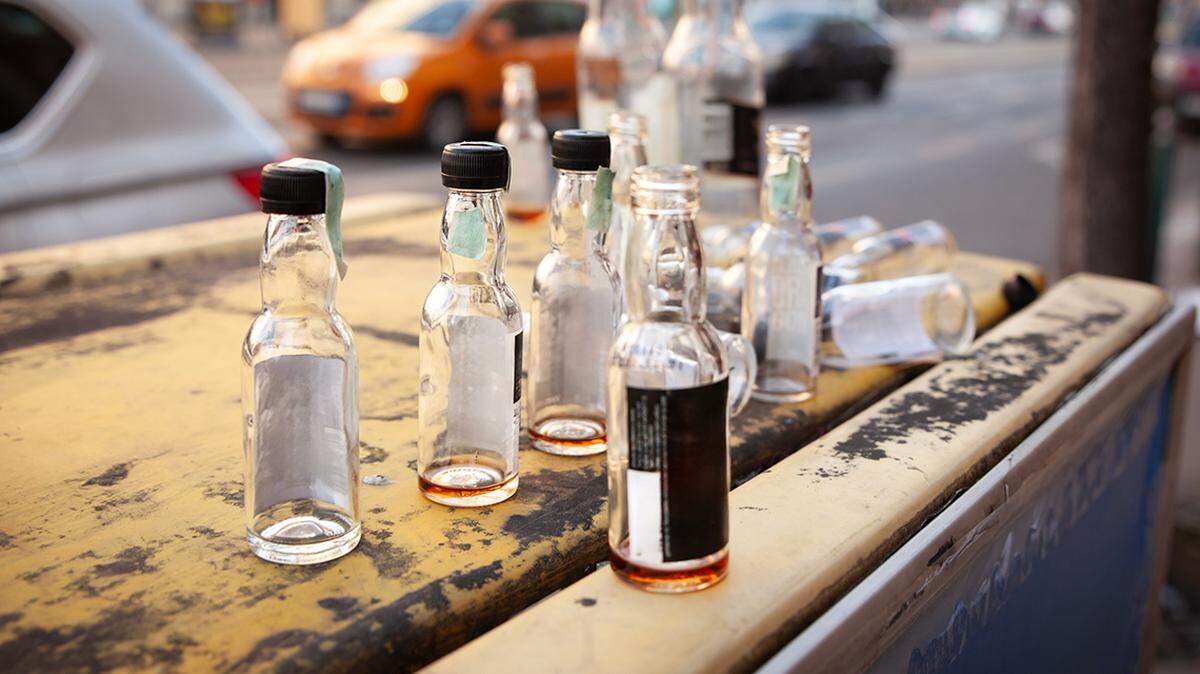
What kinds of alcohol are we talking about? Small bottles, like the ones you might get on an airplane, malt liquor 40 ounces or less, half-pints, miniatures, nips, and shooters.
I think the ban, or at least a pilot test, is a good idea.
I think I know what you’re going to say, David. This is taking away people’s rights to drink a legal substance. Calm down — we’re not going back to Prohibition. It’s not an outright alcohol ban. The ban won’t apply to grocery stores, and at the stores that will be affected, alcohol can be sold in packages larger than single servings.
Having seen some of the impact on crime and what is called “nuisance behaviors” in these areas where such booze is sold, it’s clear we have a problem. And if you think not many people consume these items, just look at the litter.
David Mastio: You are right it is not a ban, but the myriad alcohol laws that micromanage where, when and what you can sell are the leftovers of the Prohibition failure of a century ago. They are not any better.
If you don’t like that analogy, try this one: What we have here is alcohol redlining. The nuisance behaviors of a certain kind of people are being targeted, while those of a lighter shade, perhaps suburban women drinking out of a pricey YETI tumbler while they drive can go about their business unmolested by the nannies of the City Council.
If people drink and misbehave, we should quickly and efficiently arrest them for the crimes they commit, not ladle new restrictions on those who can buy a shooter or six without misusing them on the street, something people by the thousands manage to do every day across our great nation.
Yvette: You’re right about “alcohol redlining.” If it were me, I’d make this ban a citywide test. According to the ordinance, here are the area borders:
1. The Blue Ridge corridor, bounded by 83rd Street on the north, 119th Street on the south, Newton Avenue, Bennington Avenue and Hickman Mills Drive on the west, and James A. Reed Road, Eastern Avenue and Food Lane on the east, excluding any areas outside Kansas City.
2. The Central Business District Corridor, bounded by the Missouri River on the north, 18th Street on the south, Interstates 35, 29 and 70 and Bruce R Watkins Drive on the east and Broadway on the west.
3. The Independence Avenue Corridor, bounded by that portion of Scarritt Avenue east of Benton Boulevard, inclusive of that portion that is known as Gladstone Boulevard, and that portion of St. John Avenue west of Chestnut Trafficway on the north, East 18th Street on the south, Forest Avenue on the west and Interstate 435 on the east.
4. The Midtown Corridor, bounded by 27th Street on the north, 47th Street/Emanuel Cleaver II Boulevard on the south, the city limits of Kansas City on the west and Troost Avenue on the east.
5. The Prospect Avenue-Southeast Corridor, bounded by 23rd Street on the north, Interstate 435 on the south, the portion of The Paseo and Lydia Avenue between 49th and 59th Street on the west and Jackson Avenue on the east.
City officials report these areas have had significant problems with drunkenness and nuisance calls.
As far as the “thousands” who manage to buy shooters without issue — who’s doing that? Who’d buy a bunch of little bottles, that, when added up, cost more than a standard size bottle? Who buys one tiny bottle? Really, I want to know. It doesn’t make sense to me.
David: There’s a huge section of such bottles in the suburban Hy-Vee where I go to pick up a six-pack of a local brew and I frequently see people buying them. Men with a case of Bud. Ladies with some wine. Young people with some boozy seltzers. Fireball seems particularly popular.
That’s not the only place I see it. The high-end wine and booze store in the same outdoor mall as the Hy-Vee (where I get my Sscotch) sells these little bottles, too. I often see people buying full size bottles of booze right along with the little ones.
Nobody second-guesses the white people there when they do it.
Yvette: Ouch, that’s a hot take, David. Are you saying no Black and brown people are buying them, or that they don’t shop in your Hy-Vee? And maybe it’s the second-guessing that’s the real problem. I don’t know that your shoppers aren’t getting into trouble with their purchases. In any case, grocery stores aren’t the target, and, at least for now, neither are suburbs.
But the ordinance is not a sure thing. Ever since Director of Public Safety Lace Cline first discussed this at an Urban Summit meeting on Jan. 23, the topic has drawn some fire. What if this was a pilot with an opportunity to be reversed? The ordinance allows for a recheck every three years “to evaluate the impact on public safety, public health and neighborhood stability. The review shall include an analysis of the current level of criminal activity in and surrounding each retail alcohol impact area.”
David: Restriction and taxes, whether temporary or not, lead to lawbreaking and unintended consequences. Every time California or New York or Australia raise the price of smokes, they get more tax evasion and smuggling to dodge the levy. Cops waste time on harmful pastimes that used to come without crime.
A Black man in New York died in a police chokehold over selling loosies (loose cigarettes). Some people remember his name: Eric Garner. Just like loosies, you can expect little bottles of vodka to turn up for sale on tabletops and alleys in Kansas City when they are illegal in places that might actually check ID. Kids will have their booze, legit businesses will have less money, and we’ll turn regular people into criminals to crack down on nuisance calls. Seems like a bad deal to me.
Yvette: We’ll see. The ordinance will be heard in the Finance, Governance and Public Safety committee next Tuesday. Residents who share your concerns, David, will have time to talk to their council member.
Studies show the average proportion of shelf space devoted to single-serve containers was positively related to violent crime, and that if cities were to ban these items, violence in the surrounding areas would decline. Some cities have +voluntary iterations of alcohol impact plans, such as Milwaukee, and Chicago’s drink restrictions on size and time of day. In Seattle, they tested two neighborhoods, and after two years saw increased neighborhood stability and stability in the non-ban surrounding neighborhoods. Cline and other leaders are hoping to see similar results in these areas in Kansas City.
David: I am sure the intentions are good, but did you read this ordinance? Apparently nips of high-alcohol vodka in some places cause disorder, but the same product sold at a grocery is fine. First, that makes no sense, and second, now they are discriminating between businesses based on whether they like them or not. That’s not right. And it doesn’t seem too bright either: Do we want to funnel Kansas City homeless alcoholics into the few grocery stores for their cheap buzz?
Moreover, an enterprising liquor entrepreneur could get around these rules pretty easily. Sell 220 milliliter bottles and poof! You are legal. Or sell 50 proof alcohol instead of 60 and poof! You’re legal again. Those aren’t big changes.
The City Council would be better off focusing on alcoholism and disorder by funding police and public health properly.
Yvette: Wait, let’s not blame the unhoused. That’s unfair and labels a group, when the truth is more complicated than that. But if consumers of these products in these particular areas are causing problems, the city has a right to step in to try to protect the neighborhoods.
David: Whether you use a prefix (unhoused) to describe them or a suffix (homeless), substance-abusing and mentally ill people for whom there is no abode are a big part of the problem.
In any case, peoples’ behavior is the issue, not legal products. If the behavior is a crime, arrest and charge them. If the behavior is a sickness like mental health or alcoholism, then help them. That’s the ugly expensive answer that won’t change with this quick-fix ordinance.
This story was originally published February 26, 2026 at 12:12 PM.