It’s not selfish: JD Vance and his wife are having a baby. Not everyone can | Opinion
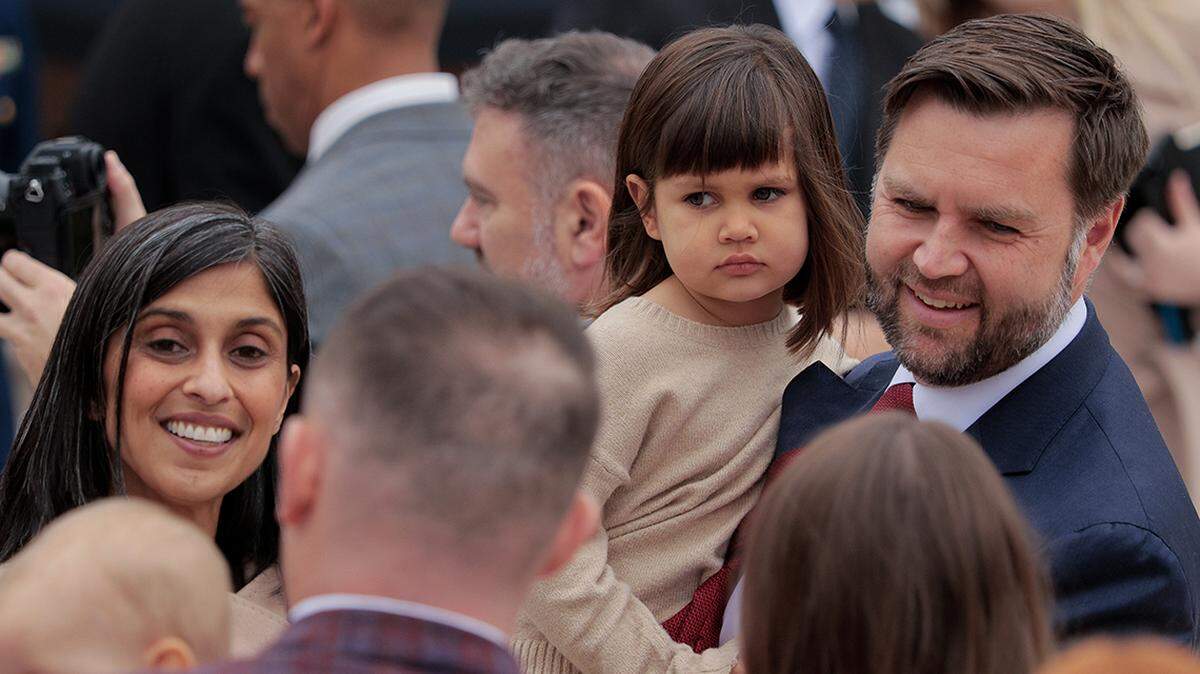
The vice-president and his wife are having a baby. Their fourth. Last month, second lady Usha Vance posted on X: “We’re very happy to share some exciting news. Our family is growing!”
Katy Faust replied on the post: “Four is the new two. Congratulations!” Faust is the founder of conservative pro-child organization Them Before Us.
Having a fourth child is a beautiful gift. It’s also a decision — one that we need to talk about.
Vice President JD Vance has previously broached concern about the declining U.S. fertility rate. Vance said in his first address as vice president, “I want more babies in America.” Before he ever held political office, he derided whom he called “the childless left” at a 2021 Future of American Political Economy Conference. Back then, he said they were being selfish not to have children.
He’s right about one thing. The rate of women having children in the United States has declined over time, and Kansas and Missouri aren’t immune.
Whether or not you find it alarming, it comes down to choice, health and opportunity.
In the Kansas City metropolitan area, census reports estimated that 94.5% of women age 15 to 50 did not have a baby in 2024. Nearly 30,000 out of 506,723 women did give birth.
Let’s look at it another way: Kansas Health Matters, reporting data from the Kansas Department of Health and Environment, shows that there were 11.3 births per 1,000 women from 2021-2023.
For every 1,000 women, about 11 babies were born. From 2000 to 2002, the numbers were higher: 15.1 births per 1,000.
These numbers correlate to what’s happening across the country. Johns Hopkins University reported in 2024, that the U.S. recorded its lowest-ever fertility rate of “1.6 births per woman, following a downward trend in fertility rates starting in the early 2000s, and it is consistent with a global decrease in fertility rates.”
Why are there fewer babies?
Here’s the thing. Americans say they want to have larger families. Gallup polls in 2025 and 2023 show that despite the decline, Americans say an average of two to four kids is preferred for a family, and that this preference is the highest since 1971.
In 2023, “just 2% (thought) the ideal family does not include any children at all.” Just 2%! Where are all those selfish people from the “childless left” — or right for that matter — who intentionally want to soak up a life without kids?
So why is the rate declining? It’s probably just what you are thinking: money.
Johns Hopkins University found that many Americans don’t think they can afford one child, let alone more.
“The economy, job insecurity, housing insecurity, the cost of child care — these are all rapidly increasing, and people are feeling uncertain about their future and their ability to support a child,” said Linnea Zimmerman in an article on the Johns Hopkins website. Zimmerman is an associate professor in population, family and reproductive health at the university.
An older study from 2013 found the same thing. More than 75% of Americans cite finances or the economy behind a drop in the U.S. birth rate. “Specifically, most Americans (65%) mention not having enough money or the cost of raising a child, and another 11% name the state of the economy or the paucity of jobs in the U.S.”
What’s really interesting is who shared these beliefs: those who did have kids (64%) as well as those who did not (66%). This shows that it’s not a difference in attitudes driving the lack of births. (This study was in 2013, but today’s economic indicators mirror what was happening then.)
Congratulations to the Vances
I’m happy for the Vance family, and there are lots of reasons a community wants to see babies born. These include determining public policy, budgeting for education and health systems, not to mention a future tax base. The Kansas Health Matters website mentions that the birth rate “can have major impacts on the well-being of a country’s population.”
But back to those three: choice, health and opportunity.
Choice: No matter how you feel about abortion, you have to recognize that a woman has a right to determine whether (or not) to have a baby. This isn’t China, and we aren’t living in “The Handmaid’s Tale.” Let your faith and your values guide you — that’s between you and your god, not politicians.
Health: Plenty of women who would love to have babies simply aren’t able to based on health conditions. The Mayo Clinic reports that it’s not only infertile women who can’t have babies. Disorders can preclude a successful pregnancy for some women, including scar tissue in the pelvic area and endometriosis. For men, exposure to pesticides and certain medicines can cause sterility, and for both, cancer and its treatment can affect fertility.
Opportunity: This includes finding a partner who wants to start a family with you. It also means you can afford and provide for children. Natalists such as Vance, who believe having large families are beneficial to society, don’t seem to consider the post-birth necessities of paying for food, diapers and clothes, not to mention the soaring costs of childcare or education.
What about adoption? Natalists seem to focus on fertility and birth rates, and not taking care of the children already here.
I am what Vance would call one of the “childless left,” but if I could sit down with him, I’d tell him my childless journey includes elements from all three categories: choice, health and opportunity. In another life, I certainly would have been a mother. My mother raised me to share my gifts with the next generation. I have done that in my own way: through teaching, mentoring and coaching.
I believe children are a beautiful gift from God, and I rejoice for those who are able to start families. For those who don’t or can’t, it’s their right.
This story was originally published February 12, 2026 at 5:08 AM.