‘Government cheese’: Its existence was a result of government intervention gone wrong | Opinion
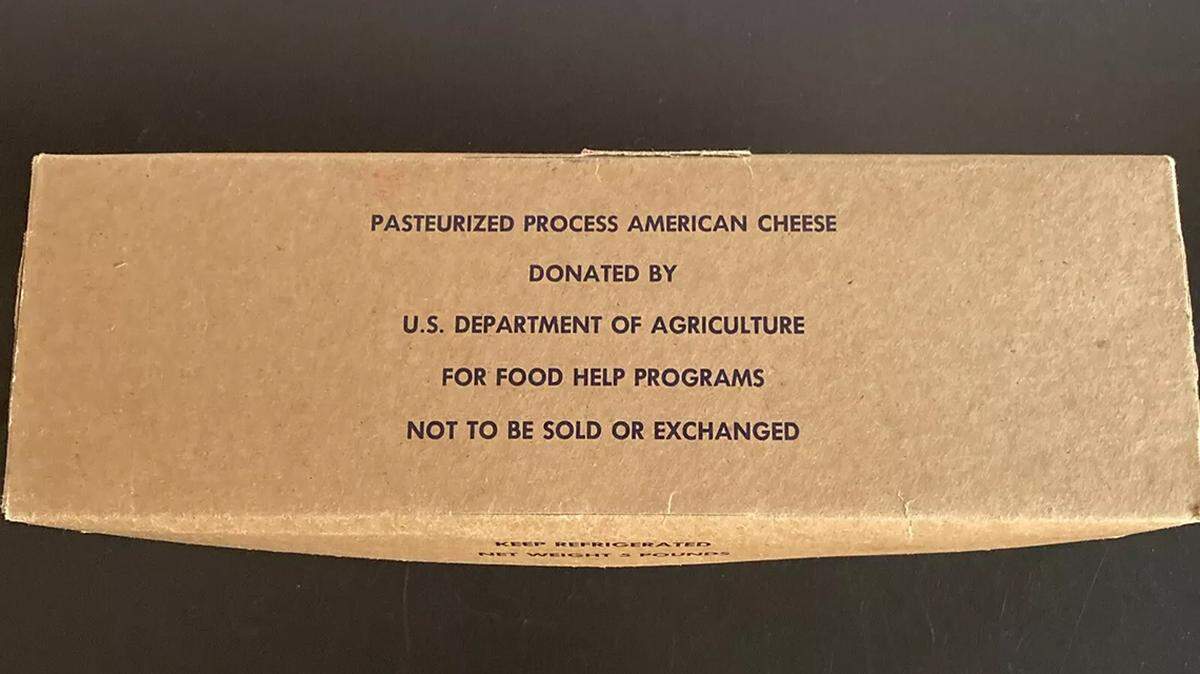
Remember “government cheese”?
Either you understand what I’m talking about firsthand, or maybe you’ve heard about it more as an urban legend, but government cheese was real. My family, like many others who lived on Chicago’s South Side in the 1980s, received blocks of the orange stuff back when the Reagan administration doled it out to lower-income families.
I’ve eaten it, a kind of salty American-style cheese that was perfect for melting and snacking.
Do a search today and you’ll find plenty of people denigrating the big blocks of fromage. Maybe I’m not a foodie, but I thought it was tasty. Of course, I was a down-on-my-luck college student at the time.
Families hurting from the recession of the ‘80s could take cheese and butter, at least, off their shopping lists, as agencies handed out hundreds of millions of pounds of these foodstuffs.
I’ve heard Kansas City folks got some of the cheese, too. Makes sense. Some was stored in those Missouri cheese caves, right?
How we got to the place where the government was handing out stockpiles of overmanufactured cheese is every bit as complicated and unhinged as what’s happening today, but for a different reason.
Call it government intrusion versus government dismantling.
Democratic President Jimmy Carter tried to help dairy farmers survive a recession in 1977 (to disastrous results — I’ll explain later), while today, Kansans are worried Donald Trump isn’t helping farmers enough. Dem versus GOP, liberal vs. conservative ideology. Still, the instability feels somewhat the same.
Yes, it’s complicated.
As egg prices continue to rise, the stock market roils and House Republicans propose cuts in the Supplemental Nutrition Assistance Program, known as SNAP or food stamps, this cheese is on my mind.
So is the song, “Government Cheese,” by blues great Keb’ Mo’. I saw the Grammy-winner Tuesday night at the Kauffman Center for the Performing Arts and I went down a Keb’ Mo’ music wormhole.
Mo’s song takes us back to a time when the cheese was symbolic of inflation and hard times.
Well, it’s late in the evening and I’m on my knees
Well, it’s late in the evening and I’m on my knees
Yes I’m all so grateful for my government cheese
It’s a bad situation when I love my little friend Louise
It’s a bad situation when I love my little friend Louise
She’s a wiz in the kitchen and she knows what to do
With that government cheese
Cutting USDA funding
There’s some question as to whether the government actually ever got out of the cheese business.
And lest you think there’s no connection between 1980 and 2025, think again. The Commodity Credit Corporation, an agency of the U.S. Department of Agriculture, was behind the cheese stockpiles way back then and the USDA still purchases dairy products to be delivered to schools, food banks and nonprofit organizations through various USDA programs.
However, the Trump administration has demanded the USDA cut two federal programs that provided about $1 billion in funding to schools and food banks to buy food directly from local farms, ranchers and producers. Guess who funded those USDA programs? The Commodity Credit Corporation.
We go from overfunding farmers to underfunding them. Everything old is new again.
Let’s see how we got here:
Inflation in the 1970s affected more than gasoline, but also food prices. The government tried to intervene and in 1977 the Carter administration poured $2 billion into the dairy industry.
History.com explains it this way: “The government purchased the milk dairy farmers couldn’t sell and began to process it into cheese, butter and dehydrated milk powder. As dairy farmers produced more and more milk, stockpiles ballooned in hundreds of warehouses in 35 states.”
The cheese began to go bad, and they had to do something with it. Then came the 1980s and the Reagan years. A statement from the Ronald Reagan Library (Dec. 22, 1981) reveals Reagan’s mindset:
“The Dairy Price Support program in this country has resulted in the stockpiling of millions upon millions of pounds of cheese by the Commodity Credit Corporation. At a time when American families are under increasing financial pressure, their government cannot sit by and watch millions of pounds of food turn to waste. I am authorizing today the immediate release of 30 million pounds from the CCC inventory. The cheese will be delivered to the States that request it and will be distributed free to the needy by nonprofit organizations. The 1981 farm bill I signed today will slow the rise in price support levels, but even under this bill, surpluses will continue to pile up. A total of more than 560 million pounds of cheese has already been consigned to warehouses, so more distributions may be necessary as we continue our drive to root out waste in government and make the best possible use of our nation’s resources.”
Root out waste in government? Sounds familiar, but I don’t think even Ronald Reagan could have imagined DOGE at its finest.
A bad solution
Government cheese wasn’t a perfect solution. In fact, it was the bad result of an attempt to help dairy farmers. However, more controls were needed and farmers kept producing more and more milk, which was then made into more and more cheese. Applying some brakes might have helped keep production under control, avoiding stockpiles.
Some of you think cutting funds to these kinds of federal programs is a crisis. Others believe it’s agencies like the CCC that need to stop sticking their nose into our business.
Maybe, some of you think, ending these agencies is the way to go.
Today, “government cheese” is a joke at a dinner party. But funding programs that feed the needy isn’t. Surely, everyone can see that.
Likewise, cutting $1 billion in funding to schools and food banks without a way to satisfy hungry kids can’t be the only solution. Can we all agree with that?
This story was originally published March 15, 2025 at 6:08 AM.