My sister was in hospice. Could funding cuts have affected access to her final care? | Opinion
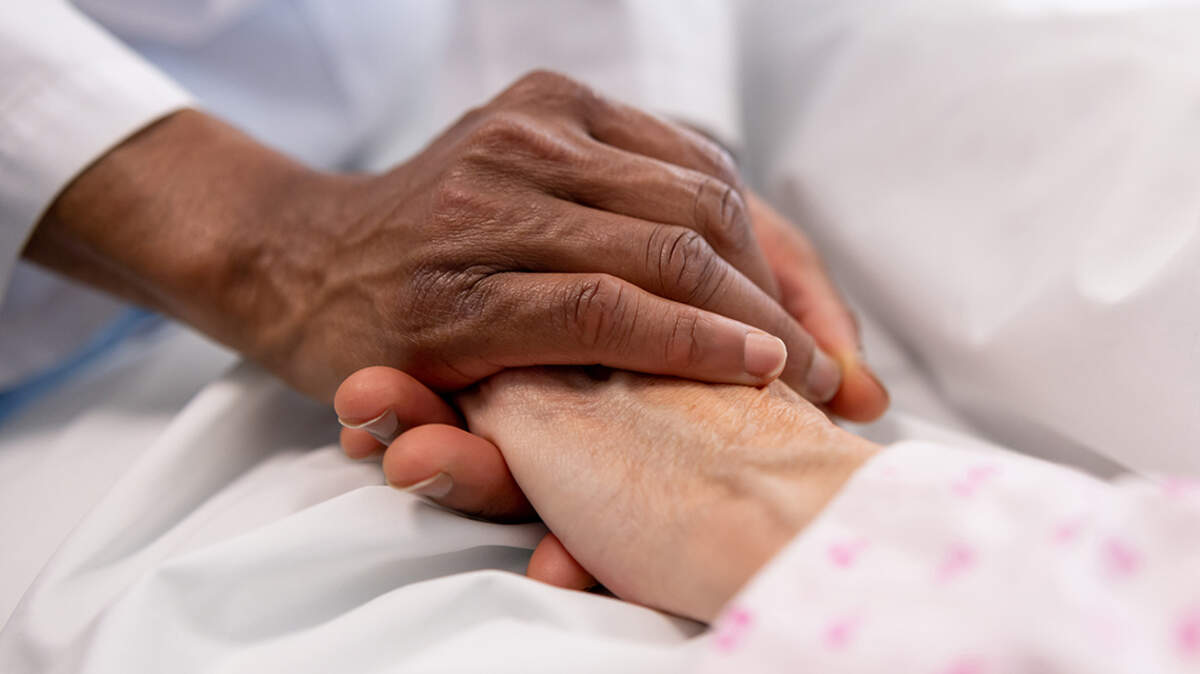
Most people only hear about end-of-life care when a former president goes into hospice or when news stories report on sad cases, inspiring cases, or crimes involving hospice staff:
Like the time a young Kansas City hospice patient got to cuddle a pig and received messages from the Royals and the Chiefs.
Or when a hospice caretaker was arrested and booked for abandoning an elderly cancer patient.
While true, those stories are just a drop in the ocean of hospice experiences felt by thousands of families every year, and for the most part, these services are positive — or as positive as it can be to witness a loved one at the end of their life.
If you are lucky to live long enough, your family may be one of those. Generally, hospice care is a boon to them. My family was one. My sister, Karen Melinda Walker, died Dec. 11 in hospice care, and the nurses and staff were incredibly kind and generous.
I’ve been processing my experience, and something has been troubling me.
I’ve been thinking how access to quality hospice care might be affected by a lack of funding as President Donald Trump’s administration endorses Medicaid cuts and closes programs that affect these services.
Just this month, Trump suspended the hospice Special Focus Program, which is “designed to identify poor performing hospices, mandate quality improvement and in some cases impose additional penalties,” according to Hospice News. The notice appeared on the U.S. Centers for Medicare and Medicaid Services website.
Last week, the American Journal of Managed Care bemoaned how the Trump administration endorsed $880 billion in cuts to Medicaid. While Medicare manages hospice programs, families who receive Medicaid may be affected by how much families have to pay for related end-of-life care services.
This is a scary thing to happen in the middle of one of the scariest things you will have to go through.
But first, let me tell you my family’s story.
The end-of-life fight
I said before most people don’t think about hospice. What most families do think about are the days or weeks before hospice is deemed necessary: the days of fighting, the days of “do whatever is needed, Doctor.”
Those are hard days for families, don’t get me wrong. But the exhaustion doesn’t stop. Because when those “fight” days are over and doctors determine a patient is, in fact, going to die, families have to make a lot of decisions in a very short period of time.
It’s a different kind of fight.
It’s overwhelming, and while you want to do the best you can and select the best place for short or long-term care, it often comes down to money and time: do you have enough of either? Do you have enough time and skill to care for your loved one in your own home? Are you able to qualify for inpatient hospice care?
My sister received hospice care in Denver, where she and her daughter lived, and I’ve been going over what we experienced during those final days.
I’ll be honest. Those few days before she was transferred to hospice were hell.
Karen had major organ failures, was conscious and was in a lot of pain. When the doctors told us there was no hope and that we’d have to decide where she would go after leaving the hospital, we didn’t know what to think.
We didn’t think we could keep her at home safely without a full-time nurse, one we couldn’t afford. Ultimately, my sister’s critical condition qualified her to spend her final days at a hospice facility, where my niece and I could spend time together with her and not have to worry whether we could keep her safe, comfortable and pain-free.
But I wondered, was my experience unusual? What if I had brought her here to Kansas or Missouri? And, perhaps more important, what if these federal funding cuts had affected her options for care?
When I got back to Kansas City, I reached out to a hospice expert.
What is hospice?
One thing I knew already: Most hospice nurses are angels.
“Yeah, it takes a special person to be a hospice employee,” said Michael J. Fields, administrator for the Bureau of Home Care and Rehabilitative Standards in the Missouri Department of Health and Senior Services.
I agree and saw it firsthand: From the delicate touches to avoid hurting the patient, to checking in regularly with whoever is sitting bedside, the nurses and caretakers I witnessed understood what was needed.
What I didn’t know is that most hospice care is regulated the same in all states. Not all hospice services participate in Medicare, but a lot do, so Fields told me my experience in Colorado should mirror hospice in Missouri. “Almost 100%,” he said.
“And so, no matter what state that you would go to, any of the 50 states, those states would regulate to those same set of regulations,” Fields said. That’s good to know, because families often are spread out, sometimes needing care outside of your home state.
Fields explained the many levels of hospice care: care at home, in-hospital patient care, care in a hospice facility (where my sister went) and continuous home care. The last one is rare, he said and is a short-term option where one of the hospice nurses can actually stay in your house to get patients’ pain and other symptoms under control, if possible.
Caregivers can experience burnout, so hospice nurses can give them a break for a day or two, called respite care.
Fields is not only an administrator, but also someone who has gone through this.
“I know how tough it is,” he said. My wife and I had a grandparent and a parent both go on the hospice program. So I’ve been through some of the same things that you’ve gone through just recently.”
Teresa Taylor-Williams, a hospice medical social worker for Phoenix Home Care and Hospice with locations in Missouri and Kansas, said she believes much education still needs to happen. She said comfort is the goal for the patient, explaining that the team can include a nurse, home health aide, chaplain and social worker.
“Social Workers can advocate for appropriate patient care, link patients and those close to them with community resources, walk family members through important decisions and even assist with funeral arrangements.”
“This work is challenging and unpredictable, yet impactful,” said Taylor-Williams, who works in Topeka. “It’s a sensitive and intimate time, and I count it as an honor to serve patients who are at their end of life, and to support their families and loved ones.”
Remember I talked about the fight that happens before the decision to go to hospice? Fields calls it a decision to transition from a “curative mindset to the palliative hospice mindset.”
“It’s sometimes tough because the doctors don’t want to give up. The family doesn’t want to give up. So I can understand your frustration when you had to go through that with your sister.”
I wish for every family — with or without means — an easier final decision. But I worry that a lack of federal funding and program cuts will mean just the opposite.
When it comes to making a difficult hospice decision, Fields said that’s when families usually can breathe a sigh of relief.
“I’m not sure how to make that better, but once hospice is brought in, they can usually smooth things out for the family and let the family relax and say, “You’ve made the right decision here.”
For more hospice and palliative care information:
Kansas: kdhe.ks.gov/834/Palliative-Care
Missouri: health.mo.gov/safety/hospice/
This story was originally published February 27, 2025 at 12:08 AM.