Pothole season got me, and it’ll cost me big. These streets need a better fix | Opinion
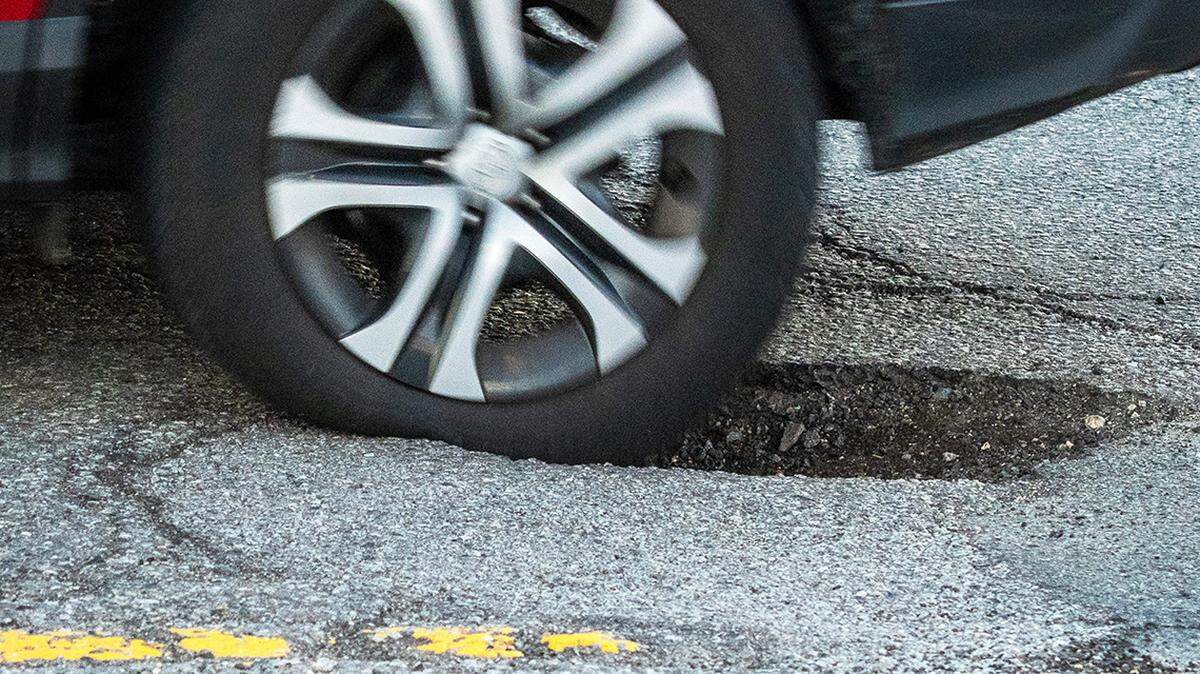
On Saturday morning, I went to a mechanic to have a tire repaired. I had fallen into a large pothole on Missouri Route 1 north of Vivion Road in Gladstone the night before. As I walked up to the desk, the employee asked me if I wanted to leave it.
“There are 29 cars ahead of you,” he said with a straight face. He called me later to give me even worse news: “You need a new tire and your rim is cracked. I’ll have to order it.”
It’s pothole season in the greater Kansas City metro area.
It’s dark at night on Missouri 1, which is maintained by the Missouri Department of Transportation (or MoDOT), and I just didn’t see the deep hole. I wonder how many other people didn’t see it and ran into it?
My colleague Joseph Hernandez wrote about a big one that slowed traffic on Interstate 435 just last week.
If you’ve ever been the victim of a pothole on Missouri or Kansas City roads, you might not be surprised to learn that “Kansas City is one of the top metro areas in the nation for search terms related to potholes,” according to a report released in November from USA Today.
The Kansas City metropolitan area in Missouri and Kansas is listed at number 10. Missouri is the 14th-worst state for potholes.
About 1,200 complaints have been reported to Kansas City in the first 28 days of the year. That’s a fifth of last year’s tally. I’m sure other surrounding cities have increased tallies as well. Clearly, the new year’s winter storms have taken their toll.
(In Kansas City, you can report potholes by calling 311 or 816-513-1313 and press 3. Or report the pothole in the myKCMO app. Outside of KC, contact your closest municipality.)
Annual problem for roadways, but also environment
Look, I’m from Chicago. I know winters. And I know that potholes are a way of life in the north where hard winters wear and tear our roads. And while there is debate over whether salt, the miracle drug of frozen roadways, actually is the culprit that causes potholes, it definitely contributes to the problem.
I’m probably one of many of you who will be out $$$ this season. If your pothole accident is in Kansas City, you can file a claim at the Law Department’s claims division website. But good luck getting a payout — because in the past, the city has rarely paid drivers’ damages.
What I want to know: What are our cities doing to try and find a better solution to this annual problem? What’s the alternative to salt that will be gentler on our streets?
The U.S. Environmental Protection Agency asked the same question in Rhode Island, a small state with a big snow and ice problem — it ranked 12th on the worst potholes state survey, two spots above us.
There are different kinds of salt and solutions used on streets for ice and snow. Some are better for our roads. Some worse.
Missouri highways maintained by MoDOT mostly use a brine solution — salt mixed with beet juice — and switches to calcium chloride to melt ice on highways when temperatures drop below 5 degrees.
Kansas City proper uses salt, calcium chloride, and Ice Ban pre-mixed salt, reserved for super cold temperatures.
New England cities, such as Massachusetts, have used Sodium Chloride (NaCl) or table salt, “known as rock salt when spread on the road because of its much larger granules.” Rhode Island has tried salt solution mixtures like what MoDOT uses.
But whichever salt you use, there are corrosive properties. And whether that’s to the road, your car or the environment, we must find another way.
According to the EPA, “Road salt can contaminate drinking water, kill or endanger wildlife, increase soil erosion, and damage private and public property. Alternative methods are needed to mitigate these drawbacks.”
Alternatives in beet juice, porous pavement
To their credit, MoDOT and Kansas City are using solutions that the EPA endorses, including the beet juice mixture on Missouri roads and calcium chloride in both Missouri and KC .
Another alternative is to use less of it, or mixed with sand for traction, combined with proper road clearing before application.
One technological solution is porous pavement, engineered to reduce runoff from roads and reduce snow and ice cover. “Porous or permeable pavement allows standing water to seep through, removing water from roads that would normally go through freeze-thaw periods, thus preventing ice formation on the roads,” according to the EPA.
To be sure, these solutions aren’t perfect, and often are more for the environment and less for our tire headaches — but if cities continue to research and create solutions, we’ll reap the benefits.
In the meantime, AAA advises to reduce your speed in pothole season. It’s not always possible to avoid a pothole, but the faster you hit it, the more damage your car may sustain. Slow down and then release your brakes before you make contact with it. Several websites also advise you to straighten your wheels to hit the pothole squarely and coast over the pothole, which may reduce the risk of damage.
I’m waiting to get my tire and rim back from the shop. It’s dangerous out there, folks. Be safe.
This story was originally published January 30, 2024 at 5:08 AM.
CORRECTION: This column has been updated to clarify the methods used by multiple entities that care for roads in the Kansas City metropolitan area.