
No good reason for all JoCo cities not to have bilingual election ballots | Opinion
And then there were two.
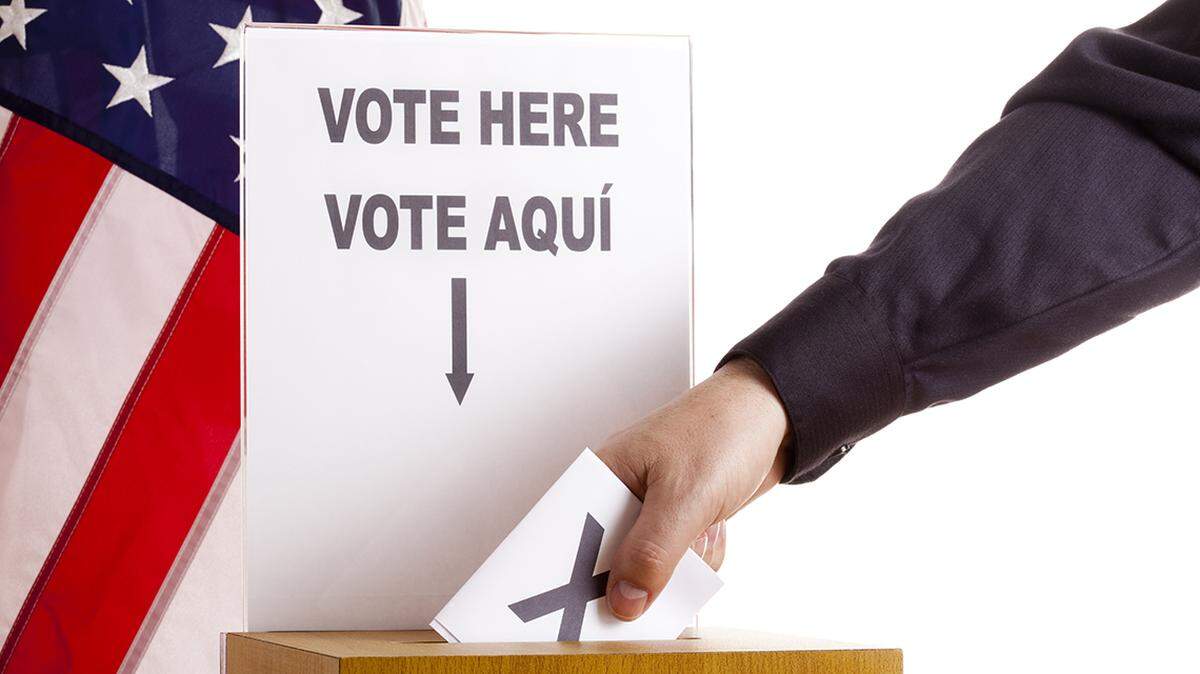
In an 8-2 vote, the Prairie Village City Council approved on Monday a nonbinding resolution signaling its support for improved language access for Spanish-speaking voters throughout the state.
By doing so, Prairie Village became the second Johnson County city to get behind the American Civil Liberties Union of Kansas’ push for more bilingual voting materials statewide.
I strongly encourage other JoCo municipalities to follow the path set by their neighbors.
In September, Roeland Park became the first JoCo city to approve a resolution calling on Kansas Secretary of State Scott Schwab and Johnson County Election Commissioner Fred Sherman to provide voting information and ballots in Spanish.
In another show of support, the Johnson County Commission placed the issue on its legislative platform for 2026, according to Logan DeMond, ACLU of Kansas policy and research director .
And just last year in Wyandotte County, the Unified Government’s Board of Commissioners unanimously passed a similar resolution, DeMond told the Prairie Village council during Monday’s meeting.
“This council is not alone in recognizing that this problem exists in Kansas,” he said.
While it’s true the measure was only ceremonial — local jurisdictions have no control over county election matters, Sherman told the council — its passage illustrated Prairie Village’s willingness to get behind an issue the ACLU of Kansas brought to the forefront about two years ago.
And that is a promising and positive development in a county that had a Latino population of about 9% in 2023, according to data from the U.S. Census Bureau. The bureau also reported that the most common birthplace for all foreign-born Kansans was Mexico — the largest Spanish-speaking country in the world.
Also worth noting: About 63,000 Johnson County residents speak a primary language other than English, according to the ACLU of Kansas.
‘Why default to Spanish?’
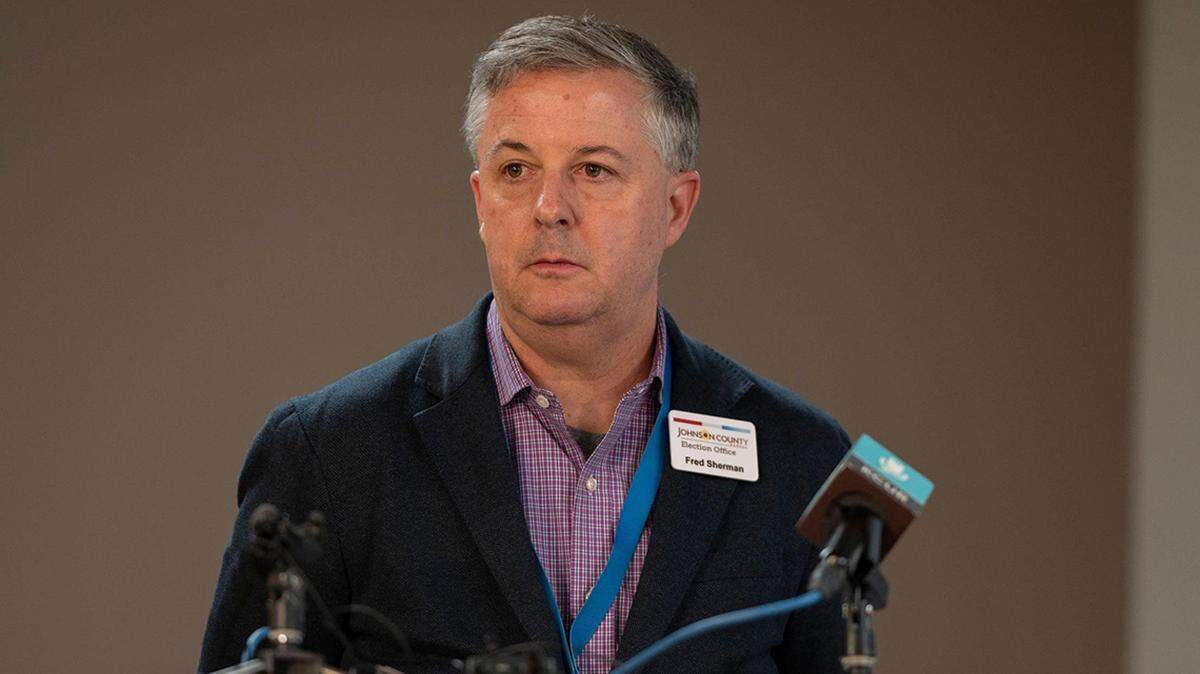
Despite what the local civil rights group sees as a pressing need, Sherman urged council members to oppose the resolution.
In a prepared statement to the council that Sherman shared with me, he wrote: “Elections are governed by both federal and state law, and it is essential that election officials and governing bodies operate within those legal frameworks to preserve the integrity, uniformity, and defensibility of the election process.”
He added: “Actions taken outside a jurisdiction’s statutory authority — particularly in matters administered by another governmental entity — can unintentionally create legal, operational, and policy risks.”
Why was the top election official in Kansas’ most populous county so adamantly against this proposal?
Because the matter would prove to be too arbitrary to apply equally, Sherman during a phone interview Tuesday.
“Why default to Spanish?” he said.
Census data clearly suggests Spanish-speaking Johnson Countians make up a sizable portion of the population there. Eligible voters not proficient in English deserve the same access to information as their American counterparts.
Sherman made an interesting observation when he asked me what to make of voters who speak languages other than English or Spanish and may request the same resources.
That’s simple: “The ACLU of Kansas stands ready to assist them in those endeavors,” the ACLU’s DeMond said Monday.
JoCo election commissioner against effort
Under the federal Voting Rights Act, local jurisdictions must meet one of these criteria for expanded language access:
- The minimum number of Limited English Proficient voting-age citizens who speak the same language is greater than 10,000, or
- The minimum proportion of Limited English Proficient voting-age citizens who speak the same language is greater than 5%, and
- The illiteracy rate of Limited English Proficient citizens who speak the same language exceeds the national illiteracy rate.
In Kansas, six counties met the threshold required for Spanish ballots, Sherman told The Star in September. Johnson County was not among them.
However, Whitney Tempel, the director of communications and policy for Schwab’s office, emailed me to say that “any county in Kansas is allowed to use these materials at their discretion.” Did Sherman miss that memo?
Besides, the number of voting-age county citizens who speak Spanish is greater than the population of many of those counties that currently provide translated voting materials, Prairie Village Ward VI Councilman Ian Graves told colleagues.
“It kind of makes sense to expand it,” Graves said.
In my mind, other JoCo cities should get on board, too. Only then would Schwab even contemplate expanding access, Micah Kubic, the executive director for the ACLU of Kansas, told The Star in September.
“It’s a way of showing the secretary of state this is something that matters in this community,” he said then. “This is something that this community really prioritizes and wants to get done.”
Spanish-speaking voters
The right to vote is an essential one — even for those who may not speak fluent English.
In recent years, the ACLU of Kansas has focused on expanding language access for Spanish voters in the state.
While Schwab’s office has information available in Spanish, it’s not always readily available at the local level, the ACLU’s Kubic told The Star this fall.
In an email, Esmie Tseng, the nonprofit’s communications director, said the resolution specifically called for three things:
- Upon request, provide Spanish-language voting materials at in-person polling places and via advance voting beginning in 2026.
- Make all Johnson County Election Office materials and online content available in Spanish.
- Offer in English and Spanish both printed and online materials that inform voters of their right to bring a translator to polling places.
If you ask me, these were relatively simple recommendations to implement that would not run afoul of federal law.
Website changes make a difference
On the Wyandotte County Election Office website, there is a direct link to the Kansas secretary of state’s web page for Spanish voters. No such connection exists on the Johnson County Election Office’s website, but it should.
Sherman should consider adding a similar link. I would offer this suggestion to him as well: Stop opposing these resolutions and work with the ACLU of Kansas to help provide eligible Latino citizens with bilingual voting materials.
Sherman previously told The Star that taking the ACLU recommendations would fall short of federal requirements and “risk creating inequities by elevating one language group above others in our diverse community.”
I somewhat understand Sherman’s perspective here, but I don’t agree. Nothing in Kansas state law prevents local election commissions from enacting such measures, according to DeMond.
Sherman “can take on any of the measures,” DeMond told me this week.
“Wyandotte County changed its website,” he said. “There was no legal recourse there. That was one big step.”
But it shouldn’t be the last.