South Kansas City school district is $12 million short. Can it survive? | Opinion
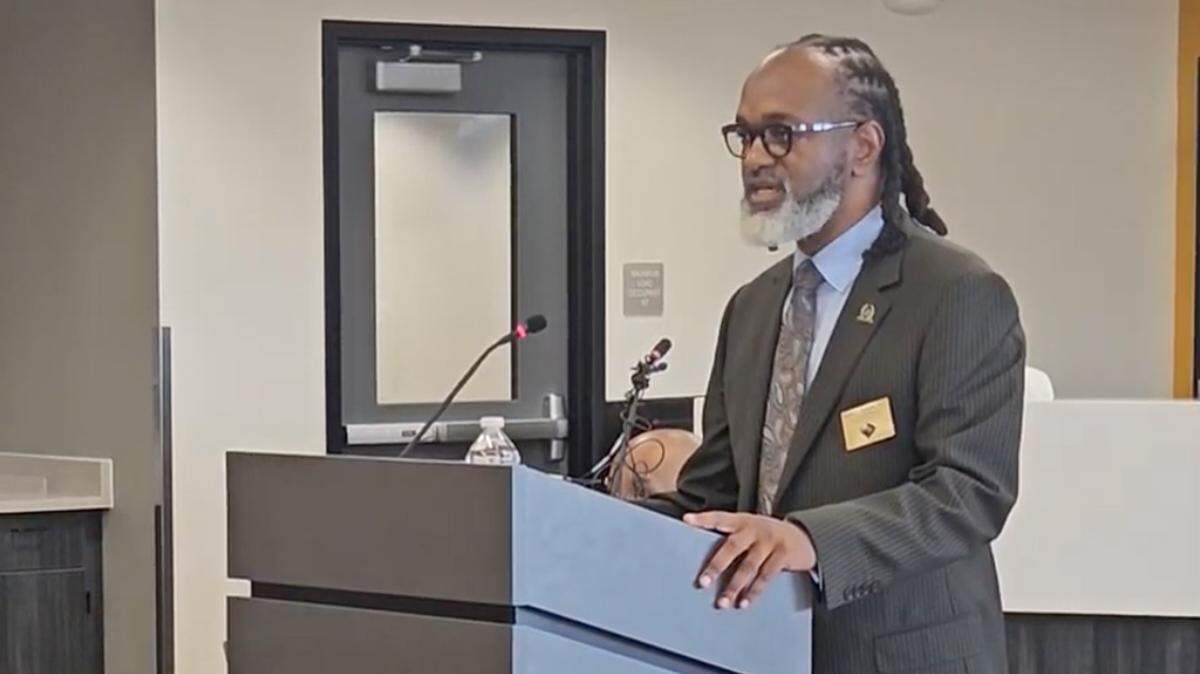
Hickman Mills School District interim Superintendent Dennis Carpenter and his new executive leadership team have got their work cut out for them.
The state auditor is breathing down the district’s neck and its projected operating budget for the 2025-26 school is about $12 million short, according to analysis presented during a school board meeting on Thursday.
The district is indeed “on fire” as school board member Byron Townsend said during the meeting.
No one knows what the immediate future holds for this district, but anyone with a vested interest in Kansas City as a whole should root for leadership to right the ship. A fully accredited school district is the backbone for any community.
Hickman Mills has made strides in recent years trying to regain its accreditation from the Missouri Department of Elementary and Secondary Education. But DESE historically frowns upon financial disasters like this. Recent changes with leadership don’t help. Most, if not all, of that progress could be undone — and that would not be a positive development for anyone that calls this city home.
At the board meeting, the Hickman Mills School District Board of Education unanimously approved a revised budget — the district’s expected operating revenue this school year is $12.4 million short, according to Jason Hoffman of The Missouri Capital Asset Advantage Treasury, a financial management resource group for Missouri school districts known as MOCAAT.
Hoffman gave an update on the district’s finances at Thursday’s meeting.
The district’s fund balance next year will go from $11.8 million to negative $775,551 without corrective action, according to Hoffman. Audible gasps from the audience could be heard throughout his presentation.
And who could blame anyone from being blown away by the projection? Property tax revenue that partially funds the district is scarce enough as it is. Money is hard to come by. Every penny counts. Operating at such a large deficit is obviously disheartening.
“We’re in trouble,” school board president Bonnaye Mims said during the meeting.
Carpenter said he was aware a statewide review of the district’s finances was underway when he started the job on a temporary basis earlier this month.
What the one-time leader in Hickman Mills and Lee’s Summit schools didn’t foresee was a financial crisis that would lead to some very difficult decisions to be made in real time and in the future.
“I probably am stepping out of the frying pan and into the fire, but… I’ve done this work for a long time,” Carpenter said at a press conference Thursday.
No more stimulus money
How could a cash-strapped district like Hickman Mills approve a budget allocating money it doesn’t have? On Thursday, Carpenter said that he was not in a position to answer that question but an internal review might.
And when that report is finalized, district patrons must hold leadership to account for its pledge of transparency. Carpenter and the school board must release those findings in a timely manner.
The district’s initial budget, approved in May, failed to take into account that stimulus money from the federal government is drying up, according to data presented Thursday. The district will begin an internal forensic review to find out exactly how its finances were so badly miscalculated, Carpenter said.
“I do know a tentative budget was presented in May and those numbers just seemed to be significantly off but I can’t tell you why,” he said.
The internal review will be separate from the pending one Missouri State Auditor Scott Fitzpatrick’s office recently announced — more on that inquiry later — but a thorough explanation of what went wrong is needed.
From his vantage point, those in charge of district finances before him strayed too far away from district policies, Carpenter said.
“When a district or any kind of organization gets too far away from its policies, the likelihood of something going wrong is pretty apparent,” he said.
Community effort needed
Carpenter was Hickman Mills superintendent from 2013-2017. He was hired in Lee’s Summit in 2017 but agreed to a substantial buyout two years later when he received pushback for diversity work he brought to the predominantly white and affluent suburban district.
In Hickman Mills, he replaced former Superintendent Yaw Obeng, who was fired in July.
Less than two weeks into his latest stint here, Carpenter has revamped leadership staff and the school board is facing a financial crisis that was unimaginable until reality crept in over the last couple of weeks, Carpenter said.
“I’ve seen enough evidence in about 14 days to see that in some cases we got too far away from our policies,” he said.
Much like Kansas City Public School’s successful fight for full accreditation, it will take a collaborative and ongoing effort from stakeholders in south Kansas City and beyond for Hickman Mills to get there.
Residents must fully buy into what very well may turn into an arduous task.
Changes in Hickman Mills
In the last eight days, at least five members of the district’s executive staff have either resigned or retired, Carpenter told me late Thursday afternoon.
These moves should strengthen alignment across the district’s academics, finance, operations, and human resources departments and save Hickman Mills $148,528, according to district data.
More changes were inevitable, Carpenter said. Moving forward under a financial strain won’t be easy, he added.
“We need to… understand the depth of how it’s impacting our budget and our numbers,” Carpenter said.
Full state audit coming
Carpenter spoke about the district’s financial woes at a press conference the same day Fitzpatrick, the state auditor, announced his office would conduct a full audit of the school district.
In a news release, Fitzpatrick said an investigation of the Hickman Mills School District that began in March uncovered potential improper governmental activity that warrants a performance audit of the district.
The district was notified this week that a preliminary review by Fitzpatrick’s office uncovered significant issues, he said.
“The next step will be to transition to a full audit that will look closely at most aspects of district operations,” Fitzpatrick said in the release.
Fitzpatrick’s initial review of the district began after a whistleblower complaint raised concerns about travel expenditures paid for with a school credit card, according to the release. The probe looked at that issue as well as the cancellation of a technology contract that cost the district $1.4 million in termination fees, Fitzpatrick said in the release.
He must have found some very damaging information to proceed with a full audit.
“School-funded trips to Ghana and China raised red flags for many parents and taxpayers in the Hickman Mills School District and I’m glad they brought these issues to our attention so we could start the process of holding the district accountable for its actions,” Fitzpatrick said.
“At a time when the school district is struggling to gain full accreditation, it’s best they use the hard-earned tax dollars of district residents on providing a foundational education that prepares students for the future,” he continued.
Transparency in Hickman Mills?
Led by Carpenter and Mims, the school board president, Hickman Mills pledged to fully cooperate with the state auditor’s office and provide regular updates to staff, families and the community to restore trust with its constituents. The district will host town hall meetings in the near future to ensure community voices are heard, Carpenter said in a statement.
Local constituents must demand officials follow through on this promise, too.
“For too long, power in this district was concentrated in the hands of a few people, and these are the results,” he said. “I’m saddened because the decisions of adults are negatively impacting students. I’m also energized and committed to bringing the entire ( district leadership) team back into the decision-making process.”
Carpenter said another immediate change leadership made was a reduction in district-issued credit cards.
“In 14 days, we’ve gone from 47 credit cards in the district, I believe, down to about three,” he said.
While that reduction represents a modest step in regulating spending, the Hickman Mills School District must do more to ensure whatever led to its current financial strife will never happen again.