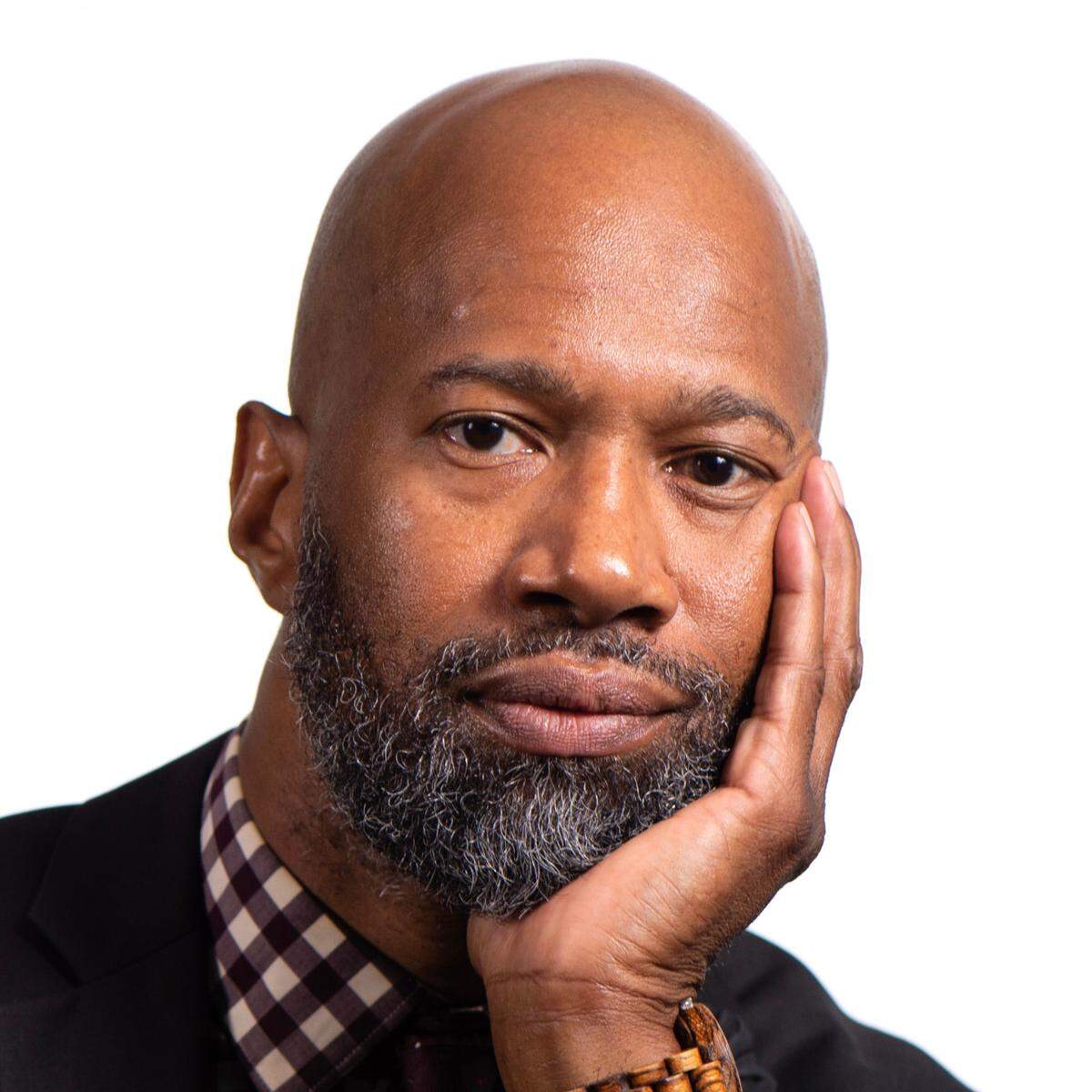
In a country where Black dentists are rare, Antjuan Hampton makes a difference | Opinion
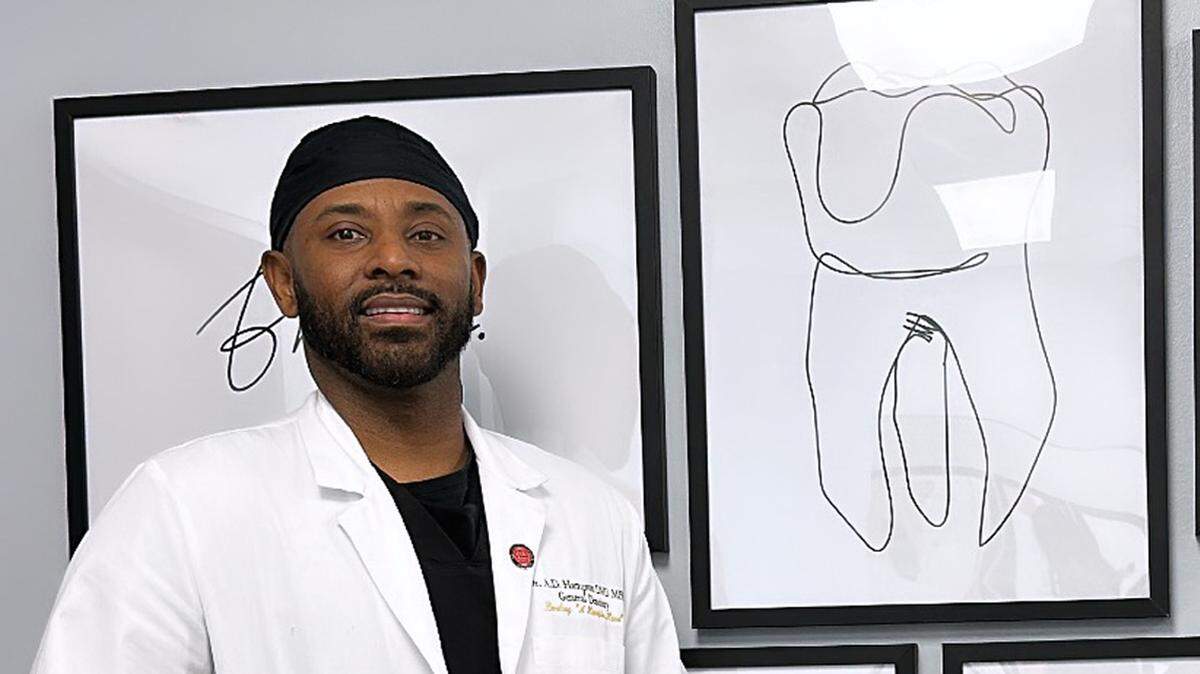
As a Black dentist in the Kansas City metropolitan area, Antjuan Hampton could be considered a rare breed.
While Hampton is not the only Black dentist in the area — trailblazer Anne Lambert Johnson, the first Black dentist in Kansas City, and others come to mind — he represents something we don’t often see: a Black oral health practitioner.
Thousands of these professionals are expected in Kansas City for the National Dental Association’s national convention July 10-13. Hampton is the NDA’s co-chair for the event.
The 43-year-old Mississippi native operates two Comfort Dental locations here — one each on both sides of the state line. As impressive as owning two dental offices is, Black dentists such as Hampton are too few and far between in America.
Nationwide, Black dentists make up only 3.8% of all dentists in this country, according to the American Dental Association.
Hampton said access to quality health care is important. And in the dental field, there is a need for more minority dentists, he said.
“We are still down in the numbers,” he said, comparing the Black dental professional population in America to that of the overall Black population of 14.4%, according to Pew Research. In Missouri, the Black population was 11%, according to the U.S. Census Bureau, while just over 5% of Kansas’ population.
This disparity is an obvious one. “That’s really low,” Hampton said.
You may wonder why all of this is important but oral health inequities in America are real. Research shows that minority patients are more likely to seek care from a provider of similar race or ethnicity. As a result, these patients experience improved health outcomes, research shows.
Oral health disparity
According to a 2022 article published in the Journal of Dental Education, minority dentists are historically underrepresented in the field, which has an impact on the overall health of minority patients.
The authors — six dentists in all — wrote that racially and ethnically diverse dentists provide care to a significantly higher number of patients of the same race compared to their white counterparts. Minority dentists see more patients with Medicaid insurance, too, the authors wrote.
Only 12% of white dentists treated 100 or more Medicaid patients while 30% of Black dentists and 22% of Hispanic and Asian dentists, respectively, did the same, the authors wrote.
“It has been reported that in 2017, only 25% of white dentists treated at least one Medicaid patient, compared to 46% of Black dentists and 33% of Hispanic dentists,” they wrote.
The underrepresentation for Black dentists is extraordinary, public health experts have said. It’s not lost on Hampton that Black dentists shoulder a disproportionate share of dental care for minority and underserved communities, as research shows.
“One of the things we learn in all health care disciplines is patients feel comfortable with doctors that look like them,” Hampton said. “They want to be around people that look like them because they can relate.”
Ample evidence supports Hampton’s assertion including a theory known in the medical field as racial concordance, which means minority patients are more likely to seek care from a provider of similar race or ethnicity. As a result, these patients experience improved health outcomes, as a huge number of studies have shown.
“When you find people you can relate to, you are more prone to continue treatment,” Hampton said.
UMKC mirrors national average
The dental pipeline in our area mirrors the national average. For example, at the University of Missouri-Kansas City School of Dentistry, it follows those national statistics, with only 17 Black students of the 546 enrolled — a little over 3%, according to school officials. UMKC’s School of Dentistry is the only public dental school in Missouri and Kansas, according to the university’s website.
At the faculty and staff level, Black people filled 30 of the 272 positions (11%) at the dental school. While relatively much higher than the dental school’s Black student population, this percentage does not reflect the percentage of Black people in the country.
To counter this discrepancy, I would suggest UMKC follow the example set by the University of Illinois-Chicago. There, the UIC’s College of Dentistry actively recruits minority students.
Between 2019 and 2024, that university’s dental program maintained an average Black student population of about 12.6%, statistics on its website show, stating the significance: “This statistic not only highlights the diversity inherent in our student body but also highlights our unwavering commitment to nurturing a welcoming and supportive community for all.”
Compared to the national average of Black dentists at around 4%, that figure shows UIC gets the importance of a diverse dental workforce.
Alas, UMKC and the University of Missouri system, like some other universities, are hamstrung by a political climate that has all but eliminated these types of diversity and inclusion efforts.
UMKC officials’ hands are tied under a Republican-led state legislature that frowns upon anything related to diversity, equity or inclusion. Lawmakers and Gov. Mike Kehoe have threatened to withhold millions of dollars in funding if public universities conduct DEI work.
When asked if UMKC had established any recruiting efforts or scholarships geared toward attracting students from underrepresented populations to its school of dentistry, I was told that the university at large actively seeks to attract and retain talented students and employees from a broad range of backgrounds and experiences.
“For students, dentistry offers a wide variety of scholarships, including some that seek to attract students who are first generation and/or from financially disadvantaged backgrounds,” UMKC spokeswoman Stacy Downs wrote in an email.
“The university’s practices around recruitment and retention, whether for students or faculty and staff, follow guidelines that are consistent with state and federal laws and grounded in principles of fairness, excellence and opportunity.”
KC to host national dental convention
Now in its 112th year, the NDA is the largest dental organization in the world for dentists, dental students, dental hygienists, and dental assistants of color, according to organizers.
Its four-day national convention here will include on-site screenings and dental education seminars to area youth participating in summer programs at the the J&D Wagner Boys and Girls Club and Emmanuel Church in Kansas City, organizers said.
According to organizers, UMKC’s School of Dentistry and Colgate-Palmolive’s Bright Smiles, Bright Futures initiative are donating time and talent for these screenings.
During the convention, Johnson, the city’s first Black dentist, will be recognized, as will LaShawn Walker, founder of Suburban Balance, a local nonprofit bringing cultural experiences to suburban kids of color, organizers said.
Hampton said he can’t wait for Black dentists and others in the field to visit a city he has called home the last five years.
“People need to know that we’re here and we have an opportunity to give back to our community,” Hampton said. “We are here and we are invested.”