‘Colon cancer in young adults is rising at an alarming rate.’ Kansas man shares battle | Opinion
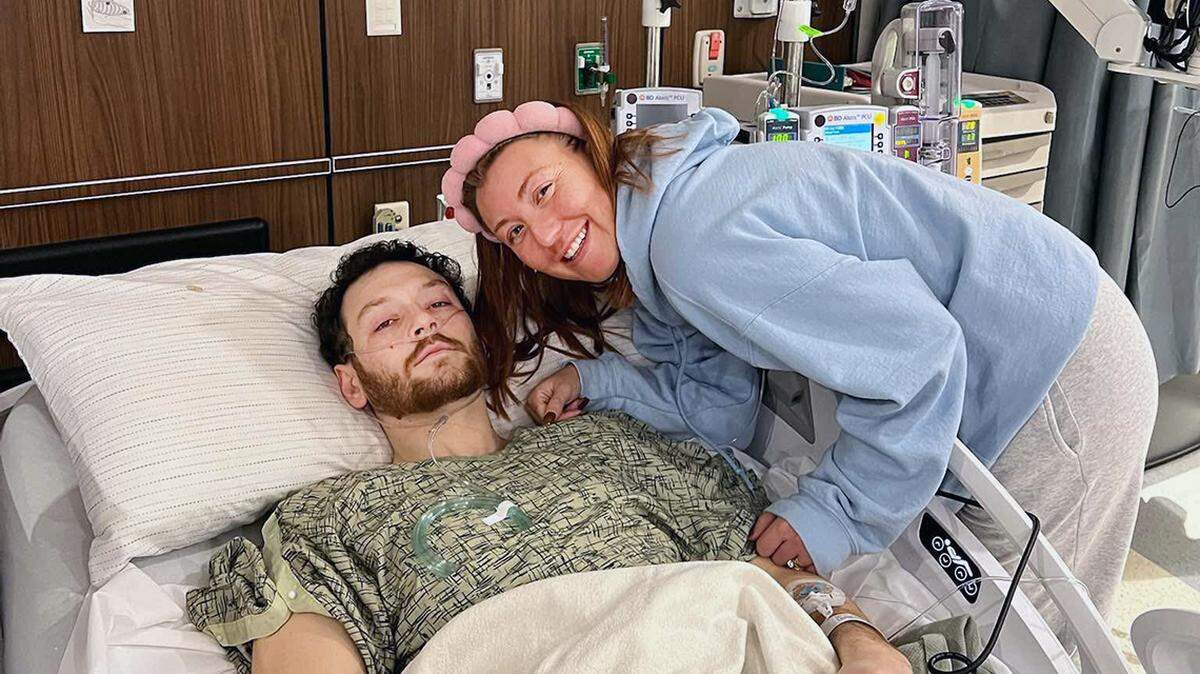
Jackson Layton is one courageous individual.
In January, the Kansas City, Kansas, man was diagnosed with stage 4 colon cancer that had metastasized to his liver. Aggressive rounds of chemotherapy followed. In the midst of this damning battle, Layton and wife Hannah, decided to share Jackson’s story publicly.
Instead of keeping his diagnosis and prognosis private, Jackson and Hannah wanted to chronicle his trials online. With Hannah’s help, Jackson’s journey is being shared on Facebook and other social media platforms. His mother, Diane Layton, created a CaringBridge page dedicated to Jackson’s fight.
A GoFundMe page set up to help this young couple during these trying times has raised about $57,400 — the fundraiser’s goal is $60,000.
“On 1/11, my husband was diagnosed with stage 4 colon cancer that has spread to his liver,” Hannah wrote in a Facebook post last month. “The day before, I remember telling him he was just having a stomach ache like every other time. Little did we know this would be the absolute worst nightmare.”
Jackson, 28, said he felt compelled to go public because he wants to raise awareness around colon cancer and early detection in young adults. Typically, people are urged to screen for colon cancer at 45. Jackson would like to see that recommendation changed.
“Colon cancer in young adults is rising at an alarming rate, and no one can tell us why,” he said. “Why are healthy young people getting Stage 4 colon cancer? Why is it so hard to get tested, screened, or colonoscopies? I realize colonoscopies come with a risk, but there has to be change — it’s so hard for a young person to get a colonoscopy.”
That Jackson was diagnosed with colon cancer at such a young age could be considered an anomaly. But it’s not all that uncommon these days. Today, colon and rectum cancer was the leading cause of death for men under 50, according to the American Cancer Society.
Men between 20-29 — Jackson’s age range —- were at the top of the list.

Early detection is key
I’ve written before about my own colon cancer scare. During my first colonoscopy about four years ago, doctors discovered and removed two large precancerous polyps, small clumps of cells that form on the lining of the colon.
At the time, I was 46. Three years later, I was given the all-clear during a follow-up procedure. I’m scheduled for another invasive surgery in 2029.
As I was then, I remain thankful doctors caught those polyps before they developed into full-blown cancer. Jackson wasn’t as fortunate. And neither was Danielle Ripley-Burgess of Lee’s Summit.
Ripley-Burgess was just 17 when she was diagnosed with Stage 3 colon cancer. She said she was diagnosed twice more at 25 and 39, but aggressive screening caught them early so she didn’t need treatment other than surgery.
When she first learned of her condition as a teen, it was very uncommon for someone that young to receive such devastating news.
Ripley-Burgess is 41 now. As vice president of disease awareness for Fight Colorectal Cancer, a Springfield-based nonprofit advocacy group, she urges people of all ages to know the risk factors involved and their family’s history with this type of cancer.
“Every day, we are unfortunately learning about stories like Jackson’s and Hannah’s, where a young person is facing advanced colorectal cancer that came out of nowhere,” she said. “It’s devastating and heartbreaking, and it motivates us to keep educating, advocating, and funding research to get to the bottom of what’s going on.”
Ripley-Burgess said early onset colorectal cancer is expected to increase by more than 140% by 2030.
“More than 27,000 people under age 50 will be diagnosed with colorectal cancer in 2030,” she said. “Among adults under age 50, colorectal cancer is now the No. 1 cause of cancer death in men and the #2 cause in women. And we’re seeing a rise of colorectal cancer in young adults all over the world.”
According to Fight CRC, if a young person has any signs of colorectal cancer, they should ask for a colonoscopy. Some of the most common symptoms in young patients are blood in the stool, intense abdominal pain, narrowing stools, anemia, and sometimes constipation, Ripley-Burgess said.
“Don’t assume it’s stress,” she said.
Misdiagnosis led to cancer
In Jackson’s case, he said before he was diagnosed with colon cancer, he encountered stomach issues for years.
Doctors told him he had irritable bowel syndrome and a chronic acid reflux disease known as GERD. Jackson said he believes he was misdiagnosed.
“Never once was colon cancer brought up or thought about,” he said. “It’s always passed off as just stomach issues. What would my life be like if I had a colonoscopy four, five years ago? Would I have Stage 4 colon cancer?”
Most likely not, Fight CRC’s Ripley-Burgess said.
“Don’t let a doctor tell you you’re too young for a colonoscopy or that you probably have hemorrhoids or irritable bowel syndrome,” she said. “If you’re a young person and feel like anything is off with your body, let your doctor know and fiercely advocate for yourself to get to the root cause as quickly as possible.”
Ripley-Burgess said the Fight CRC website has a screening quiz that could be used as a helpful resource for people younger than 45. For more information, visit fightcolorectalcancer.org
Newlyweds receive bad news
Jackson is from Olathe and Hannah is a Parkville native. The couple were married just six months before Jackson’s diagnosis. They had just purchased their first home in KCK when he fell ill enough to seek emergency treatment at a local hospital.
And then the sobering reality of Jackson’s fight for his life kicked in.
The immediate aftermath of receiving the news was absolutely awful for Hannah, she wrote.
“I would never wish this pain on my worst enemy,” she wrote.
According to Jackson, doctors told him they could not determine how he developed colon cancer. He told me he’s no expert, but the additives and preservatives in our food could contribute to the rise in young people developing this potentially fatal disease.
“I don’t know much at all about this topic, and haven’t ever thought about it before I was diagnosed and my life was on the line,” he said. “But if I can raise awareness to young people to get checked and be aware of signs of colon cancer, and check their food, then that is the least I can do to save people from my situation. I feel like this is what I am being called to do and why I was put in this situation.”
The courage Jackson Layton has shown these past few weeks are hard to put in words. He is fighting both for his life and others.