Black-owned housing near 18th & Vine set a national example. But now it can’t be saved
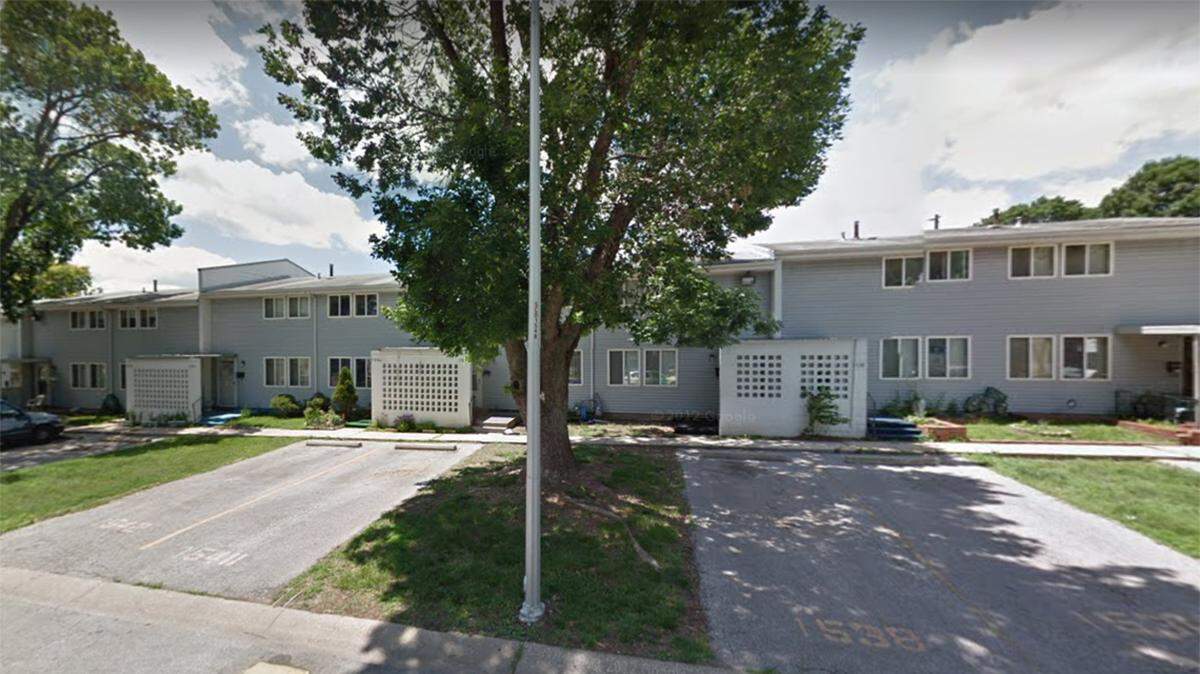
The door may be closing on Parade Park Homes, one of the oldest Black-owned housing cooperatives in the country.
The current conditions of the residential complex near the historic 18th & Vine Jazz District make it, in essence, uninhabitable, according to the U.S. Department of Housing and Urban Development, which owns the $10 million mortgage.
This week, the newly-elected board of directors for Parade Park Homes, Inc. met with local, state and federal officials to discuss the sad reality that preserving the venerable enclave is not feasible.
Built in the early 1960s, the two-story, 510-unit complex became a national model for independent self-governance. But 60 years later, new construction on the site is inevitable. Deferred maintenance has caught up with residents.
Only 247 of the units are occupied. Fire damage is visible in some units. Many dwellings on the premises are beyond repair. Leaky roofs and bad plumbing are chronic problems.
Though the co-op hasn’t missed a mortgage payment, it nevertheless is considered in default due to all the deterioration.
Parade Park residents will not be paid for vacating their homes, members said. The co-op simply will no longer exist, if residents approve its board’s recent resolution to redevelop the area.
You hate to see longtime residents of any area displaced for new developments.
“We’re giving up our independent home ownership but we’re doing it with a view to the future,” resident Archie Williams said this week.
There’s hope for future development on the site. But no one knows what that will really look like.
The complex may be demolished in phases and rebuilt from the ground up, since rehabilitation is no longer an option.
“These are the choices that we’ve created for ourselves,” Parade Park resident Myrtle Bailey said.
Decades of neglect were Parade Park’s ultimate undoing. Members pay a monthly carrying charge meant to cover housing fees and maintenance. For the few residents I spoke to, fees ranged between $600 to $845. Others pay more but many could not afford a monthly increase to remain in Parade Park.
Whatever comes next, will community benefits agreements be in place to ensure developers work with neighborhood partners? Such protections are fairly common in urban redevelopment contracts.
Any project must include mixed-income units and offer senior living options. Retail is a plus.
Down the road, single-family homes must be built to attract young families. Local minority businesses, contractors and developers must play a leading role in the overhaul of the neighborhood.
On Wednesday, the City Council’s finance committee allocated $1.4 million to help close a $14 million funding gap for redevelopment plans initiated by the city.
Funds will help identify and hire an entity to develop the site, Mayor Quinton Lucas said. The full council was expected to vote on the revised ordinance Thursday.
Third District Councilwoman Melissa Robinson sought $4 million in American Rescue Act and HUD Housing Trust Fund money to begin phase one of a redevelopment plan that has yet to be clearly defined.
The city already set aside $600,000 to assure current residents of Parade Park, particularly low-income seniors, find alternative places to live. That’s just a start, I hope, for residents who’ve been stakeholders in this historic neighborhood for decades.
Whatever they do, officials must make certain that vulnerable people now living in Parade Park are not displaced by corporate developers setting prices current residents can’t afford.