
It took journalists way too long to finally start capitalizing the letter B in Black
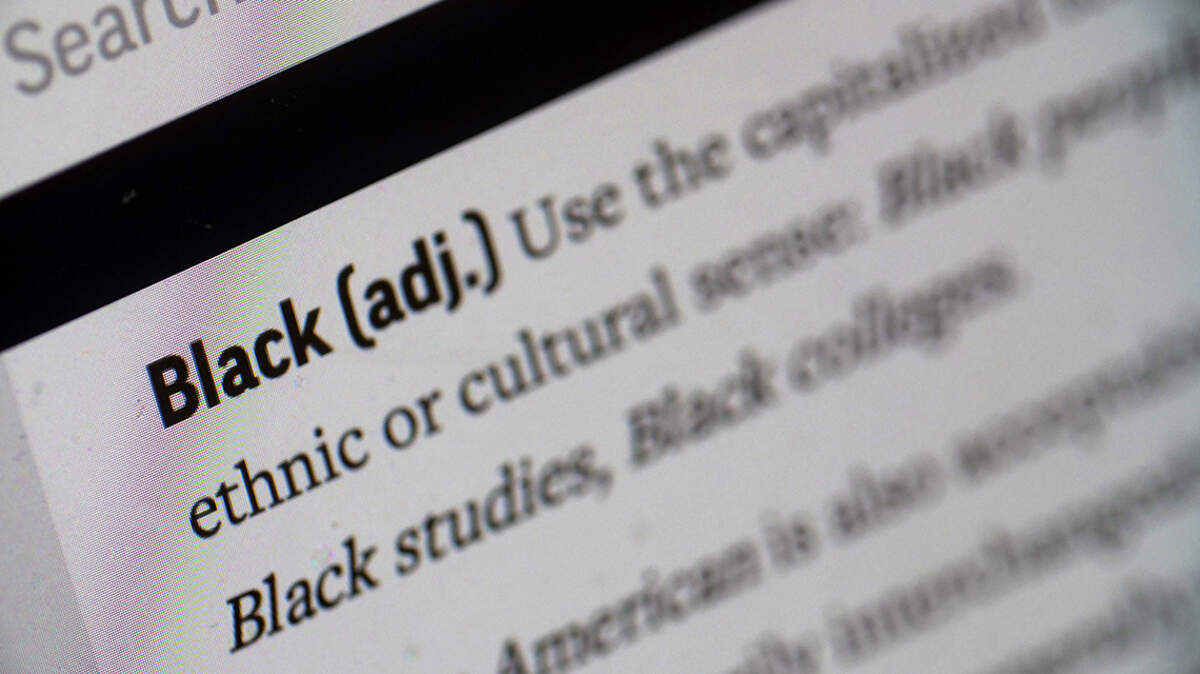
For practically my entire career, when I’ve written about the experiences of Black people I’ve had to do so using a lowercase b.
It never felt right.
But that was the official style in every single newsroom where I have worked, and I had to follow suit. Even if I didn’t, an editor would have just changed it.
Today, though, for the first time ever, I can write about Black people and do so using a capital B.
It may not seem like a big deal, but words matter.
Black journalists, activists and academics around the country have been calling for this small but significant tweak since just after slavery ended.
“We’re just talking about a small piece of respect,” explained Bobbi I. Booker, president of the Pen & Pencil Club here in Philadelphia and a local radio personality, who was among those agitating for the style change.
One of the earliest newspaper editorials on this subject dates to 1878, when Ferdinand Lee Barnett, husband of the legendary journalist Ida B. Wells, wrote in The Chicago Conservator that the refusal to use a capital letter N on the term Negro was deliberately disrespectful.
Decades later, W.E.B. Du Bois and other prominent intellectuals engaged in a letter-writing campaign to persuade publications to do the same. The New York Times refused until 1930, when it relented, calling the move an act of recognition for those who’d spent generations in “the lowercase.”
Even after the word Negro fell out of favor as Black and later African American became our preferred racial designations, the standard at the Associated Press — which many news outlets see as the arbiter of accepted style — was to use a lowercase letter when referring to Black people.
Over the years, various crusaders picked up the call for change almost like relay runners passing a baton. Author Lori L. Tharps did her part in 2014 by publishing a widely cited op-ed in The New York Times calling for the B in Black to be capitalized.
“I really thought that people just didn’t know,” that it had long been a source of contention, said Tharps, who teaches journalism at Temple University. “And so the fact that it took this long for the change to be made is beyond irritating. It’s actually kind of depressing, because it wasn’t that people didn’t know.”
“They were choosing not to take a stand,” she added. “They were choosing not to look at what my argument pointed out — that Black referred to a culture, not a color.”
Earlier this month, Sarah J. Glover, president of the National Association of Black Journalists, grabbed the proverbial baton when she published an open letter to the news media and the AP in New York Amsterdam News, which calls itself “the oldest Black newspaper in the country.” She wrote: “Capitalizing the ‘B’ in Black should become standard use to describe people, culture, art and communities. We already capitalize Asian, Hispanic, African American and Native American.”
Meanwhile, discussions around race increased as journalists grappled with massive protests and other changes in the aftermath of George Floyd’s death at the hands of a Minneapolis police officer.
Instead of blindly following along with the AP, newspapers started breaking ranks. USA Today and its affiliated papers updated its policy earlier this month. Other outlets that have made the change include The Kansas City Star’s parent company McClatchy, The Los Angeles Times, NBC News and MSNBC.
Then, late Friday came word late that the Associated Press would finally change its style to align with Latino, Asian American and Native American. My newspaper sent out an internal memo announcing that it would follow suit.
And just like that, a decades-long stalemate ended.
“This one small letter, as simple as it sounds, carries so much significance,” said Glover, now an executive at NBC News. “And it’s the least that we can do to catch up to the times that we’re living in.”
It should not have taken this long.
This story was originally published June 25, 2020 at 5:00 AM with the headline "It took journalists way too long to finally start capitalizing the letter B in Black."