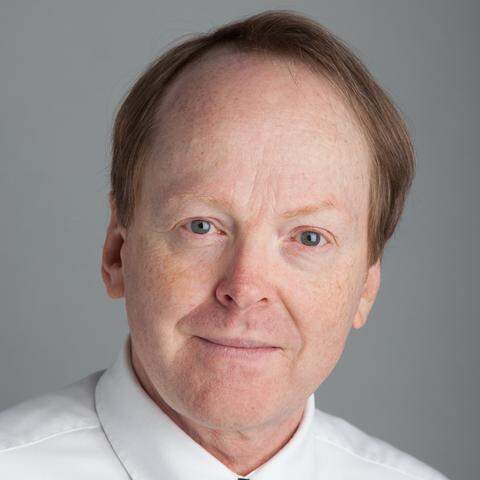
‘I want to be that kind of nurse’: KC hero charged into the eye of the COVID-19 storm
Cassie Champagne saw a hero in her mom, a nurse who volunteered for the gruesome task of identifying the Twin Tower dead after 9/11.
She sees heroes in the everyday exploits of her fellow nurses at Overland Park Regional Medical Center.
But, funny thing, she somehow loses her keen eyesight when that familiar heroic figure passes by in the mirror — even after volunteering to leave her home and risk her health and safety to care for coronavirus victims in New Orleans during that city’s darkest hot-zone days.
Her friends and family see clearly enough, and what they see is one of some 200 noble nurses from the five Kansas City-area HCA hospitals who flew at the end of March straight into New Orleans’ COVID-19 hurricane to tend to the sick and to comfort the dying for 20 days at Tulane Medical Center.
They see a hero in their midst.
“Yes, yes they do,” the 44-year-old married mother of three says with a mix of modest exasperation and appreciation. “I don’t think it’s heroic at all. I think it’s just my job. As soon as the opportunity arose, I volunteered, and next thing I knew, I was on a plane.”
Today, as The Star honors Kansas City’s hometown heroes in the COVID-19 battle, it’s been proved again that true heroes never really accept the mantle — even when they’re featured on national television as Champagne and two others were in a segment featuring the Kansas City nurses who went to New Orleans.
“They are driven by what feels natural to them,” says Kansas State University professor emeritus Charles A. Smith, who’s made a career since 9/11 of studying and nurturing heroism. “To call someone a ‘hero’ is setting them, in their minds, apart from other caring people. It makes them uncomfortable. We may think they are special, and indeed they are, but they don’t consider themselves special. True heroes do not feel like heroes.
“None of the doctors and nurses who are responding to the coronavirus — they’re not going to end up with Carnegie hero medals. But it’s just as courageous, as heroic, as anybody who was given one of those medals.”
The last person a COVID-19 patient might see
Champagne is only human, of course. A bit of apprehension should be expected. “You’re always fearful when you go into the unknown,” she says. Then you hear the term “hot zone,” which is never reassuring.
Still, as much as anyone could, Champagne took it in stride — even as she took her HAZMAT-outfitted self into specially vented rooms that contained one of the most contagious diseases we’ve ever seen. How many of us would have followed in her footsteps under those conditions?
But that’s just getting across the threshold. Then comes administering aid and comfort to the desperately ill, through multiple layers of protective gear and over the drone of the negative-pressure machine that keeps the contagion contained to the room you’re in.
“It’s a kind of ugly death for people that are dying of COVID because it’s a respiratory-related death, and people feel really vulnerable when they can’t breathe,” she says.
Champagne had to use her expressive eyes, her raised voice over the machine’s whir, and her glove-protected touch to express her humanity as best she could — as the last person several dying patients ever saw. Relatives and other loved ones, naturally, could not be there.
Champagne considers it as much a privilege as a burden to have taken their place.
“You have this incredible honor to be invited into that environment with those people.” she says, “because it’s not something that we’re normally invited to be part of, as a stranger, in a room with somebody who’s passing away and with family as they spend those last few precious moments.
“In this situation, you were their family. You’re the only person that they have at that moment. It was kind of special, but it was also very overwhelming, and a heavy burden to bear — to feel like you’re the last person they might see.”
What to say?
“You don’t say anything, a lot of times. You just sit there and hold their hand,” Champagne explains. “Hopefully they can see the compassion in your eyes. Because that’s really all of you they can see, is your eyes.”
New Orleans coronavirus hot zone? More like war zone
Oddly enough, some of the most unexpected moments came not on the coronavirus “positive floor” she worked on, but on the streets of New Orleans. For a time, the city became “The Big Uneasy,” with some passersby recognizing Champagne as a health care provider and giving her a wide berth, sometimes the entire width of the street. Social distancing never felt so bad as it did to an out-of-town nurse risking her life to help out someone else’s city, only to feel like she was radioactive: “That’s a little bit off-putting.”
But the feeling is fleeting. While researchers say heroic types tend to exhibit higher degrees of empathy, stoicism is also a big part of the mix. And Champagne scores perfect on the latter.
“I get in, I do the job, I’ll try to do it very well, and I’m not real emotional about it. You just go about your business. That’s kind of just what nurses have to do. You just kind of have to adapt and overcome,” she says.
After essentially spending three weeks in a war zone, she is back working with the people she considers hometown heroes at Overland Park Regional Medical Center.
“There’s not a single day that goes by on our shift that somebody doesn’t just blow my mind with something they do for a patient or the way they handle a situation,” Champagne says. “I consider myself still a baby nurse, because I’ve been a nurse for less than two years, but I always think, ‘Man, I want to be just like that. I want to be that kind of nurse if I ever get put in that situation.’ Absolutely, I see heroism every day on my floor.”
While Champagne spent much of her married life as a stay-at-home mom and pastor’s wife, she knew from a young age she wanted to be a nurse, after seeing her mother volunteer at Ground Zero following the 2001 terror attacks, and before that at the San Francisco Bay earthquake that rocked live television during the 1989 World Series.
“I always wanted to do that myself. So when the opportunity arose, it was like, ‘Heck yeah, I’m going to do this,’” Champagne says.
Mom, otherwise known as Mary Beth Ridley, certainly wasn’t as stoic this time as when she did her own tour of duty, worriedly going over the precautions Champagne needed to take and checking on her daughter nearly every day by phone.
“It’s different when it’s your daughter. I understand where she’s coming from,” Champagne says.
Moreover, this is a pandemic. Mom has a right to be concerned.
Then again, she’d already seen her daughter in action. In 2012, before Champagne even started nursing school, the two went on a church mission trip to China, where they spent eight-hour shifts together at a critical care nursery and pediatric unit. Even as a volunteer, Ridley says her daughter wowed the kids and health care workers with her compassion and dedication.
When she heard earlier this year that her daughter had volunteered to go to New Orleans, Ridley says she thought, “Of course. That’s so Cassie.”
The nature of heroes in the age of pandemics
The aftermath of 9/11 was as life-changing for Smith, the Kansas State professor, as for Champagne. The valor of first responders and Flight 93 passengers left Smith obsessed with understanding the nature of heroism. He’s devoted websites to the subject, instructed teachers on it, crisscrossed Kansas to educate kids, and published a book about it, “Raising Courageous Kids: Eight Steps to Practical Heroism.”
Heroism, Smith says, is choosing to overcome fear to take a substantive risk, or accept a significant sacrifice, on behalf of another. The thing is, society often does a pretty poor job of recognizing and rewarding real heroism, especially the everyday folks such as health care professionals, instead talking about such things as athletic achievements being heroic.
“I think we’re looking at glitter, not the gold,” Smith says about idolizing sports figures. “The gold is that nurse, that doctor, in the ER working over that patient who’s got the virus. I mean, that’s gold.”
Champagne’s friends and neighbors know gold when they see it.
“I randomly get cards on the front porch, and gifts and things like that,” she says. “Somebody sent me a new pair of tennis shoes with a sweet card saying ‘thank you for being a hero.’ But honestly, I don’t think me going was any more heroic than all the nurses who get up every single day all over America and just keep going to the job. There are risks there, too. COVID patients show up here, too.
“I just got singled out because I went to a hot spot.”
Is that all?
Well, yes. And that’s more than enough for most of us.