New archbishop of Kansas City: ‘I strive to be a pastor, not a politician’ | Opinion
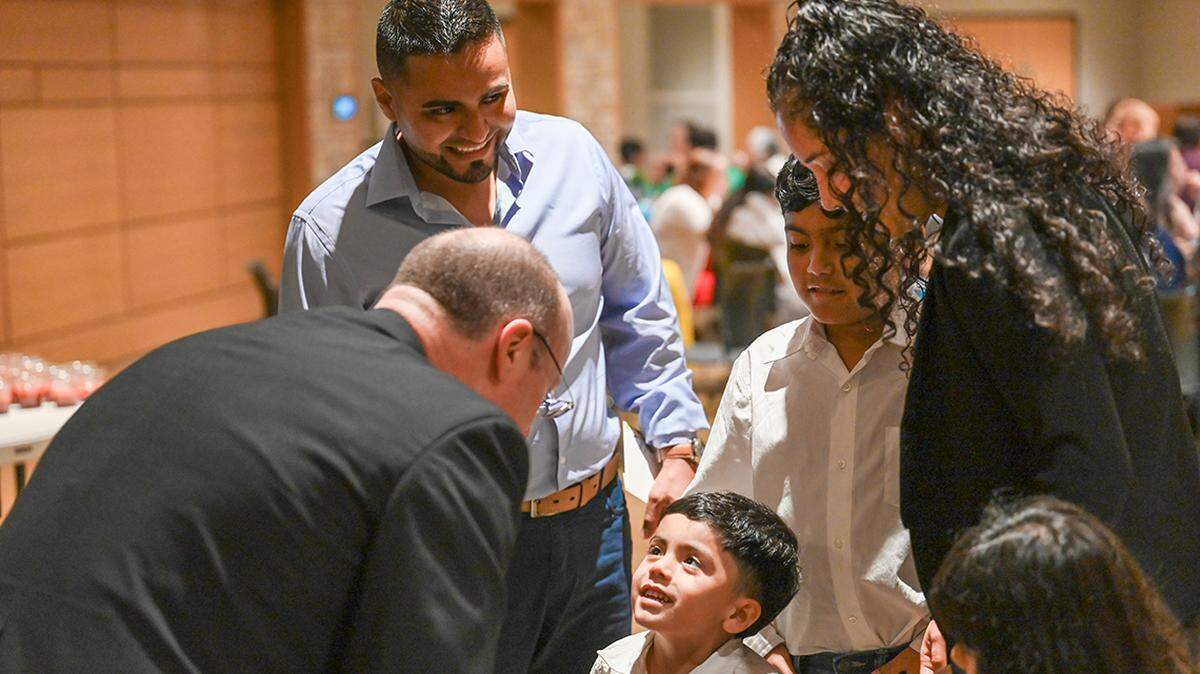
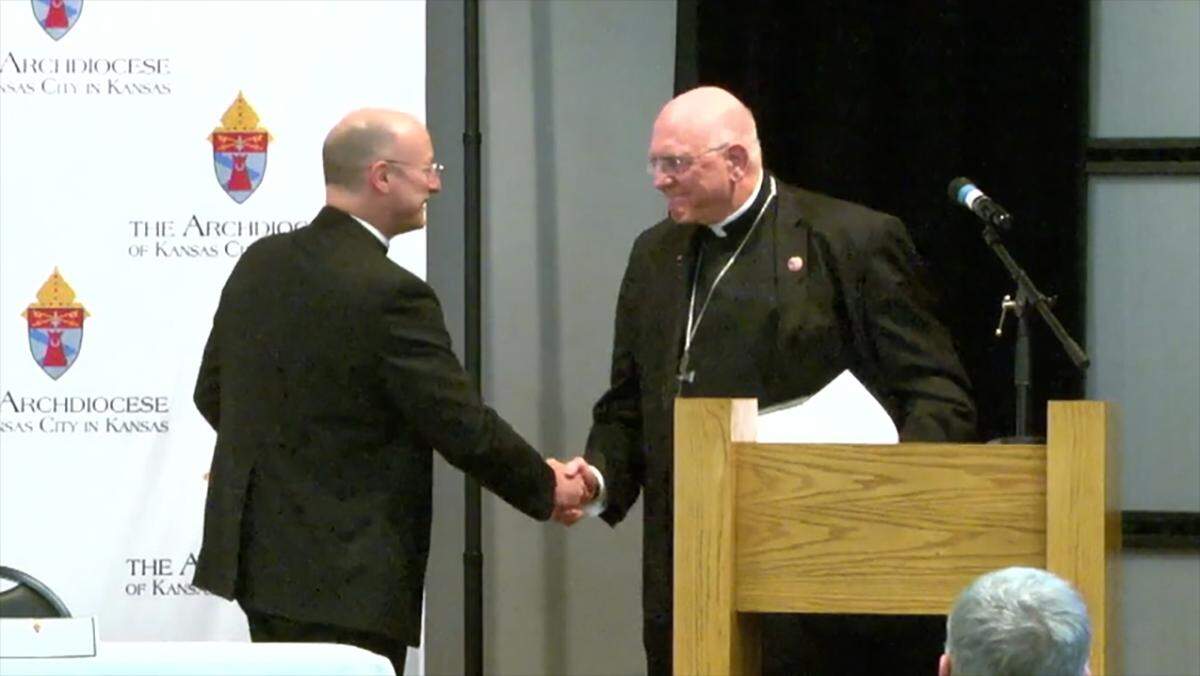
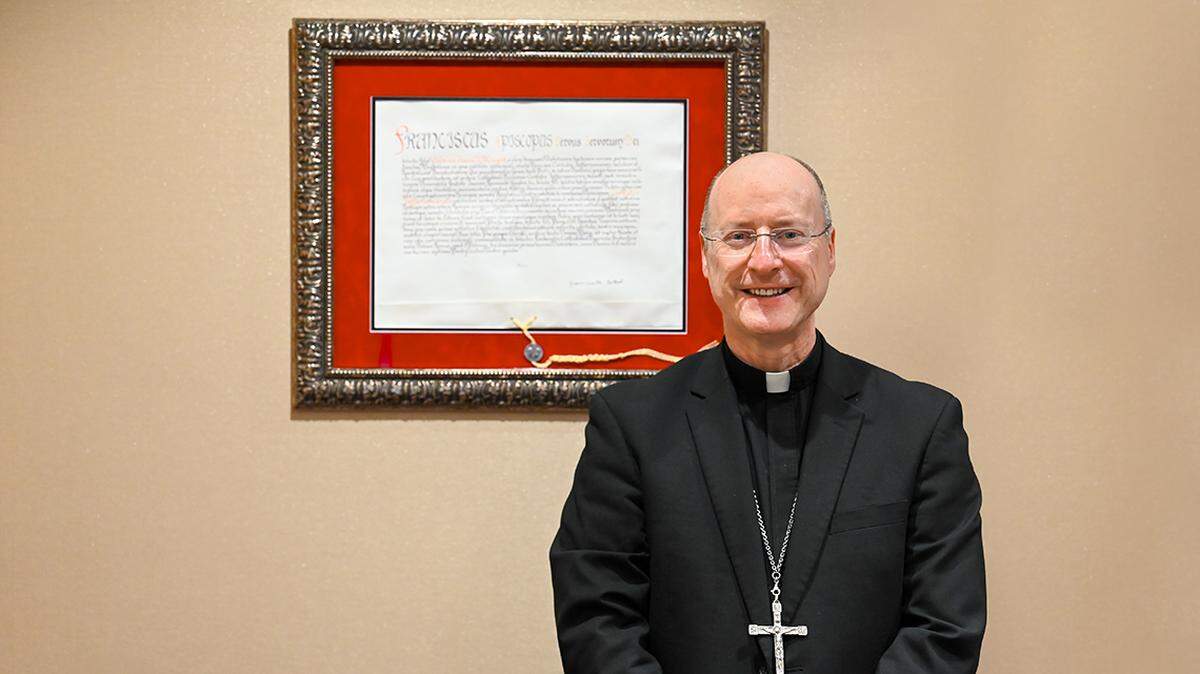
At the news conference announcing that Pope Francis had appointed Bishop Shawn McKnight to succeed Archbishop Joseph F. Naumann in leading the Archdiocese of Kansas City in Kansas, a reporter essentially came right out and asked McKnight if he would be wearing a blue jersey or a red one.
“It’s no secret Francis has set the church on a very progressive path,” the reporter said. “I’d like to inquire how you would interpret the path he has foreseen for the church.” (Here, the official video camera actually cut, almost Academy Awards style, to an unsmiling Naumann, a favorite of conservatives, who I think it is fair to say has not been among those who have viewed that path with particular enthusiasm.)
Granted, the reporter went on, Francis “is perhaps near the end of his time as the leader,” but “what tone would you like to set?” McKnight, currently the bishop in Jefferson City, did not fully accept the premise of the question, but also did not pretend that this was crazy talk.
“Progressive, liberal, conservative, whatever – I don’t know if that accurately captures the Holy Father Pope Francis. But I do see what you’re talking about in terms of moving the church forward, especially in the vision of the Second Vatican Council,” the 1960s renewal that gave the laity more responsibility, called for more of a focus on social justice and more openness towards other faiths, apologizing for centuries of antisemitism.
Sixty years after it ended, the council is embraced by almost all Catholics in theory, and yet remains a dividing line, too, because some traditionalists still tend to see it as having been misinterpreted in a way that led to sexual laxity, while some progressive Catholics still lament that it was never more fully implemented.
The man arrested in the recent murder of Father Arul Carasala in Seneca, Kansas, may have taken his schismatic opposition to it to the absolute extreme, after writing letters to the editor of the local newspaper that ranted about Jews, the move away from the Latin Mass, and “the fake, diabolical Vatican II church.”
After sitting down for more than an hour with McKnight in the chancery in Jefferson City last week, I came away thinking he’s not at all the lefty activist that some in his new diocese fear and others hope for, but will bring enormous change all the same.
Of Trump’s mass deportations, he said, “I think it’s all unnecessary. There’s an unnecessary harshness and an unnecessary fear. That’s not to say the government doesn’t have a right to protect her citizens; she’s got an obligation to do so. I have no problem with the deportation of violent criminals. But all of this other stuff isn’t necessary for that.”
How McKnight is like Pope Francis
In the news conference introducing him, McKnight went on to explain how Francis is also moving the church forward in pushing to make it more “synodal,” which means pulling church governance into a more consultative process. And yes, “some could be trying to use this for their own agenda,” he said, “but it’s really about us in leadership paying attention to those who have to live under the rules that we make, if you will.”
Francis has a keen understanding of the human dimension of the church, McKnight said, and gets that “human needs have to be tended to.” In his own experience as a parish priest and bishop, he said he too has learned “the value of listening to people, and letting that factor into how you move forward. … Sometimes the decisions aren’t easily received, but the people receive them much better if they genuinely feel they have been heard.”
Those who’ve known McKnight over the years say he was doing that long before Francis acquainted most of the rest of us with the concept of synodality. And that may be the biggest difference between 56-year-old McKnight, the Wichita native who will be installed as archbishop on May 27, and Naumann, who has led the archdiocese for the last 20 years and turned 75 last June.
‘Not a lot of people I can send a survivor to’
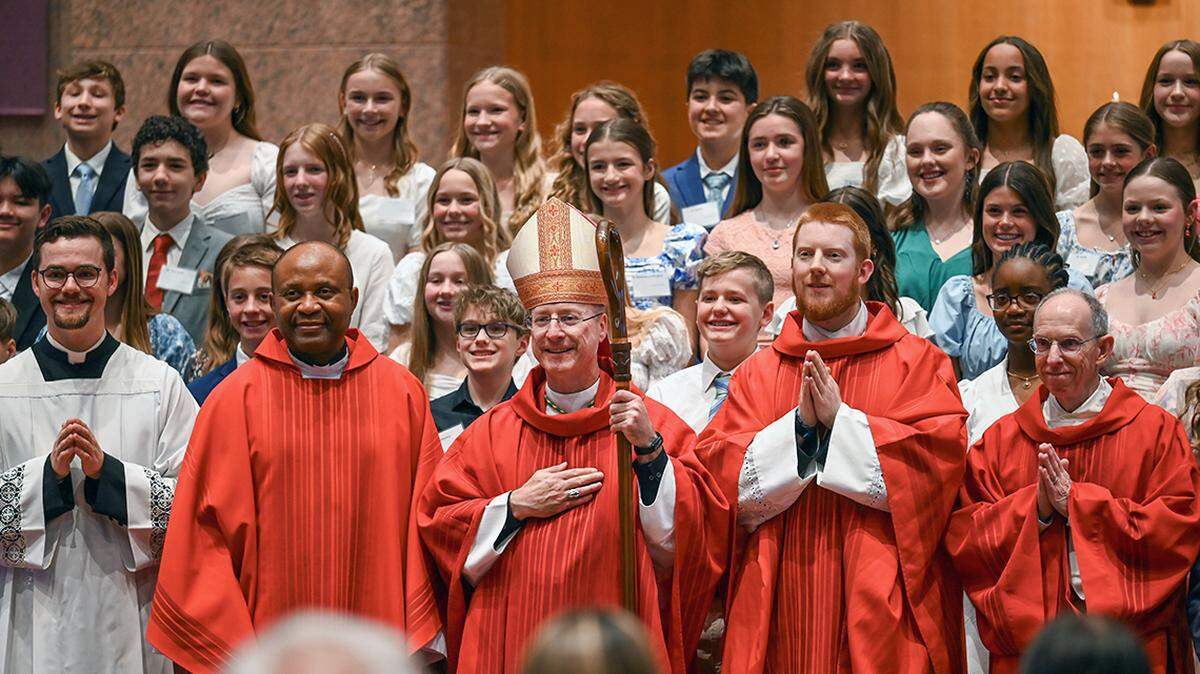
McKnight is “open to constructive criticism, and if there’s a problem, he doesn’t let it fester,” said Patrick Hanrahan, the former president of the United Way of the Plains, who met him early in his assignment as pastor of the Church of the Magdalen in Wichita, where the first thing he did was hold a series of long listening sessions, children included. A man of God but also a man of the people, “he wants to know his people,” Hanrahan said, and works harder than any priest he’s ever seen to take care of all of them.
Teresa Pitt Green, a clergy abuse survivor and cofounder of Spirit Fire, a fellowship of survivors that she says tries to get restorative justice for those who want to reconnect with their faith safely — “and that’s not for everybody” — told me that McKnight is one of the few bishops she feels completely comfortable sending victims to talk to. That’s because of his “simple moral clarity” and belief that “survivors deserve special care from the church.”
“All I can say is, I would call it nourishing. He’s a very serious person, so he’ll listen a lot, and he doesn’t spiritualize abuse. There’s not a lot of people I can send a survivor to and know that they might not come back to the church, but they won’t be hurt” inadvertently by remarks gone awry. “He’s a leader in this way.”
Father Dan Griffith, founding director of the Initiative on Restorative Justice and Healing at the University of St. Thomas School of Law in Minneapolis, said he got to know McKnight when he was hosting a national consultation on clergy abuse. He asked a canon lawyer he knows which younger bishops stood out in calling the church to greater integrity, “and she said at the top of her list was Bishop McKnight.”
In the years since then, he’s found that to be true, Griffith said. “He’s forthright, a man of courage with good emotional intelligence. He’s committed to the work of restorative justice and healing, particularly for those who are marginalized and those who have been hurt by the church. He stands out among his brother bishops.”
Archbishop Naumann’s father, friend murdered
Archbishop Naumann could not have been more gracious in introducing his successor at the news conference. Seeing him crying, and then apologizing for crying — “We of German descent don’t like to do it” — reminded me of my own solid yet easily moved German father and grandfather. It reminded me, too, of the things I appreciate about Naumann, like his steadfast support for Donnelly College in Kansas City, Kansas, where many are the first in their families to go to college.
When I left the church in heartbreak for a time after the abuse scandal involving the disgraced, defrocked and now deceased former Cardinal Ted McCarrick, and wrote about it in USA Today, people from all over the country wrote to inform me that I was going to hell. Some sent bibles, underlining the passages I most needed to read, and a fellow Notre Dame grad urged me to surrender my diploma. Naumann, however, reached out and met with me. Not for an interview, but, I will always believe and appreciate, out of a shepherd’s care for one of the sheep making a run for it.
Naumann has said that he may never have been ordained if other priests had not stepped in to help his family after his father was murdered while his mother was pregnant with him. And now he ends his time as archbishop in another season of tragedy, after the fatal shooting of his friend Father Carasala.
A recent editorial in the National Catholic Register praised him as someone who “has played a pro-life leadership role for more than 40 years. … He has consistently called for the end of the death penalty, a position made more compelling by his own personal story, and criticized the Trump administration for resuming federal executions in 2019.”
‘Torpedoed’ Kansas Medicaid expansion
Naumann has also done harm, though, and not only in his early support for Donald Trump’s mass deportations. Jim Denning, the former Republican Kansas Senate leader, told the Kansas Oral History Project that in 2020, Naumann “basically stopped Medicaid expansion. … He single-handedly torpedoed the bill because he said, ‘You can’t vote for Medicaid expansion until the abortion amendment passes with the public.’ So he killed it. It never came out of committee.”
Parishioners at Holy Trinity Catholic Church in Lenexa were beside themselves when he assigned a previously accused priest there last year, though the DA in Topeka had declined to file charges and the church-appointed review board had not substantiated the claim, either.
Some in the parish were even more upset after Naumann met with them: “You’re rolling your eyes!” one man shouted during the meeting. Past victims of abuse at Bishop Miege High School continue to speak out against the hiring and ongoing support for the president of Bishop Miege High School, who was accused in Arizona decades ago. A civil suit against him and two priests was settled in 2005, and that case, too, never went to court.
‘A pastor, not a politician’
When I sat down with McKnight, I asked how he thinks Kansas Catholics will most see him as different from Naumann. “We’re going to be different personalities. I can’t fill his shoes, and want to honor and respect what he has done.”
McKnight definitely made a statement by beginning his remarks at the news conference in addressing Spanish-speaking Catholics in their language: “I hope you feel welcome in your parish communities and find them to be a sanctuary of mercy where, in the words of our Holy Father, ‘the thirsty come to drink in the midst of their journey.’” He did that, he told me, because he wanted to emphasize that “our churches are to be safe environments … places they instinctively know they can go to get help.”
He does not, however, see himself as a political actor. “I should strive to be a pastor, not a politician. We have to be more discerning, and use more discretion in how we use our power and authority as bishops. We should be able to talk to one another and not condemn one another, and that’s not just a problem with conservatives. That’s there on the left, too.”
Of course, he said, the Gospel has political consequences, but that’s really the purview of the laity. “Because I’m a pastor, I want everyone to listen to me. And we have to be careful about allowing ourselves to be reduced down to one issue.”
‘I’ve loved all of the popes’
One of his mentors in seminary at the Pontifical College Josephinum in Columbus, Ohio was his rector, now Cardinal Blase Cupich of Chicago, considered one of the more progressive prelates in the country.
But when I asked if what McKnight said about Pope Francis and politics also describes how he sees himself, he said no. “I’m pretty much moderate, firmly in the center. It’s tiresome that those on the far left and the far right are just tearing us apart.”
When I noted that he’d mentioned Francis many times in the news conference, he said, “I’ve loved all of the popes that I’ve had. You can’t choose whether you like a pope or not; that just is not Catholic.” Of some of the vitriol aimed at Francis, he said, “I don’t understand that on the right, the language and the behavior that I see sometimes that’s just not truly Catholic” vis-à-vis the Holy Father.
One thing he and Naumann have in common, however, is having suffered the early loss of their own fathers. McKnight’s dad, grandfather and uncle were all killed in a boating accident when he was just 18 months old, and his mother struggled with her faith for a time after that.
When she remarried and went on to have seven more children, including one with special needs, Shawn took his responsibilities as the oldest seriously, his now deceased mother Mary Schaffer told a reporter some years ago. “I think it prepared him to be the person he is,” she said, strong but always gentle.
He was majoring in biochemistry at the University of Dallas and on track to become a doctor when he went on a chaplain’s retreat that he’d really only signed up for to catch up on sleep and homework before hurrying back to his girlfriend. Once he started thinking about the priesthood, though, he began to feel called to it, and soon was calling home to tell his mom that there had been a change of plan.
A quail and pheasant hunter, he enjoys fly fishing and hates moving. Now, as he gets ready to pack up for Kansas City, what sounds to me like his most boiled down goal is as simple as it is monumental: “We should conquer evil with good.” No one of any stripe can argue with that.
This story was originally published April 20, 2025 at 5:09 AM.