Kansas nuns have moved past controversy over comments by Chiefs’ Harrison Butker | Opinion

For weeks after the Benedictine sisters of Mount St. Scholastica responded to Chiefs placekicker Harrison Butker’s Benedictine College commencement address comment that life “truly begins” for women after they marry and give birth, both nasty and nice messages and calls poured in.
“People used profanities to the switchboard! And then they’d say, ‘I went 12 years to Catholic school,’” Sister Judith Sutera told me a full month later. “Twelve years and they didn’t tell you not to behave like this? One lady called and said, ‘Well, it doesn’t matter because you’re all old and you’re going to die soon.’ We’re proud of what we did, but the number of hateful messages saddens me.”
The statement the sisters put out was not incendiary: “Our community has taught young women and men not just how to be ‘homemakers’ in a limited sense,” it said, “but rather how to make a Gospel-centered, compassionate home within themselves where they can welcome others as Christ, empowering them to be the best versions of themselves.” Do those sound like fighting words to you?
Anyone who would curse at these women is probably not looking for more information about who they are and what they do, because then they wouldn’t be mad anymore. But the statement from the sisters did make me want to know more about them and their relationship with Benedictine College, which they co-founded, so I paid them a visit this month.
That they are quite an accomplished bunch did not surprise me: Sister Mary Rardin, a Navy vet (and former atheist, she notes) is a family physician who until recently ran a rural hospital. For years, she treated indigent Kansas Citians at Swope Health, back when programs for AIDS patients were new.
Sister Elaine Fischer, a bio-chem major and former firefighter now in charge of maintenance, is the community’s beekeeper, pesticide-free farmer and furniture maker. Somehow, she makes the 53 acres that surround the monastery look as though she has a vast staff instead of the part-time help of two other sisters. She still helps out as an EMT in Atchison as needed, too, “because if people fall, I know how to get them up.” She describes her fellow Benedictines as “people with a lot of different gifts trying to seek God together.”
These 80-some women, whose order arrived in Atchison during the Civil War, live in a monastery — once a mansion, the Price Villa —that they bought in 1877 and have been building onto ever since. It also now houses their 44-bed nursing home.
Their group includes a potter, a baker, a Scripture scholar and a former concert violinist who just got a master’s degree in religion and the environment from the University of the South. Nobody in the monastery does just one job.
When they stopped wearing habits after Vatican II, they were really returning to their roots, as their order predates the habit: Saint Benedict says right in the rule that they live by to wear clothing that is simple, appropriate to the work and something you can give to the poor.
“When we wore a habit, we were so separated,” says Sister Therese Elias, who taught world religions at Donnelly College in Kansas City, Kansas, which the order also co-founded. Now, among other things, she leads retreats on the mystics.
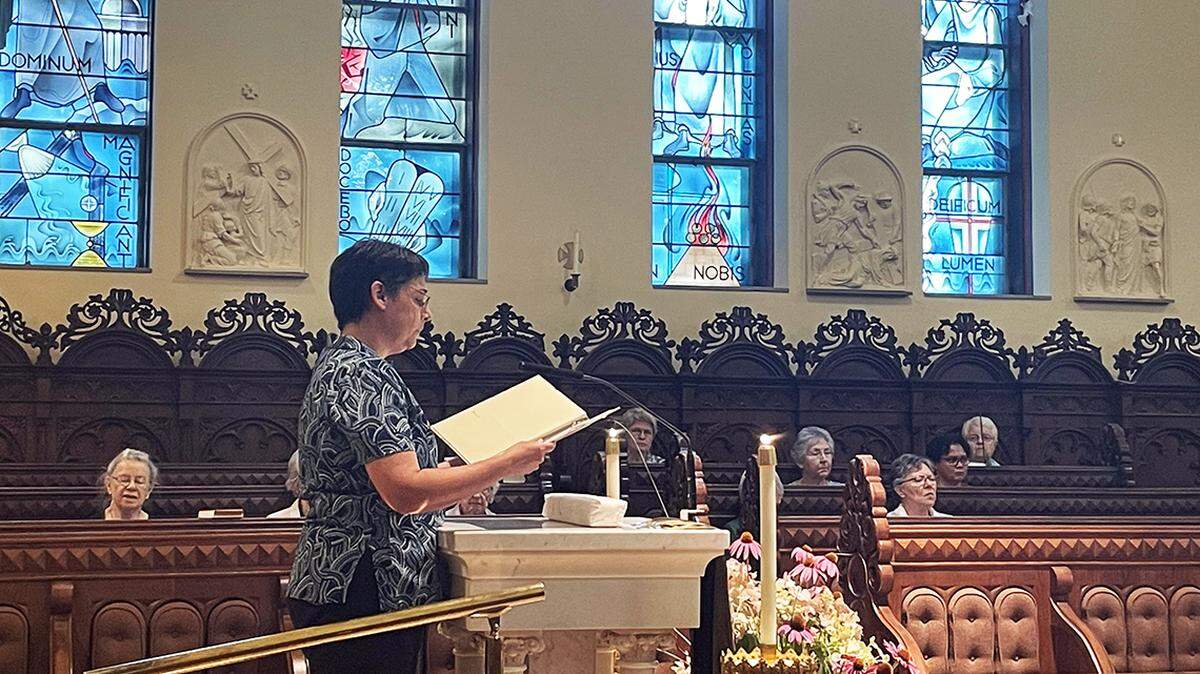
The important work these women do is not at the very center of their lives, though. “This is why we exist,” Sister Judith said on our way to 7 a.m. Mass in the chapel where the sisters meet three times a day.
“The work we do is secondary to prayer and community — meditation, seeking God, living in peace with other people and with the Earth. The chanting of the sacred word is what settles us in for the day,” following “the natural rhythms of day and night.”
These women don’t even believe in camps or sides
To even try and wedge a worldview bigger than the sky into some tiny little red-versus-blue box is a mistake. And I do think both some of those who agreed and who disagreed with the sisters during the back-and-forth over Butker’s remarks may have misunderstood why they spoke out: They felt they had to make their disagreement clear.
But are these women who chant in Latin somehow bucking tradition? Hardly; the Rule of Saint Benedict that guides their lives goes back 15 centuries.
Are they fundamentally at odds with those who run the college across town that they co-founded? Again, no: Some sisters work there, and Benedictine students who are their “prayer partners” come to them for guidance that often begins lifelong relationships. The sisters feel that the college, too, was caricatured in recent news coverage. To the extent that there are tensions, they are just not a major focus.
And to see these women living by precepts of ancient wisdom as culture warriors in any usual sense does them a real disservice. Of course they have political views, like everyone, but don’t even believe in camps, sides or anything that divides people. “We care about everybody,” Sister Judith said. “That’s the main thing.”
Maybe the best way I can convey what I took in during my 24 hours with the sisters in Atchison is that everywhere I looked, I saw and felt joy, from women not at all unacquainted with the world’s suffering.
‘It was a joy; it wasn’t a job’
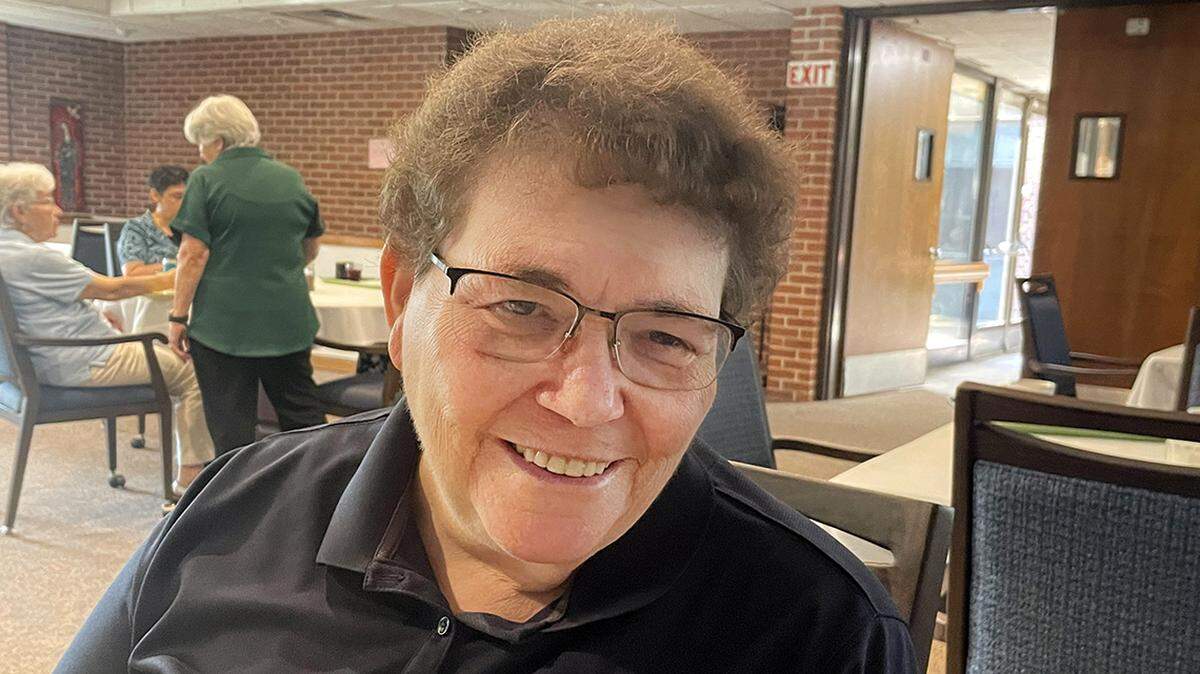
“I always knew I had the community with me,” Sister Chris Kean said of her ministry as a mortician — embalming bodies but also helping families grieve. Women here are not only encouraged to name and develop their gifts, but to keep right on doing so, and Kean feels she found the work she was supposed to be doing all along in her 50s. “It was a joy; it wasn’t a job. I got up every day doing what God intended me to do. I just blossomed.”
“My job is a joyous job,” said Sister Carol Ann Petersen, who runs the group’s on-site retreat center, the Sophia Center, and before that was director of the Keeler Women’s Center in Kansas City, Kansas, which offers a bunch of programs for low-income women. “God is so big, and we let God be so little. We see God reflected in so many people — anybody is welcome,” at both the retreat center and Keeler.
Even the story making the rounds the day I was there was a happy one, about a sister of one of their deceased sisters who to her own surprise was marrying for the first time at age 81.
And even after so brief a time with the sisters, I left a little calmer during what certainly feels like a particularly harrowing time in our world. I will definitely be going back without my notebook.

This story was originally published July 18, 2024 at 5:07 AM.