After breast cancer, Dr. Susan Love came with me to every medical appointment | Opinion
After I was diagnosed with breast cancer in my early 40s, Dr. Susan Love came with me to every medical appointment.
Which was fortunate, since her 700-page, here’s-the-deal “Dr. Susan Love’s Breast Book,“ first released in 1990, had already told me things that none of the guys in golfing ties ever did.
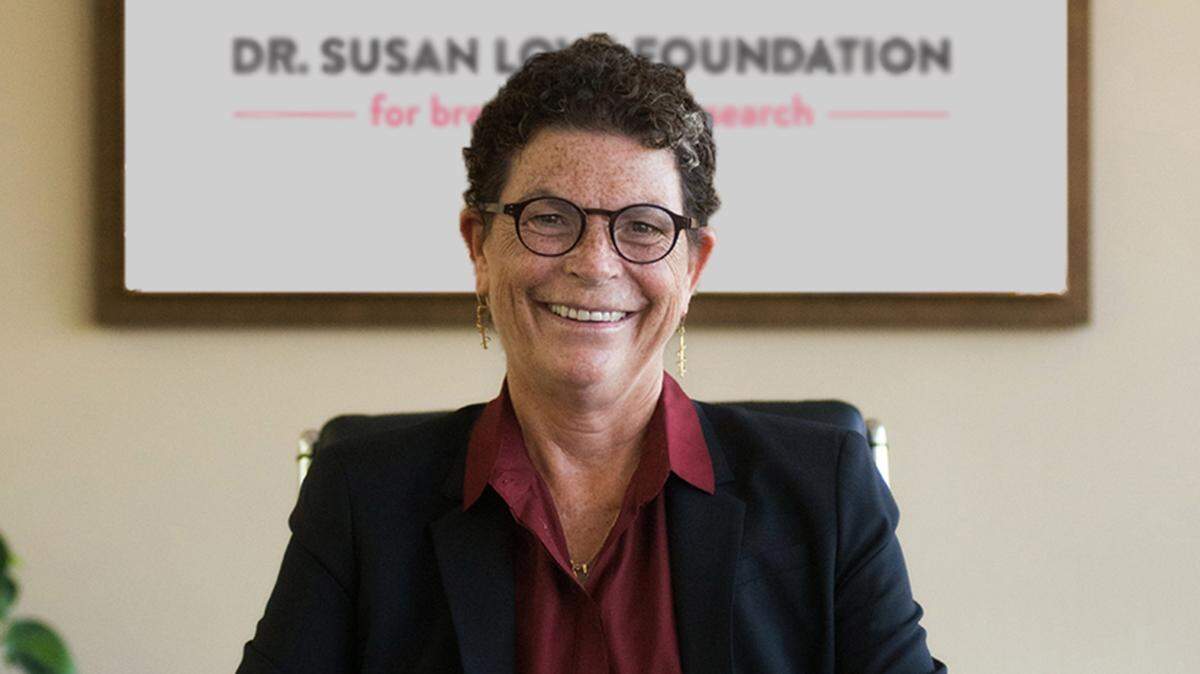
Dr. Love died this week, at 75, and her obituary in The New York Times said this: “Ubiquitous, energetic, forthright (some critics said brash) and at times controversial, Dr. Love, it was generally agreed, helped reshape both the doctor’s role and the patient’s with respect to the treatment of breast cancer, which kills more than 43,000 women in the United States annually.”
Brash, did somebody say? Thank God she was, because some of the “top” doctors I saw had not kept up on innovations in their own field. Most did not seem to like answering questions. And all wildly misrepresented what happens after surgery, which they made sound so easy. Probably because it was, for them. They did not want Susan Love in the room, even in spirit.
Though I never met or even spoke to the in-my-book wonderful Dr. Love, whose book with Karen Lindsey has sold half a million copies, it was she who presented me with my actual choices.
The second time I had breast cancer, and needed a bilateral mastectomy, she helped me decide on a form of reconstruction that basically relocates tissue from the abdomen to the chest. My doctors in DC recommended a form of that procedure that leaves the tissue connected to its original blood source in the groin instead of cutting the tissue free and reattaching it to a new blood source in the armpit. They recommended it because they knew how to do it, and warned that if I went out of town for treatment, I might find it hard it to find follow-up care when I came back.
I went out of town anyway, because women who’ve had the older procedure often feel like they’re being tugged on internally, which they are. It was Dr. Love who led me to that information, and who encouraged me to fight to keep my abdominal muscle, which my doctors in DC told me I wouldn’t need unless I was planning on doing some mountain climbing hahaha. (No, but I did plan to lift my then-small children, and maybe even put my own carry-on in the overhead bin.) Doctors wanted to add the muscle, too, along with the tissue — essentially to give me bigger boobs. But I thought needed the muscle more than I needed volume.
Dr. Love also prepared me for what I was really going to feel like after 12 1/2 hours on the table for mastectomy and reconstructive muscle-sparing “free flap” surgery at UCLA, then one of the only places in the country where that procedure was regularly performed.
From page 459 of her book: “Whether you’ve had your surgery at a facility like the UCLA center or not, you’ll come out of anesthesia feeling like a Mack truck just hit you. You’ve had hours of surgery on both your breast and your abdomen, back or buttocks. There’s continuous pain medication you can get through an IV with a button you can press so that you can control the timing.”
Dr. Love had taught at UCLA’s and at Harvard’s medical schools, and had founded and directed the UCLA Breast Center, now known as the Revlon/UCLA Breast Center.
It was from her that I knew that the nausea and the catheter and the drains I’d have to deal with during my five days in UCLA’s ICU would be followed by a good (bad) month of recuperation, in my case in my sister’s guest room in LA, since I couldn’t travel home to DC right away. From her, too, I knew that all this was “certainly an ordeal to go through” but one that’s “usually worth it.”
She was right about all of that, just as she was right to have been skeptical about the once promiscuously prescribed postmenopausal hormone replacement therapy, which was later found to increase the risk of breast cancer, heart disease and strokes.
I hate that Dr. Love died too young, and that she was taken by her enemy cancer, a recurrence of leukemia. What she did with her life, though, mattered to the millions of us who took her with us to our doctors’ offices.
This story was originally published July 6, 2023 at 9:41 AM.