How well KC students read is about environment and access to books, not race | Opinion
Data matters, and so do the words we use to explain what the data means. I mention this because a recent report that found gaps in the reading levels among Kansas City students seemed by some to conclude that Black children here can’t read as well as white ones.
All things equal, that’s not true. And that’s not what the data intended to say.
Educational experts have been looking at reading gaps for years. “It is not a Black and brown issue — it is a national issue,” said Robin Henderson, chief program officer at SchoolSmart KC, which commissioned the data for its annual data summit last month.
SchoolSmart was presenting data to make sure business groups, philanthropists, educators and education advocates are aware of literacy gaps as well as other educational challenges, because “you can’t fix what you don’t know is a problem,” Henderson said. She wants to see the problems fixed.
“There was no commissioned report saying Black kids can’t read,” she said. “Because that’s not true.”
Let me add that low reading levels in Kansas City are not a new concern. In 2011, after learning that only 33.8% of Kansas City’s third grade students were reading at grade level, then-Mayor Sly James launched a community-wide effort — Turn The Page KC — to raise the reading levels of all children to grade level by third grade.
James told me several years ago that he’d learned that third grade is a critical point in education where children transition from “learning to read” to “reading to learn.”
And that means if a child is lagging behind in reading, by the end of third grade, it hampers learning across the board as they matriculate through school.
Structural, not biological
Margaret McNamara, who taught in Washington, D.C. during the 1960s, knew this in 1966 when she launched Reading is Fundamental, or RIF, the oldest and still largest nonprofit children’s literacy organization in the United States. Its focus, similar to Turn The Page KC, is equipping children and families in underserved communities with literacy resources.
After talking this week with the University of Missouri-Kansas City researchers who collected the most recent data here, and with Henderson, it became clear to me that the intent behind its collection was to help Kansas City zero in on ways to improve literacy among all children in the city’s public education system.
It was not meant to suggest that children from any particular ethnic group don’t have the wherewithal to read as well as children from any other ethnic group. In fact, it wasn’t about ethnicity at all.
The problem is structural and not biological, one education researcher told me. And, she said, to imply otherwise is irresponsible.
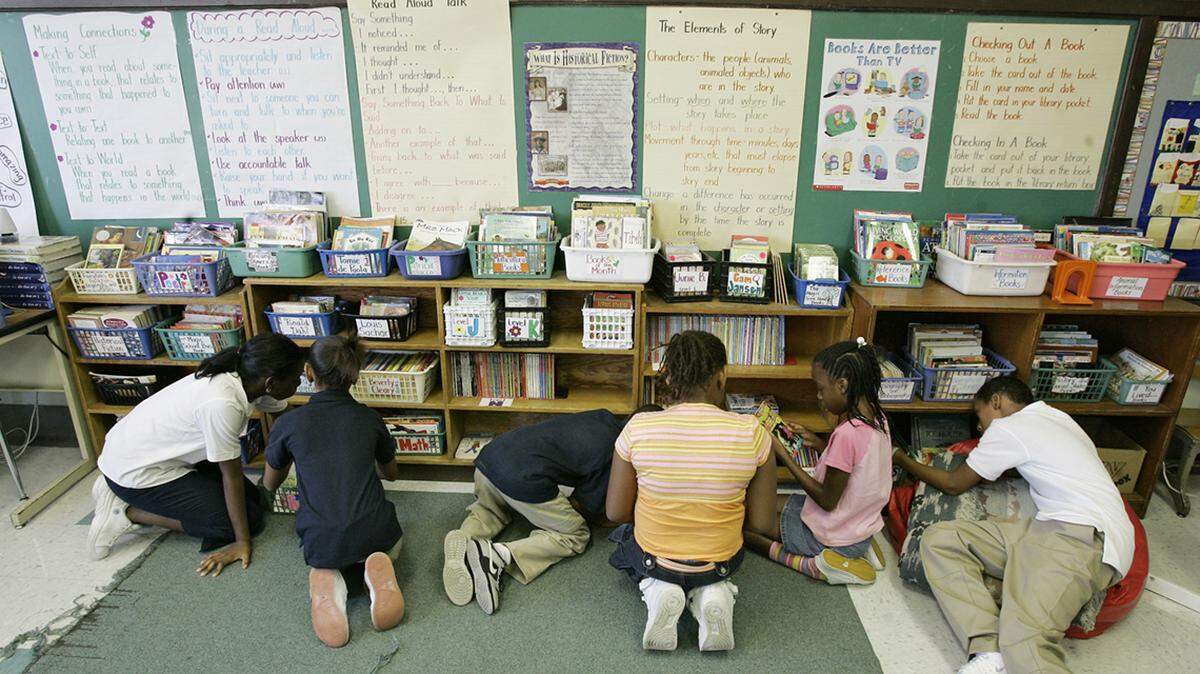
Economics, the education level of parents, language barriers, access to education resources and where and how a child lives all play a role in reading and, therefore, academic outcomes.
So if a child is being raised in a household where both parents are working more than one job to make ends meet and aren’t home talking with their kid, even before the child is at an age where talking is expected, that is likely to limit the child’s language skills.
If no one is reading to the child, that also hurts. By the time the child enters school, they are starting behind others who have had exposure to language and reading. It just so happens that many of the children in Kansas City and elsewhere who have the least access also happen to be children of color.
Let’s not blame our children, their parents or the teachers for the gap, but rather look at the systemic issues — which often revolved around race — that led us here.
Numbers tell only part of the story
Henderson said that the demographic breakdown of the data was only a small part of the data presented at the summit.
Looking at state standardized test scores from 17 Kansas City public school districts, including charter schools, researchers found that only 27% of all students in third grade through high school read at a level that is proficient or advanced, compared to 45% statewide. When broken down by race, they found only 23% of Black students read at a proficient or better level, while 61% of white students were at that level.
Educators have known for years that the learning gap is not biological. As early as 1998, a Brookings study found that “racial differences in test performance are largely if not entirely environmental in origin.”
Researchers told me they also collected data on math scores, absences, homelessness, student mobility and more. The data was broken down into categories, including race and gender, so that public school advocates and community and funding groups could take a close look, determine where and how they could help, and then fine-tune a problem-solving approach. The data was a conversation catalyst.
Henderson said the goal is for SchoolSmart to lead in pulling together people with means and a shared idea that every child, regardless of where they live, or the income and education level of their parents, should have access to early childhood reading resources.
“If every elementary school student had the same set of resources, we could affect meaningful system change,” Henderson said. That takes funding and years of consistent work.
Making more of the racial disparities than the overall low reading levels needing to be addressed runs the risk of undermining the citywide wraparound service effort that groups like SchoolSmart KC have been trying to ignite.