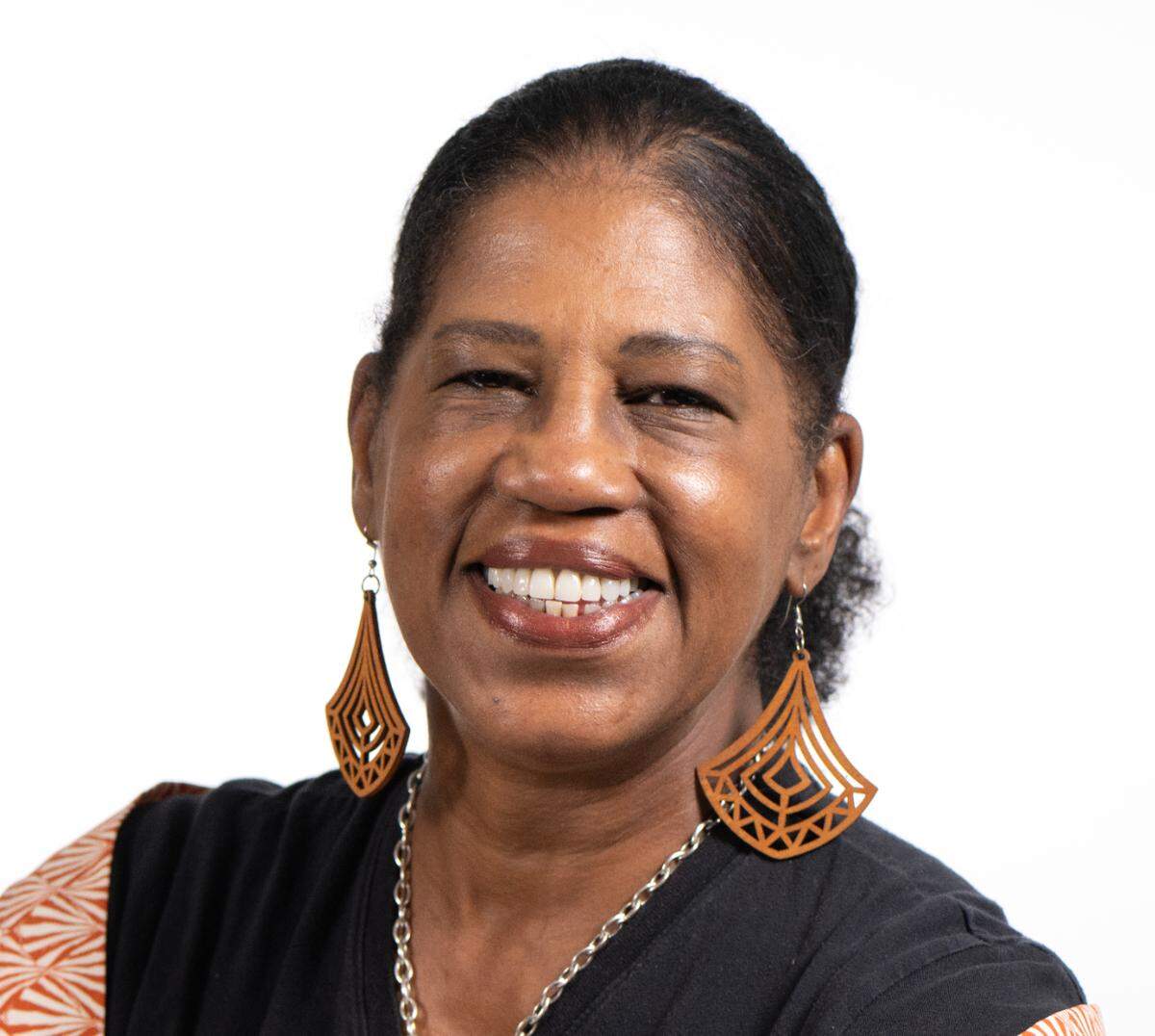
Leading Kansas City’s Urban League was CEO Gwen Grant’s career and her calling | Opinion
I’ll never forget the day I met Gwendolyn Grant. She was in front of a room full of civic and education leaders and a row of reporters with either a camera or a notebook in their hands.
Grant — a tall Black woman, impeccably dressed with a head crowned by a short, perfectly cropped Afro — stepped up to the podium. In no uncertain terms, she defended the Kansas City Public School District against local efforts to force a state takeover. The year was 2000.
I would bet, if I did that sort of thing, that there wasn’t a person in that room — whether they agreed with her position or not — who wasn’t hanging on her every word. I certainly was. I remember thinking that this woman is a force to be reckoned with. Impossible to ignore.
I didn’t know it then, but that fight in favor of keeping the besieged KCPS district under the governance of its local school board was the first major public battle Grant had taken on, and eventually won, as president and CEO of the Urban League of Greater Kansas City.
On Wednesday, Grant announced that after 25 years at the helm of the civil rights organization, she is retiring. She will remain in her leadership position until March 2027, when a successor is named. Good leaders, Grant said, prepare their next in line.
Grant’s pick for her job is Kansas City Councilwoman Melissa Robinson, who has been working at the Urban League for more than a year. Recently she’s been named president and chief operating officer, and Grant is showing her the ropes for how to run a civil rights organization.
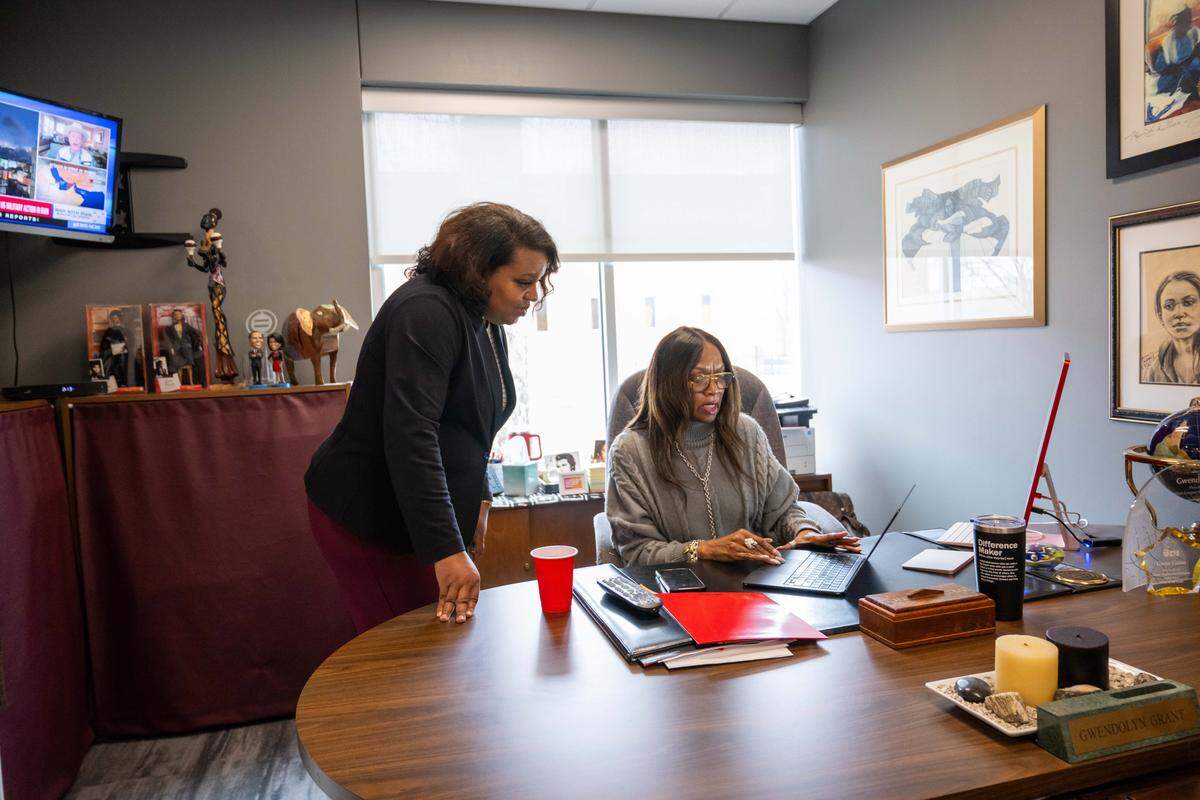
If you’ve been paying attention, you know there isn’t anything that happens in Kansas City that threatens the rights or quality of life for Black and brown residents that Grants’ dissenting voice is not a part of.
Grant was on the front line of the push to force the ouster of Kansas City’s former Police Chief Rick Smith, who she and other police reform advocates said was responsible for much of the Black community’s distrust of the city’s law enforcement. Grant said about Smith: “His record in Kansas City reflects failed leadership, broken trust with the community and an inability to fairly and effectively police in a diverse city.” Smith retired from the department in April 2022.
She was one of the leaders who sought 2022 and 2024 ballot measures and a vote to try to restrict increased funding to the Kansas City Police Department, which remained under the state’s control. Grant called state control an “antiquated” system of “taxation without representation.”
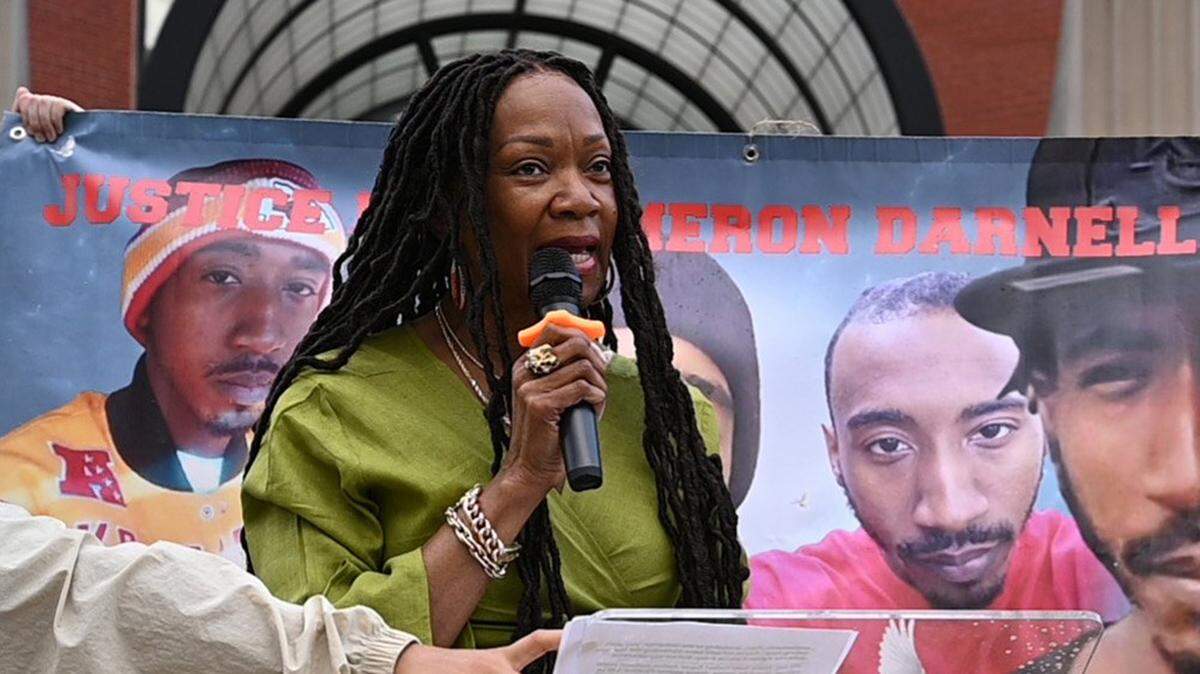
And after the 2019 police shooting of Cameron Lamb, she was one of the most outspoken civic leaders in the effort to convince Jackson County prosecutors to charge Lamb’s police killer criminally, as well as any officers who kill unarmed Black men in the city.
“I’m driven by wanting life to be better, easier, more equitable for Black people,” Grant told me when she and I met recently for two long interviews about her career with the Urban League, how she came to lead it and the journey she took from a young girl growing up the youngest of three raised by a single mom on the city’s East Side.
Lately, Grant has been excited about the opportunity to interview the Rev. Al Sharpton, a man she has long admired for his civil rights work, at the Urban League’s Difference Maker event, happening Thursday at Starlight Theatre. She said it will be a highlight of her career.
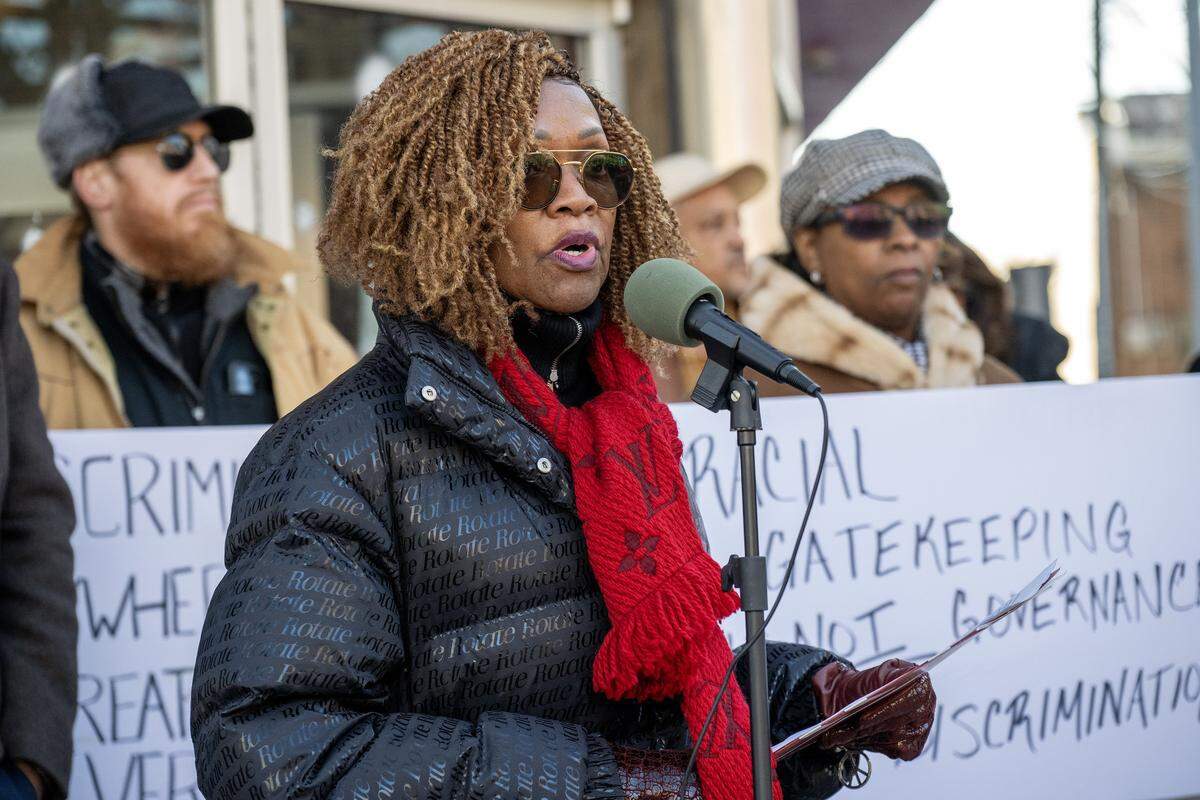
Not afraid of a fight
Grant first came to the Urban League in 1986, but left a few years later. She was called back in 1995. Five years after that, Grant was handed the reins to the historic civil rights and social justice nonprofit.
She became the first, and still the only woman to lead the Urban League in its more than 100-year history.
Kansas City would learn over her 30-year tenure that Grant, who has become arguably one of Kansas City’s most influential voices for social justice, civil rights and criminal justice reform, is not afraid of a fight.
She backed away from this next idea when I brought it up, but from the journalist’s seat where I’ve watched her fighting at the podium, is where Grant seems to shine brightest.
She told me that stepping to the podium to put an issue on public notice is often a last resort, and comes after a lot of backroom efforts to resolve a problem have not worked, and after setting a strategy to go after perceived wrongdoers. Every time — and there have been many — she spends hours preparing, and as much time suppressing public speaking nervousness.
She keeps going, though, because she believes fighting for civil rights and social justice is her calling.
Martin Luther King Jr. assassination
Grant was mentored for the job by her predecessor, the Rev. William Clark, who had led the Urban League for 24 years. But every choice she made since high school actually prepared her to be ready when the opportunity presented itself. That and her mentors along her journey, such as Clark, had been tough on her, teaching her about politics, people and how to run an operation and navigate systems
“They poured into me,” Grant said. “They saw something in me, and they nurtured it. I appreciate them for that.”
Grant grew up on Kansas City’s East Side, near 20th Street and Indiana, the youngest of three and the only girl. She attended the neighborhood elementary school, Lincoln Junior High and then Lincoln High School, where she was a sophomore the year that Martin Luther King Jr. was assassinated in 1968.
Like many young Black students of that time, she has vivid memories watching news about King’s assassination on television. The next day, Kansas City — unlike a lot of other school districts across the country — did not close its schools.
“My mom was like, if they did not close school, then you are going,” Grant recalled.
Her mom, Margie Adams, a single mother, was strict about her education and more. She was like, “You gotta go to school, you gotta be on time for school, you gotta do your homework, and when you come home from school, you’ve got chores to do,” Grant recalled.
Grant got her work ethic and earnestness from her mom. “She was no nonsense,” Grant said. Her mother also had no tolerance for anyone who lied. She taught her daughter that “the truth is always better than a lie,” Grant said. That sentiment became one of Grant’s strongest convictions.
“Don’t lie to me,” Grant said. “The truth may be ugly, but it is always better than the lie, because the lie isn’t real. You can’t fix the lie.” In turn, she said, “What I’m not going to do is to tell you a lie to avoid some consequences.”
Watched Civil Rights movement on TV
Her mother made a point to talk with Grant and her two older brothers about the Civil Rights Movement, King and his entourage of human rights activists and allies. “I don’t recall learning about it in school,” Grant said. “We watched the Civil Rights Movement unfold on TV.”
On that mournful day in 1968, Grant recalls that students at Lincoln were “traumatized” by King’s murder, but showed up and congregated under the clock in the front of the building.
“And what were we doing? Crying,” Grant recalled. “Then lo and behold, here comes KCPD. They start it.” Students were hustled into the school gym and then onto the football field.
She remembers this peaceful protest turned violent after police released tear gas on students and others protesting at City Hall, triggering four days of rioting in the streets. Five Black men and a teenage boy were killed by police.
The incident was Grant’s first encounter with what she called police overreach. She watched from the front steps of the corner house she grew up in, as National Guard units rolled through the streets of her neighborhood. A seed was planted, Grant said.
Her next step into civil rights was convincing her mother to let her, as a teen, board a bus in Kansas City, Kansas, with some church folks, and travel to Washington, D.C., to participate in the Poor People’s Campaign’s Solidarity Day, a few months after King was assassinated. “It was the first time that I had ever seen that many Black people in one place at the same time,” Grant said.
She was there to hear speeches from Jesse Jackson, Ralph Abernathy and Coretta Scott King, and performances by Stevie Wonder and Diana Ross and The Supremes.
“What hit me about that day was that it was muddy, the conditions were bad, and yet all these people left the comfort of their homes, their communities, to join in this struggle to create a better country, to eradicate poverty and racism. That’s where I learned about the importance of sacrifice and service,” Grant said.
A career and a calling
Teenage Grant may have been too young then to realize what she knows now: From that moment on, she was preparing herself for when she would answer to her calling as a community leader and social justice activist. She says looking back, that everything — even the time she spent attending a Kansas City charm school learning “how to walk and sit and all the social graces” — set her on a course to serve as the leader she later became.
Grant attended the University of Missouri in Columbia after high school but dropped out in her sophomore year. “I hated it,” she said. “I hated being on that campus with that Confederate rock (an 11,000-pound monument dedicated in 1935 to honor Boone County Confederate soldiers) in the middle of it.” The rock was later moved off campus, but not before Grant left. She went home and got a job as the office manager for the executive director at the Linwood YMCA.
“That was the start of my career building,” Grant said. “I became immersed in social services work.”
Ten years later, after losing a leadership position to a person with less experience but more college education, Grant left the Linwood YMCA for a position as executive director of a YMCA in Jackson, Mississippi.
On the outskirts of Jackson, Grant saw deep poverty, “where people were living in shotgun houses with dirt floors,” she said.
“I saw structural inequity in these places that had been forgotten.” Grant said she was “troubled by the complacency” of other Black people with means. “There was no activism, no one fighting for civil rights. I didn’t even know I was an activist yet. All I knew was that something was wrong here. This wasn’t right.“
In 1986, after a year in Mississippi, Grant returned to Kansas City and landed work as community outreach coordinator for the Urban League, under the tutelage of Clark. She left there three years later for a 10-year stint working at Metropolitan Community College, where she ended up running the college’s Pioneer Campus.
In 1995, she went back to the Urban League. “I took off from there,” Grant said. She told me it just felt like home. Along the way in this journey, Grant returned to college and received a bachelor’s degree in business administration from Park University and a master’s from Rockhurst University.
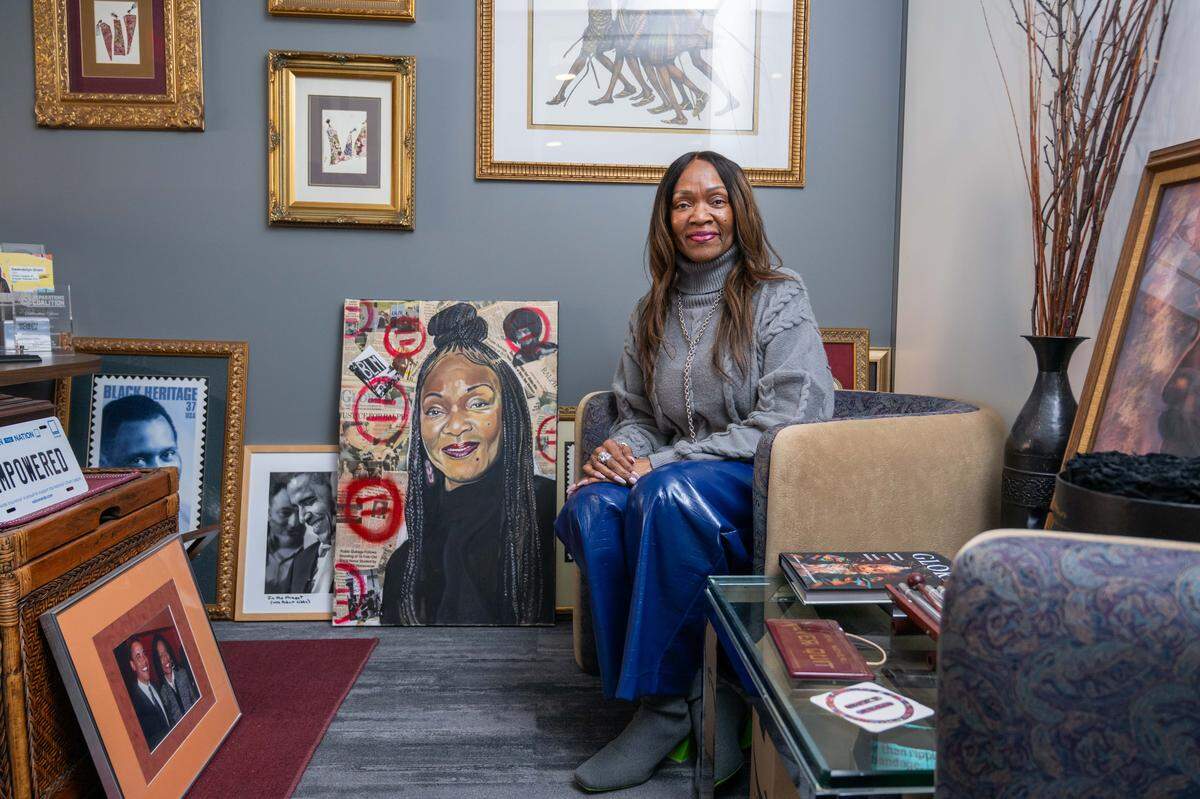
“High aspirations for Kansas City’
I asked Grant whether she had ever botched an effort and whether she is leaving her position with any regrets. She paused a moment, “No,” she said. Later adding, “When I started to look back over my life experiences, things that I did, they were all about helping people in some kind of way.”
She said her foremost job as leader of the Urban League has been “to serve my community.” And she said it has been “to position my organization to effectively advance our mission, which is to enable African Americans and other disadvantaged persons to secure economic self-reliance, parity, power and civil rights.”
When asked how she feels about where Kansas City is today, Grant delivered a soliloquy:
“I have high aspirations for Kansas City,” Grant said. “Having lived here most of my life, I have to hold out hope that we will be better as a city.
“My hope is that we will someday address the systemic inequities that burden people of color, primarily African Americans, in this city, and that someday we will achieve true equality, and that the inner city of Kansas City will be transformed into a true, livable, vibrant community.
“The hope is for us to no longer be needed as a civil rights organization.”
This story was originally published March 19, 2026 at 5:06 AM with the headline "Leading Kansas City’s Urban League was CEO Gwen Grant’s career and her calling | Opinion."