Yes, talking about racism is painful. Saying it doesn’t exist makes the problem worse
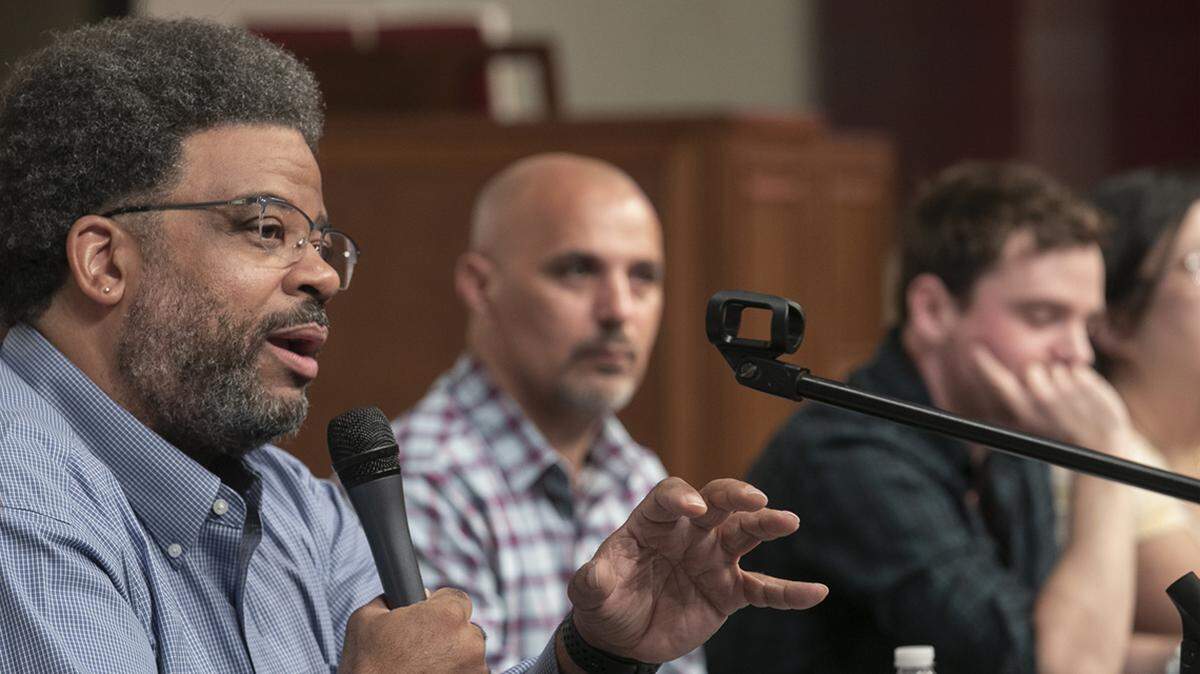
A conversation in Kansas City Saturday evening about race was more of an icebreaker than a deep dive into everything you ever wanted to know about race but were afraid to ask. But I was certainly very happy to see that some people are at least ready to start talking.
No one cast blame, denied the harm racism has done in this country or tried to defend the indefensible. That was a surprise, since any time I’ve written about racism, I’ve ended up in the crosshairs of people mad at me for bringing up the topic. Seriously, I’ve been called a racist for pointing out racism.
Some people really believe that if no one talks about racism, if schools don’t teach about it and newspapers stop writing about it, then not only is it not happening, but it never existed at all.
I wish those people had joined us at Saturday’s discussion.
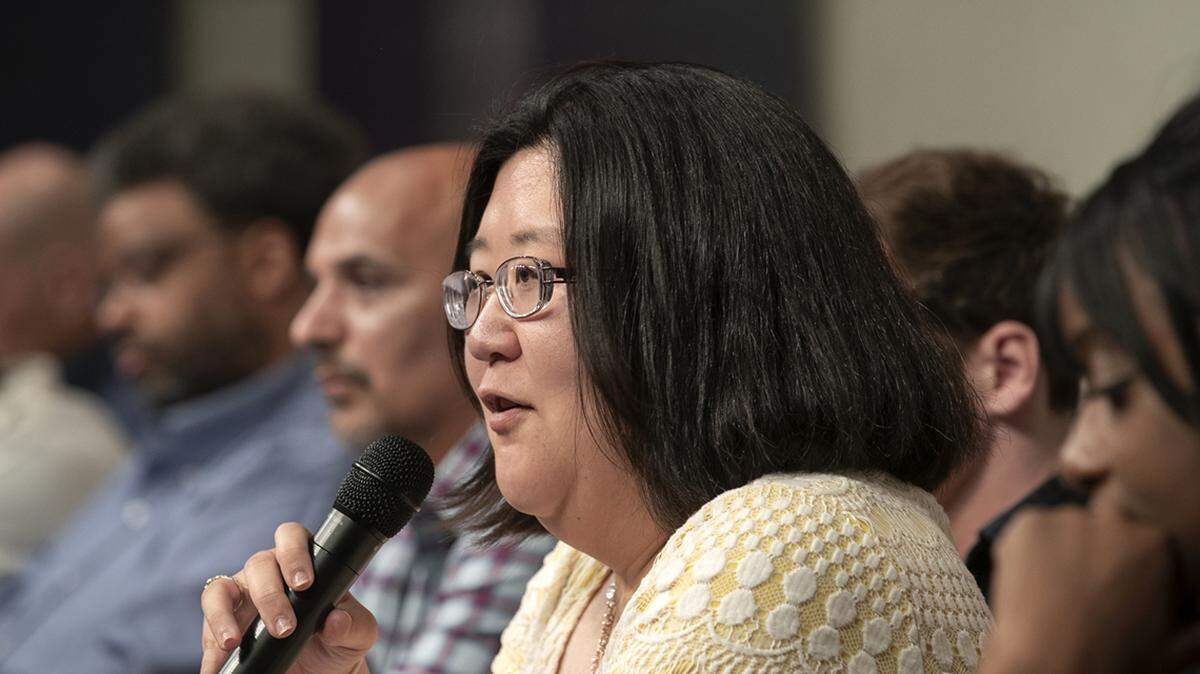
The more than 50 folks who gathered for the public forum at Community Christian Church on Main Street near the Country Club Plaza came knowing that no question or comment would be off-limits. Of course a lot went unsaid, because unpacking racism in America is bound to take a lot more than the two hours allotted for this first in what will be a series of conversations on the subject.
Those who did speak from the audience, which was predominantly white, seemed either already members of the America-has-a-race-problem choir or they came to audition. They deserve some applause, because of course the first step to tackling a problem is acknowledging there is one, right?
One or two said they grew up in racist households where no one even talked about race. They wrongly believed it didn’t affect them.
The panel of speakers discussed topics such as discriminatory lending practices, the racial wealth gap and redlining — the discriminatory real estate practice that prohibited home sales to Black people in certain neighborhoods and systematically segregated cities.
An audience member shared that she had worked in a loan office where a person’s race did affect lending decisions. She admitted that she hadn’t questioned the discrimination at the time. She now wishes she had.
Like I said, I had expected to hear resistance from some who don’t believe that racism is alive and festering in Kansas City and elsewhere.
Maybe some of those people were in the room but couldn’t muster the courage to join the conversation. Maybe they never even found the courage to come.
Acknowledging implicit bias shakes foundations
Organizer Sheryl Ferguson of the group It’s Time 4 Justice, told me she is hoping some of those nonbelievers will engage in future listening and learning sessions.
For a lot of people, though, talking about race is too hard, too painful even, and they just want everyone to shut up about it. I get emails full of anger, stereotypes and misinformation from folks like that all the time.
They want to believe it does not exist.
Because if it did (and it does), it tears up their foundations. Disturbs that fragile view of the world that gives us strength, direction, tells us when to be happy, sad, when to stand and how tall. Who we are. I think the existence of racism shakes the foundations for some people. Or weakens them.
Because the belief that “I earned my job, my house, my success, fair and square” buckles under systemic racism. Implicit bias puts a crack in the one that says, “I judge others based on their character.”
For many who don’t suffer from it directly, racism is a network of termite holes barely big enough to see that will nevertheless bring such beliefs crashing down under their own weight. You can see why some would wobble, equivocate and deflect.
After a column about the worry that comes with being the mother of Black sons, one reader responded to me this way:
“I found you to be a liar and a racist yourself, making unsubstantiated claims and statements that are patently false. There is no systemic racism in America, regarding its citizens or its law enforcement personnel. … Your false allegations and claims of racism only do harm to race relations, and cause unnecessary divisiveness among the races.“
Not true, of course. Racism is not like some conjuring from a child’s imagination, as if you can close your eyes, put your fingers in your ears and make la-la-la sounds until it just goes away.
Despite the facts of the past and present, sometimes even caught on camera, there are still those who scream, “Liar, liar, pants on fire.”
Never mind that as recently as 2020, crosses have been burning.
It’s a near certainty I’ll get more angry emails, with the same protestations and misguided indignation. But those who write them would be better off voicing their points at events such as the one I attended.
There, their views can be challenged in good company and good faith. The wider Kansas City community would be better off too.
So, yes I’m glad to see talks begin. Let’s hope the audience grows.