All kids in Kansas City-area schools deserve more than separate Black student unions
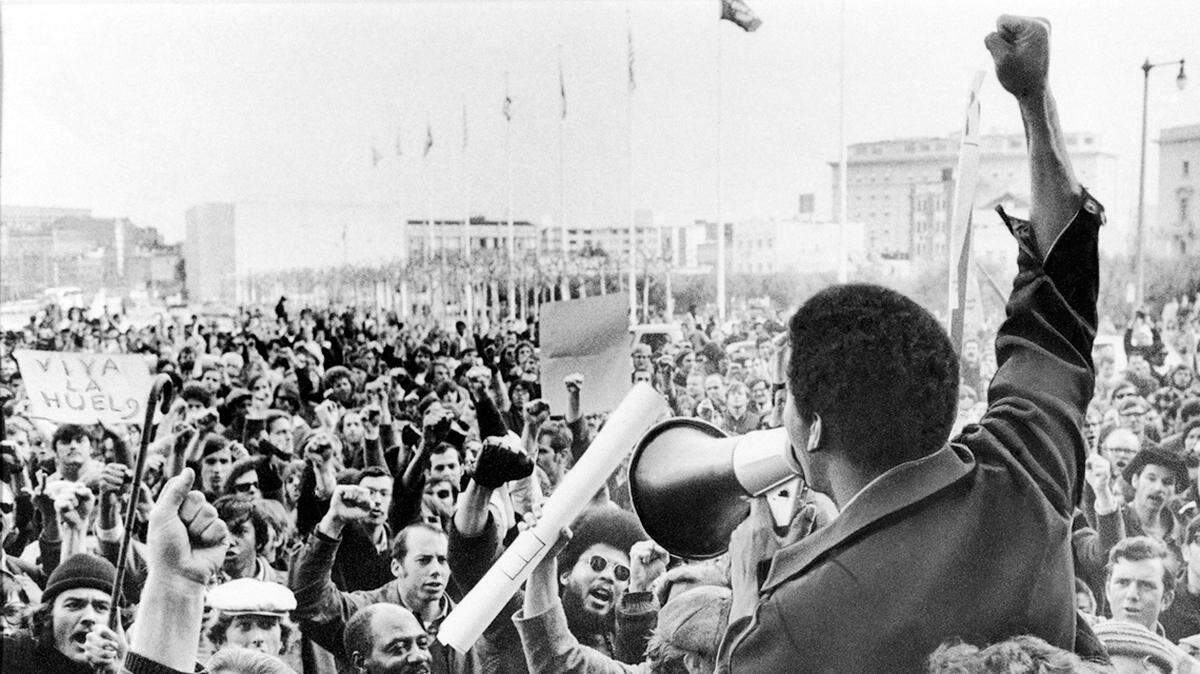
At the height of the civil rights movement, black student unions were a symbol of youth empowerment in the struggle for equal treatment, claiming identity and demanding a voice — an institution I thought would have served its need by now.
Sadly though, today, that need has not been met.
Yes, I think it’s problematic when today’s high school students form a Black student union because they need a safe space to be themselves. In some cases that has prompted the formation of a right-leaning conservative group, essentially as a counter-space for white students.
White students definitely don’t need a racially coded safe space when they are the majority everywhere in the building.
Maybe I’m idealistic, but Black students shouldn’t need one either. That they do is a problem that needs fixing. School is supposed to be a safe space for all the students attending, period.
Adults supporting white students who are mad about the Black space and want a counter-space only exacerbates the problem. Folks on both sides of the demographic divide say that all students are welcome to their groups. But in reality, the groups don’t look that way. And one is more a reaction to what Black students are doing than a heartfelt desire.
We have come so far. But is this heading the wrong direction? The schools may be integrated, but having a Black group for Black kids and another group for white kids is segregation.
I’ll acknowledge that segregation and integration are more complicated topics than they may seem. My mom, who was an early childhood teacher through the 1960s, questioned the good in desegregation and integration. The first, she said, cost a lot of Black teachers their jobs. The latter often meant Black children were bused away from their neighborhoods — across town to schools where they were few in number, not welcomed and poorly treated.
Mom would argue that the education of Black children was compromised as a result. For the greater good? Maybe. Yet here we are.
I guess the hope was that as a nation, with time, we would grow beyond the failures of desegregation and integration to a more equitable space in our minds and in our public school systems.
It’s been nearly 70 years. The formation of BSUs in high schools indicates that perhaps it has not been long enough. Or too long, with too little action taken to right our centuries and decades of wrongs. We have work to do.
The first BSU was founded in 1966 at San Francisco State University, with a goal of unifying Black students on campus through cultural, social, political and informational events. They were big on college campuses in the late 1960s and the ’70s.
I joined one at Ohio University in 1977 looking for some community among people who looked like me and welcomed me — where my voice was heard and respected. I wanted to be in a room where I wasn’t “the only one.”
But even after so many years of hard fought civil rights growth, the deaths of George Floyd, Breonna Taylor and Ahmaud Arbery and America’s supposed “reckoning on race,” Black students are still looking for that safe space.
Conservative school groups look like a response
Shawnee Mission, Olathe, Park Hill and Lee’s Summit are four predominantly white area school districts where Black students have created a student union. After students started a BSU at Lee’s Summit North High School, Young Americans for Freedom, which seeks to advance conservative ideas, also formed.
The timing is suspect.
There’s nothing wrong with a conservative student group. But when you form one in opposition to a safe space created for Black students, it looks less like conservatism and more like racism.
The sponsor of the conservative student group is the same teacher purported to have had students reenact former police officer Derek Chauvin’s murder of George Floyd, although Lee’s Summit school officials say that’s not what happened. They have not explained what did.
This is what Black students get from a BSU: The groups at all three Lee’s Summit high schools this week will host a forum to tell students about historically Black colleges and universities. Before now, those schools had been left out of discussions about college choices, said one of the sponsors for the group.
The pushback and personal attacks from some parents and community members, she said, have been so fierce that she’s asked not to be identified here. It’s no wonder that Black students in schools where they are the minority “deal with microaggressions on a daily basis,” she said.
In Round Rock, Texas, where teacher Tiffanie Harrison started a BSU two years ago, high school students have advocated for hiring more teachers of color and more counselors than cops. At the state level, they’ve challenged disproportionate discipline.
I get it, when there is so much blatant racism pointed out in law enforcement, politics and, yes, in our schools, Black students feel they need a safe space to express themselves without becoming the target in school of a petition to “bring back slavery.” That happened in Park Hill.
I’m not saying Black students in predominantly white schools don’t need a Black Student Union to feel safe, secure in knowing that others have their back. Unfortunately, the reality is they do.
But what I am saying is they shouldn’t need one. And school leaders should ask themselves why they do. And parents, particularly those fighting against equity and inclusion, instead, ought to demand schools do better at making sure all students are respected, teachers are more culturally competent, and students see more teachers of color.
Students have to know that all of them are truly, integrally, included.
This story was originally published November 3, 2021 at 5:00 AM.