Donald Trump’s Defense Secretary Pete Hegseth finally gets gender standards right | Opinion
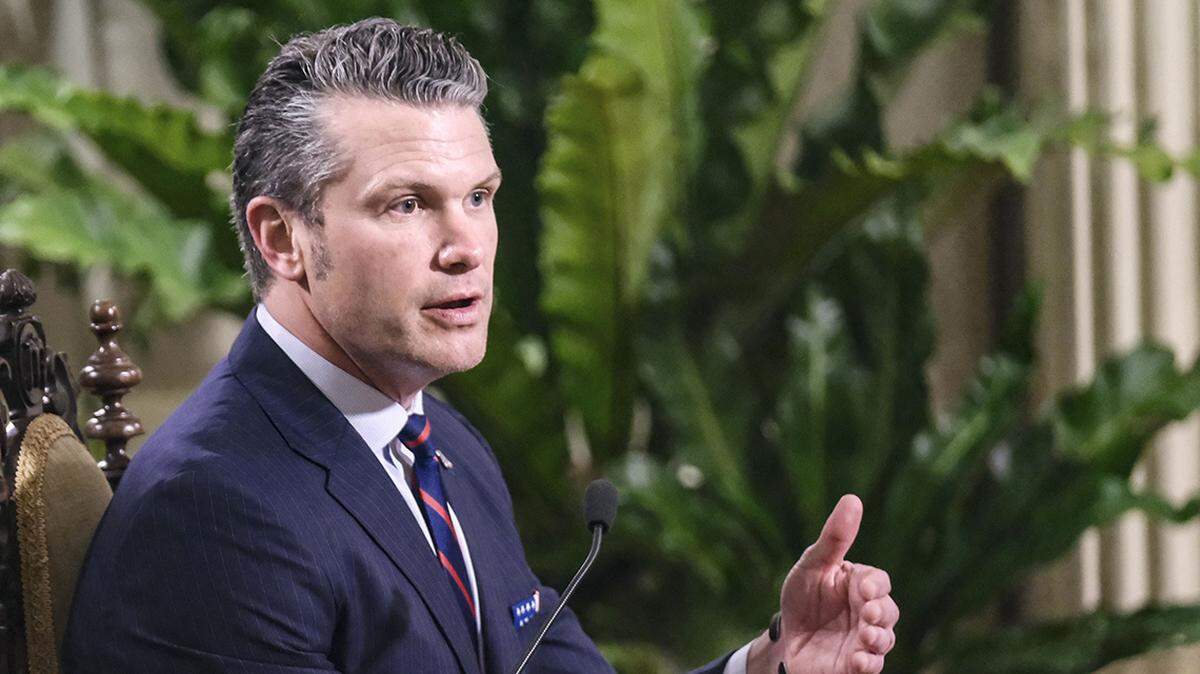
Pete Hegseth has had a rough few weeks, what with his starring role in the Signal chat scandal and calls for his resignation or removal, but he deserves some credit for one smart move this week — ending gender-based physical standards for combat troops.
Hegseth came into office with a record of opposition to women in combat. “Dads push us to take risks. Moms put the training wheels on our bikes. We need moms. But not in the military, especially in combat units,” he wrote.
But the decorated Army veteran and Fox News personality softened his views just the right amount as he prepared for confirmation hearings. He argued to Megyn Kelly that women should be held to the same physical and training standards as men. “If we have the right standard and women meet that standard, roger. Let’s go,” he told Kelly.
Now he has delivered on that compromise between his old neanderthal position and the double standards put in place under Barack Obama.
It’s time we confront a simple truth: if women want to serve in combat positions — as they’ve earned the right to do in Afghanistan, Iraq and elsewhere — they must be held to the same physical standards as men. Anything less risks weakening our military and perpetuating inequality under the guise of fairness.
The integration of women into combat roles, formalized in 2015 when the Pentagon opened all military jobs to female service members, was a landmark victory for equality. It shattered outdated assumptions about capability and recognized that courage and competence know no gender.
But nearly a decade later, the persistence of separate physical standards threatens to undermine that progress. The Army’s current fitness test, for instance, adjusts scoring based on gender and age, meaning a 22-year-old woman might pass with fewer push-ups or a slower run time than her male counterpart. Supporters argue this accounts for physiological differences, but in the brutal reality of combat, the enemy doesn’t adjust its aim for biology.
Combat is unforgiving — whether it’s medics hauling a wounded comrade to safety, Marines carrying 80 pounds of gear across rugged terrain, or Special Forces engaging in hand-to-hand fighting. These tasks demand raw strength, endurance, and speed, and they don’t bend for good intentions. It doesn’t get easier to dig a foxhole because you’re a girl.
Indeed, the impact of the double standards may be broader than the individuals involved having an impact on units overall. A 2015 Marine Corps study found that all-male units outperformed mixed-gender units in 69% of tasks, including speed in obstacle courses and accuracy under fatigue. Critics dismissed the study as biased, but its findings align with a stark reality: lower standards for women can translate to higher risks for everyone on the battlefield.
Women shouldn’t be excluded from the military. They should be given the opportunity to meet the same tough standards as men and be treated as equals.
The military has already proven that women can meet rigorous demands. Take then Capt. Kristen Griest and 1st Lt. Shaye Haver, who in 2015 became the first women to graduate from the Army’s grueling Ranger School — a program that makes no concessions for gender. Their success wasn’t a fluke; it was a testament to what’s possible when standards are universal.
If Griest and Haver could conquer one of the toughest training courses in the world, why should we assume other women can’t meet a unified fitness benchmark?
Lowering expectations doesn’t empower women — it suggests that women are inherently less capable. When we “gender-norm” fitness tests, we’re not accommodating differences; we’re codifying a double standard that undermines trust. Male soldiers may question whether their female peers can carry their weight — literally — eroding the unit cohesion that’s critical in life-or-death situations.
True equality means holding everyone to the same bar, not bending it to avoid tough conversations. That’s a broader problem with double standards often marketed under the term “equity” throughout our country. Like many diversity efforts, they put the goal of simply being “diverse” over the mission of achieving success.
In college that appears as Asian students being held to a higher standard than whites in admissions. Whites being held to a higher standard than Blacks and Hispanics. And the result is that Asians and whites are more likely to graduate than Blacks and Hispanics, even when they have the same socioeconomic backgrounds. By applying double standards we get to ignore the reality of failing primary and secondary schools, perpetuating inequality instead of addressing it.
Just as women in the military are the ones whose lives are put most at risk by double standards, minorities who “benefit” from double standards in college admissions are most at risk of dropping out and wasting their college opportunity by attending the wrong school.
Some argue that the military is adopting a new double standard where older more experienced soldiers will be allowed to demonstrate less strength and speed than younger soldiers. “Age norming,” say critics, proves that there is nothing lost to recognizing physical differences between the ages, just as we used to between the sexes.
Such arguments are only true if there is similar value in adding an 18-year-old woman to a team of young male soldiers as there is in adding the decade of experience and skill brought with a 30-something First Sergeant. That’s preposterous.
Similarly, critics argue that failing to give diversity points to Blacks and Hispanics fails to address centuries of historical and systemic factors that put them behind. Of course, discrimination against women goes back even deeper into antiquity and the reality is that neither academic performance, success in life nor opposing forces gives diversity points in the end.
The stakes in the military – life and death – mean diversity for its own sake can’t trump readiness. Hegseth’s conversion to the middle ground on standards for women in combat roles offers a welcome chance to rethink this policy. The military isn’t a social experiment – it’s a machine built to win wars based on centuries of experience.
Standards exist to ensure survival, not to stroke egos or appease activists. Women have shown they belong in the fight. Now it’s time to let them compete on equal footing. Anything less dishonors their service and weakens our defense.
This story was originally published April 4, 2025 at 5:08 AM.