Goodbye to Rick Brehm, one of Kansas City’s last true haberdashers | Opinion
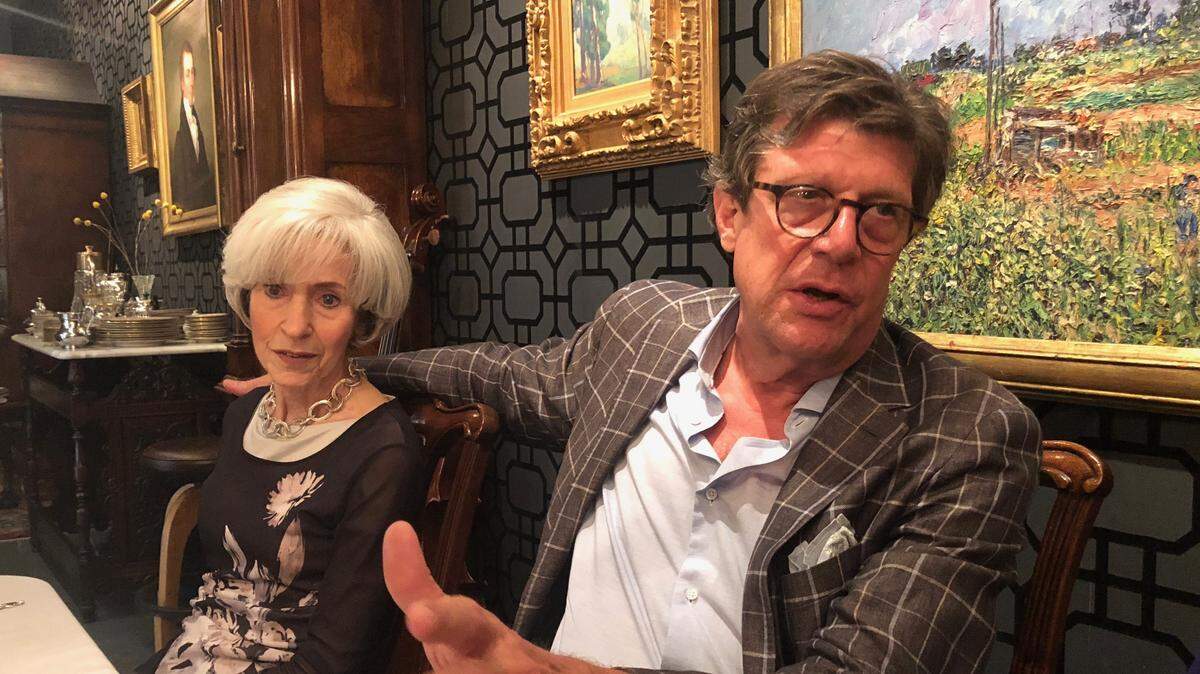
A lot of people in Kansas City knew Rick Brehm from polo. And Polo.
In his younger years, Brehm played the sport enthusiastically, was a regular at the polo grounds and later partnered in an operation that raised polo ponies.
But for more than two decades, he was also the man behind the Polo Ralph Lauren store on the Country Club Plaza. Open from 1982 to 2004, it was one of the last independently owned Polo stores in America.
It was a different era of Kansas City commerce and masculinity, a time before attorneys showed up to work in quarter-zips and white-soled sneakers and bankers dressed like golfers. Men of a certain professional class still believed in tailored jackets, proper shoes and learning the rules of dress.
Rick Brehm taught them those rules, first at the Polo store and later at Hudson and Jane, the Crestwood shop he opened and ran with his wife, Flo Ann, from 2004 until last Thursday, when he suffered a stroke and died. He was 71.
Brehm’s customers included plenty of the city’s lawyers, executives and country club types, though the store lacked the pretension often associated with luxury menswear. People came for different reasons. Some trusted his taste implicitly. Some wanted access to boutique European brands unavailable elsewhere in Kansas City. Some simply liked spending time around the tall man with the booming laugh.
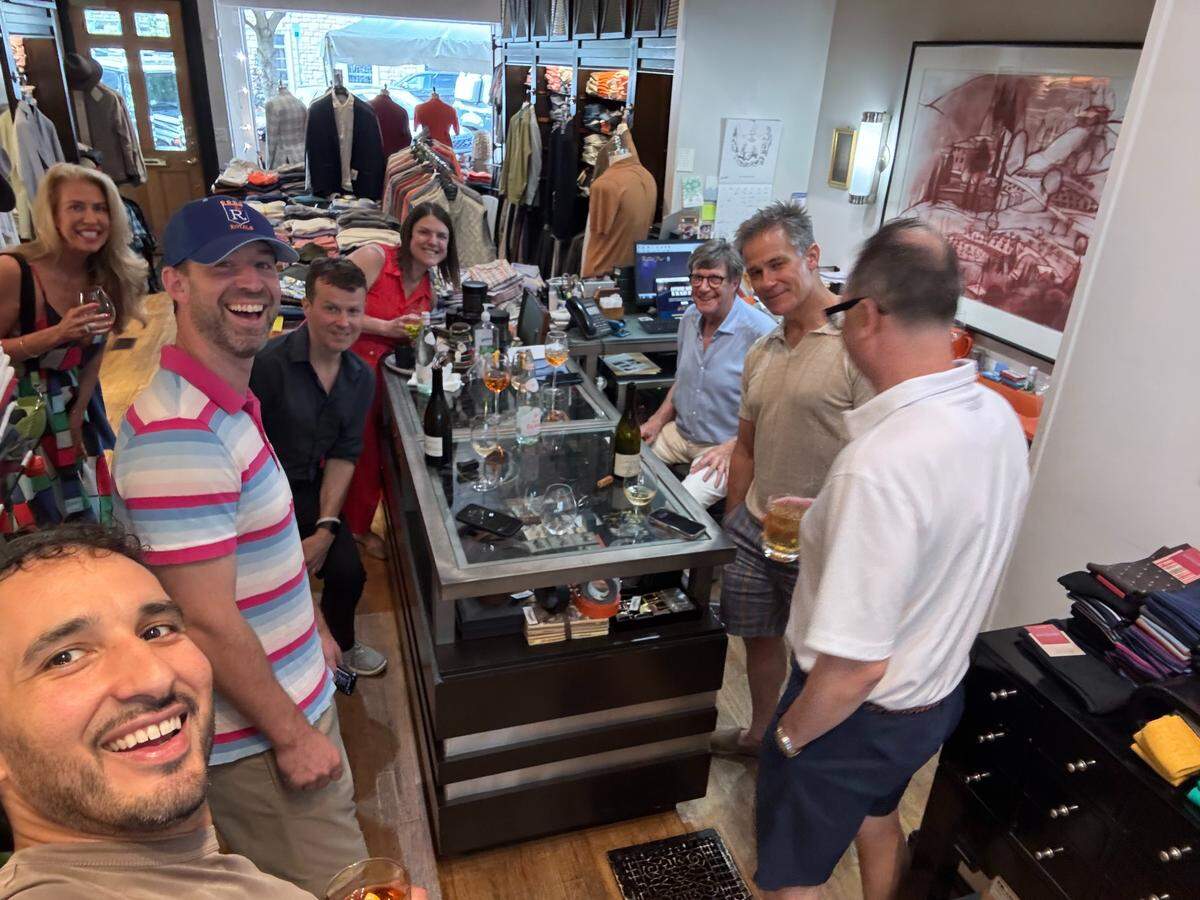
“Rick created a version of what I imagine an old-school haberdashery club was like,” said Brent Hankins, a Kansas City attorney who began shopping with Brehm in the early 1990s and eventually became one of his closest friends. “(Hudson and Jane) was a clothing store, but it almost became a social hub. People would stop by with a bottle of wine, open it up and share it with whoever came in. It was clubby, but without any of the negative connotations.”

From western Kansas to the Plaza
Though his loves included polo, sailing, wine and fine clothes, Brehm did not come from Manhattan or Milan or some inherited East Coast social world. He hailed from western Kansas.
He grew up in Hays and Dodge City, the son of educators. His father, Chuck Brehm, coached basketball at Dodge City Community College, where he won the 1964 national junior college championship before later becoming head coach at Fort Hays State.
Somewhere along the line, though, the coach’s son from the prairie developed the sensibility of a European clothier.
He worked at a clothing store in Hutchinson, his sister Becky said, before eventually making his way to Kansas City and the Plaza at a moment when the district still served as the city’s center of aspirational retail. Brehm’s neighbors at the Polo store included Mr. Guy (later Pinstripes), Halls and Mark Shale — a cluster of menswear retailers that gave the Plaza a faintly cosmopolitan feel in the 1980s and 1990s.
Brehm remembered names, sizes and preferences. He kept notes on customers. Over time, he developed a loyal following among Kansas City’s professional and social establishment — doctors, developers, Lockton executives, Mission Hills country club types. Royals legend George Brett met his wife, Leslie, when she worked for Brehm at the Polo store.
Greg Katzman worked for Brehm while attending law school in the 2000s. He remembers the store functioning almost like an informal finishing school for young professionals trying to figure out adulthood.
“I got to meet judges and lawyers and a lot of important people who would shop with Rick,” Katzman said. “Rick taught me all kinds of things about how to eat in a restaurant, how to order, how to wine-pair, how to put together a good outfit. I learned how to fold a pocket square, and how to tie multiple different ties, and when to wear them. It was an education.”
Harvey Kaplan, a former senior partner at Shook Hardy & Bacon who’s now retired, bought clothes from Brehm for about four decades.
“Rick had really great taste, and he also had the courage to tell you when something didn’t look good on you,” Kaplan said. “Most people won’t do that; they just want to make a sale. But Rick was different. He had a very attractive array of merchandise and he knew his stuff. It was always a very honest experience shopping there.”
A second act in Crestwood
In 2004, after Ralph Lauren began moving away from independently licensed stores, Brehm and his wife Flo Ann reinvented the operation as Hudson & Jane, named after an intersection in lower Manhattan. The shift allowed them to carry smaller European designers and harder-to-find labels that larger department stores ignored.
A few years later, after disputes with the Plaza landlord, the business relocated south to Crestwood Shops, where it became less polished and more personal.
The operation split into two neighboring stores. Hudson for men. Jane for women. Flo Ann ran Jane. Rick ran Hudson.
Rick’s space was more ramshackle. The window displays could look almost accidental. Walking past on the way to dinner at Aixois or Bacaro, you might spot sweaters stacked unevenly in the window, a coffee mug sitting in the sill or jackets hung densely together near the front. Pocket squares and belts spilled from corners. The place was like a dusty record shop where customers had to dig around a little to find the treasure they were after.
“Things weren’t perfectly folded or perfectly organized, but that was part of the charm,” Hankins said. “It felt comfortable, like your favorite well-worn leather armchair.”
The clothes themselves reflected Brehm’s worldview.
Hudson specialized in refined European menswear — soft Italian jackets, English-inspired tailoring, knit sport coats, patterned ties. The racks at Hudson carried the sort of labels that meant something to men who cared about clothes: Alan Paine, Oxxford, Castangia, Maurizio Baldassari. It was built as a refuge for men resisting the flattening casualness of modern American style.
“Not many places around here still cater to people who care about cuts and tailoring and their own unique style,” said Conrad Amirof, a Kansas City attorney and customer. “So much these days is about the athleisure look. Rick provided a different point of view: This is how you dress with class. This is how you dress like a gentleman. He always had a sense of elegance and aura and caring about looking appropriate for the occasion.”
Brehm approached style less as rigid rule-following than as a kind of language customers could slowly learn to speak for themselves.
“He taught you the rules first so you could eventually break them a little,” Amirof said. “He gave me the foundation and then helped me add my own twist to it. You could walk in and ask if an orange tie worked with a light pink jacket, and Rick would say, ‘Sure — now add this pocket square.’ He understood that refinement didn’t have to feel stiff.”

What’s next?
Even after suffering a transient ischemic attack last year, Brehm remained at Hudson nearly every day except Sunday. Friends said he seemed largely recovered before Thursday’s stroke.
Hudson remains open for now, though Brehm’s death was so sudden and recent that no firm decisions have yet been made about the future of the store.
Later the day he died, several friends and customers and Crestwood neighbors — people who’d been gathering around Brehm’s shop counter for years — wandered down the block to Aixois. They pushed together tables on the grass outside the French restaurant and opened bottles of wine. They sat outside in the fading light consoling each other and telling stories about Rick Brehm.
“We decided that’s what Rick would have wanted,” Hankins said. “It was just like how we’d gather in the store.”