Along I-70, a storied Kansas restaurant reaches its breaking point | Opinion
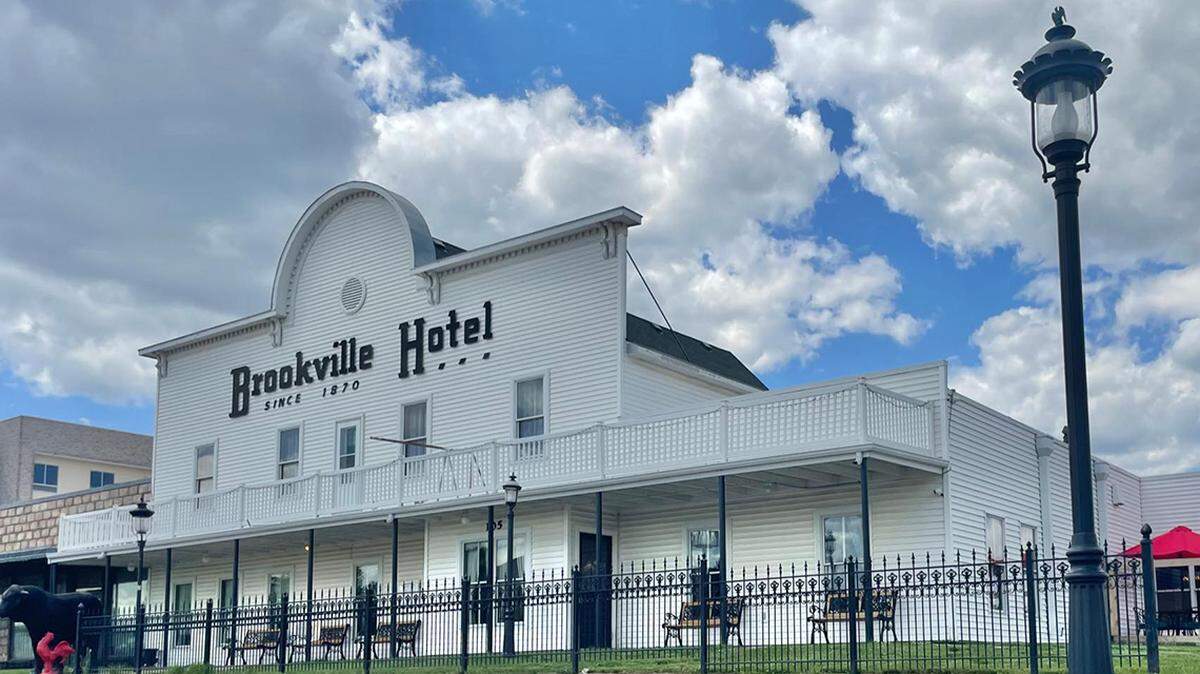
Sad news from along Interstate 70: Another old Kansas institution may have finally run out of road.
The Brookville Hotel in Abilene — technically named Legacy Kansas in recent years, though almost nobody called it that — is closing. The joint technically dates back 150 years, though its history is long, winding, complicated and messy.
Jeffrey and Veronica Higgins, who have been managing the family-style fried chicken restaurant for the past few years, announced the news Wednesday on Facebook.
In a phone call afterward, Jeffrey Higgins told me the business had long been in the red. He said he had asked the owners — the Munson family of Junction City — to sell him the restaurant and the building in which it sits. But they couldn’t come to an agreement on the price. Higgins said he thinks the Munsons think he should pay extra for it because “they know my family has money” — his mother, somewhat incredibly, has won the Kansas lottery twice.
“We’ve tried to buy it multiple times, but they think it’s worth more than it is,” Higgins said. “The ceiling in the bar area has collapsed and water’s been leaking in. It needs a new roof. My most recent offer was $600,000. They won’t do it.
The Munson family said in a statement that “no third parties are affiliated with, represent, or speak for the Legacy business.”
A recent listing from Block & Co. shows the property priced at $850,000.
Brookville Hotel history
Depending on how you calculate it, the Brookville Hotel’s legacy stretches all the way back to the 1870s, when Gus and Mae Magnuson opened an inn in the tiny town of Brookville, about 15 miles west of Salina.
Brookville leaders believed the town could become a lasting rail and cattle shipping hub tied to the Chisholm Trail economy. For a brief stretch, it was. But as the railroads and cattle trade pushed elsewhere, the town gradually became another tiny dot on the Kansas prairie.
It was saved by fried chicken.
In 1915, Helen Martin, daughter of the Magnusons, started serving family-style chicken dinners out of the hotel. Over time, the restaurant became more famous than the town itself.
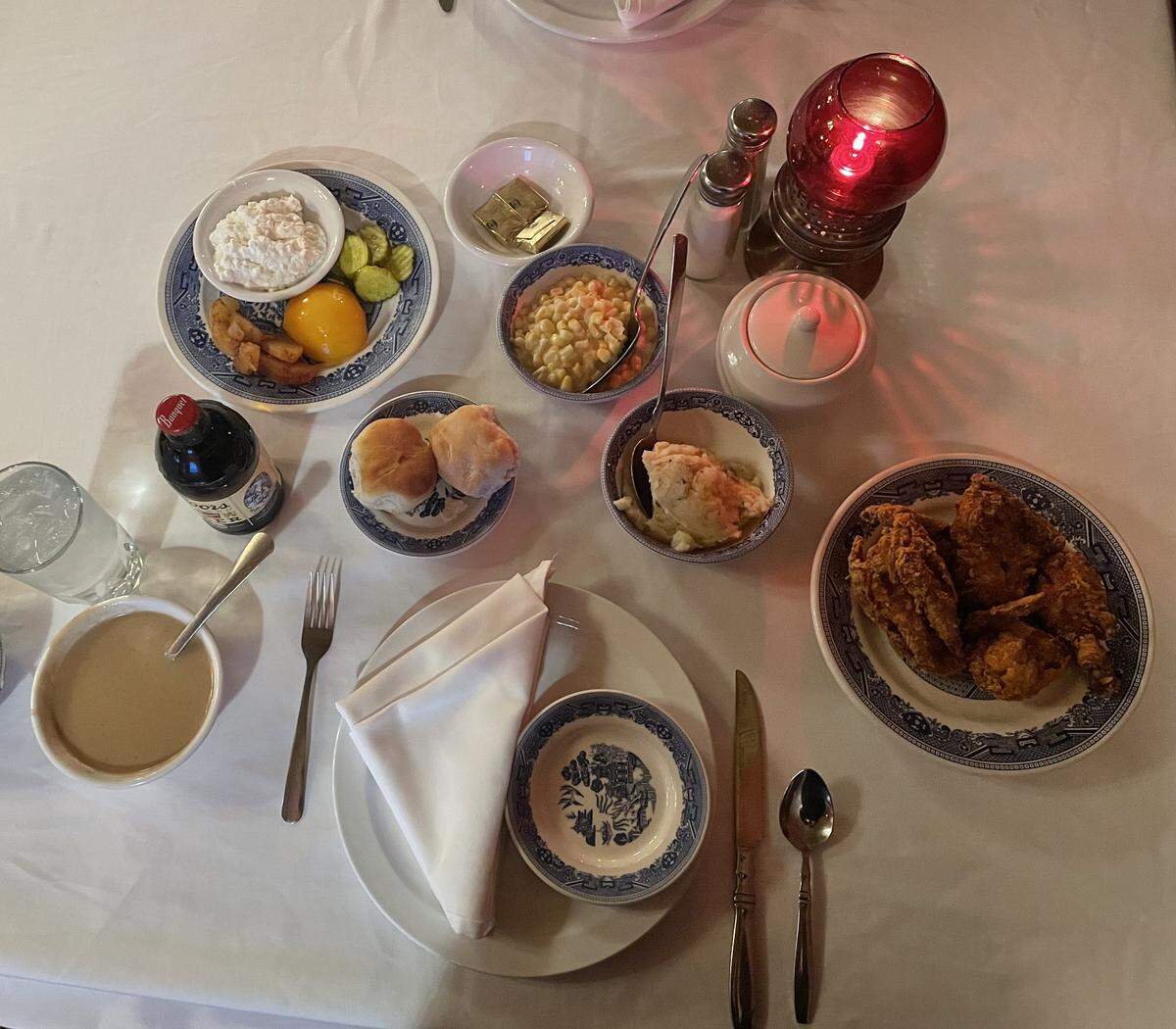
Travelers detoured specifically for the experience: fried chicken cooked in lard, mashed potatoes and cream gravy, creamed corn, fresh biscuits, relish trays and vanilla ice cream served family-style by waitresses in powder-blue dresses. It was a storybook version of a rural Midwestern restaurant.
“We had an international clientele,” said Mark Martin, a fourth-generation owner who started washing dishes at the restaurant in 1964, bought it from his parents in 1982, and owned it until 2020. “We’d serve 600 to 700 diners on a holiday weekend. People came from all over.”
There was just one problem: sewage
The move to Abilene
By the late 1990s, Brookville still had no municipal sewer system. Everyone used septic tanks, including the Brookville Hotel, which served tens of thousands of customers annually. Building a sewer system would have cost as much as $1 million, a staggering amount for a town with barely 200 residents.
“While the smell of chicken inside the restaurant might make your mouth water, the stench outside on some days can wrinkle your nose,” The Star noted in a 1999 article.
The odor issue became serious enough that in 2000, Martin and his wife, Connie, moved the restaurant 40 miles east to Abilene, just north of Interstate 70, visible from the highway.
They built a new restaurant designed to resemble the old hotel, hauled over memorabilia and decorations, and kept serving the same skillet-fried chicken dinners on Blue Willow plates.
The Brookville Hotel was still called the Brookville Hotel, but it was no longer in Brookville and no longer a hotel. (Martin said they stopped renting rooms in Brookville in the late 1970s, when they cost “five a single, six a double, and you could get the whole family in there for 10 bucks. We had seven rooms. No bath, though. You had to do that all outside.”)
The restaurant “had a long honeymoon” in Abilene, Martin said, but they never paid off the bank loan to build the new spot. When the pandemic came in 2020, they weren’t ready. By October, the bank had foreclosed on the restaurant and put it up for auction. Chuck and Deanna Munson of Junction City paid $926,000 for the property in 2022.
The Munson family
The Munsons already had deep roots in Kansas cattle country. The family traces its arrival in Junction City back to 1869. They built a longtime cattle operation that sold livestock through the Kansas City Stockyards. In 2014, Chuck and Deanna opened Munson Prime in Junction City, a steak-and-burger restaurant that burned down in 2021.
They purchased the Brookville Hotel with the intent of folding elements of Munson Prime into the Abilene restaurant. But Chuck died less than a year after, and an identity crisis followed.
The Munsons essentially tried to merge two concepts into one property: the nostalgic family-style fried chicken restaurant tourists expected in one room, and a revival of their Junction City steakhouse operation in another, serving burgers, steaks and homemade ice cream in a more casual taproom-style setting.
They called it Legacy Kansas: Munson’s Prime & Brookville Hotel.
But the arrangement never seemed fully stable. The Munsons were older and largely absentee owners — Deanna Munson faced health issues, while their daughter, Michelle, a tech entrepreneur, handled finances from California — and the restaurant cycled through a series of general managers while struggling to settle on a clear identity.
‘Good help has been hard to find’
I drove out to Abilene in November 2023 intending to write about the Brookville Hotel and the persistence of rural restaurants in an era when so many small towns seemed to be hollowing out. By then, a lot of the old places I loved had already disappeared. Others were hanging on however they could. At Guy and Mae’s Tavern, a barbecue joint in Williamsburg, Kansas, the owners had resorted during the pandemic to peeling decorative dollar bills off the walls to help pay expenses
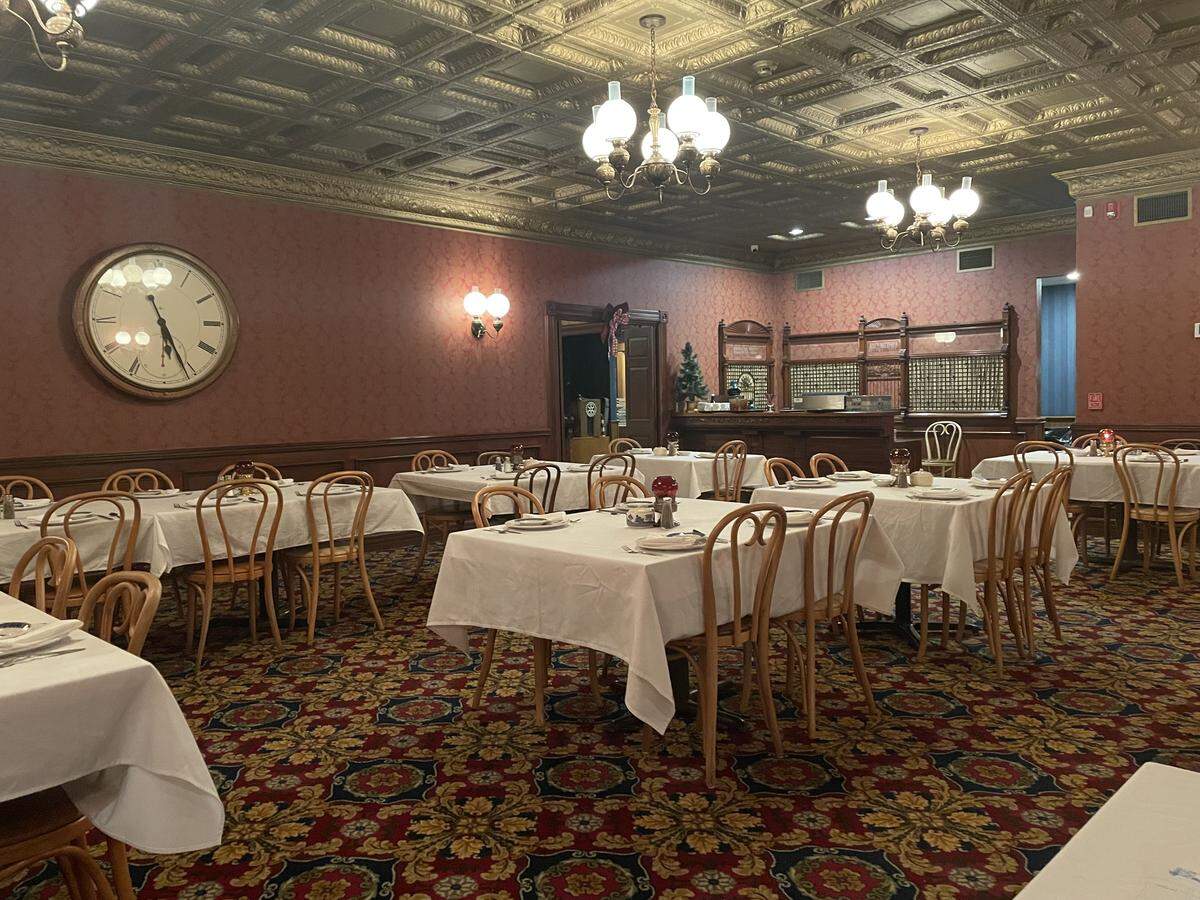
I got a pretty fine meal that night in Abilene. You could still get seconds on everything except the chicken. “Cole slaw is what we’re famous for,” my server told me. “A lot of people who don’t like cole slaw like ours.” I couldn’t argue.
But the dining room was quiet, and the restaurant kept narrow hours. This was shortly before the Higginses took over day-to-day management.
The manager showed me around afterward. The kitchen looked modernized and well-equipped. A taproom expansion was supposedly close to opening. I made plans to return on a busier weekend to talk with customers and experience the place in a livelier state.
But every follow-up attempt seemed to stall out. They weren’t ready yet; still more work to do. After a few months, I gave up trying to revisit it. From afar, through social media, the restaurant increasingly seemed to drift between closures, shortened hours and management changes.
“Good help has been hard to find here,” Julie Roller of the Abilene Convention and Visitors Bureau told me when I called this week. “I can’t imagine why anybody in their right mind would want to get into the restaurant business at this point.”
Roller said that in a lot of ways, the Munsons restored the restaurant to its original form, bringing back homemade ice cream and real potatoes. “They were making boxed potatoes in those final years (under the Martins),” she said.
Deal falls through
Roller said she is in regular contact with Deanna Munson, who has a caretaker, and her daughter Michelle. Her view is that the Munsons did everything they could to keep the place alive, but ultimately decided they could no longer subsidize a money-losing operation.
Higgins told me he had spent months involved in behind-the-scenes efforts to keep the restaurant alive through an unusual rescue plan involving the Dickinson County Economic Development Corporation and the Dickinson County Community Foundation. Natalie Muruato, CEO of the former, confirmed that to me in a call Thursday.
“It’s an iconic tourism asset, so we felt we needed to try to do something to save it,” Muruato said. “On top of that, the county would be losing a fair amount of tax revenue if the restaurant closed.”
Under the proposal, the Munsons would have donated money or the property interest to the foundation — allowing for a charitable tax write-off — and the nonprofits would temporarily hold the building before eventually transferring or selling it to Higgins.
But the arrangement collapsed after both organizations concluded the risks were too high. The building needed major repairs, and neither nonprofit wanted to become the reluctant landlord of a struggling restaurant business in an industry already notorious for failure.
Roller said the restaurant is actively for sale and that the Munsons intend to sell to someone “who wants to do something good for the community.”
“This is the front door to Abilene, in a lot of ways,” she said. “They don’t want to see it become a used car lot. They’re looking for a special kind of owner.”
Roller added that she doesn’t think this is the end of the Brookville Hotel.
“What comes next might not look the same or be the same,” she said, “but it’s a great property with great visibility. There’ll be interest. And if you think of all the iconic restaurants you’ve been to, it’s very rare that you find one that’s just one seamless story. I still think there’s a positive outcome that could happen here.”
This story was originally published May 7, 2026 at 3:01 PM.