KC’s biggest deals flow through the port. The water’s getting choppy | Opinion
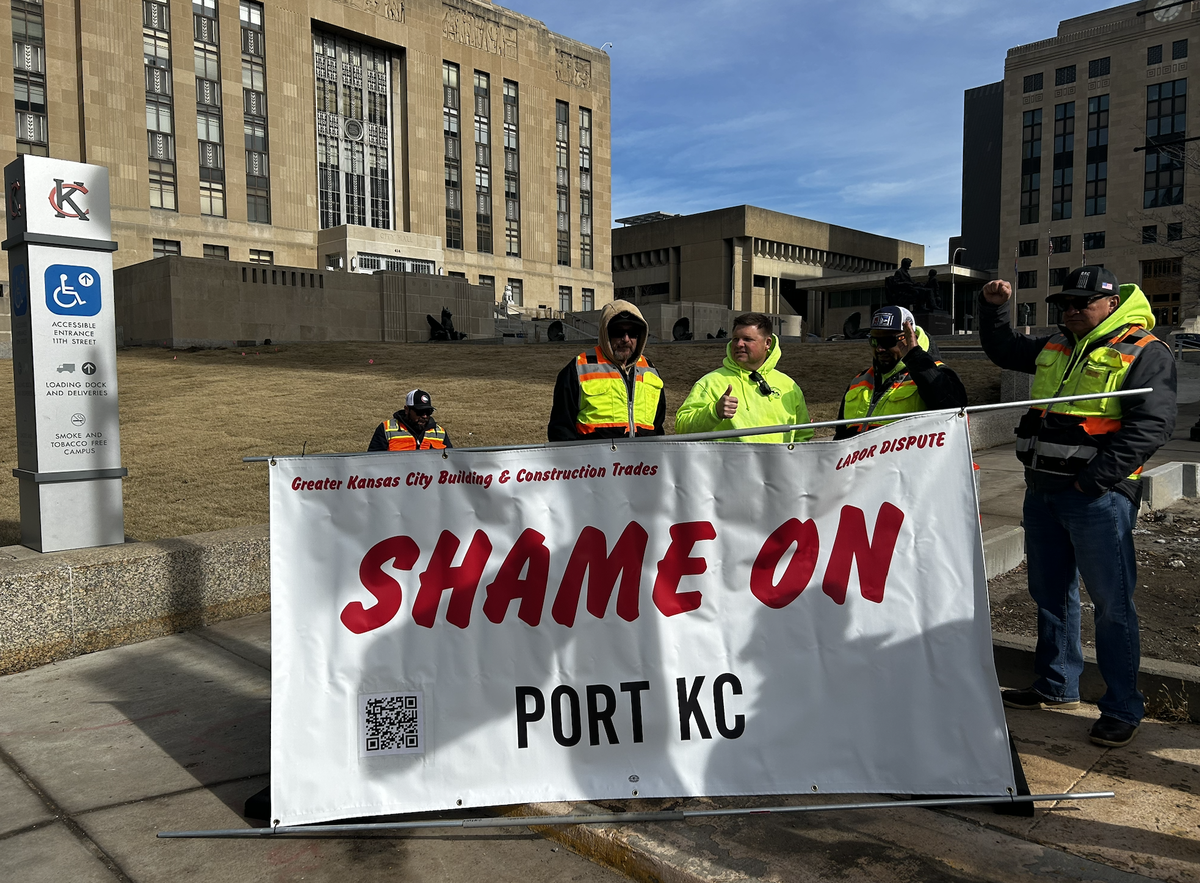
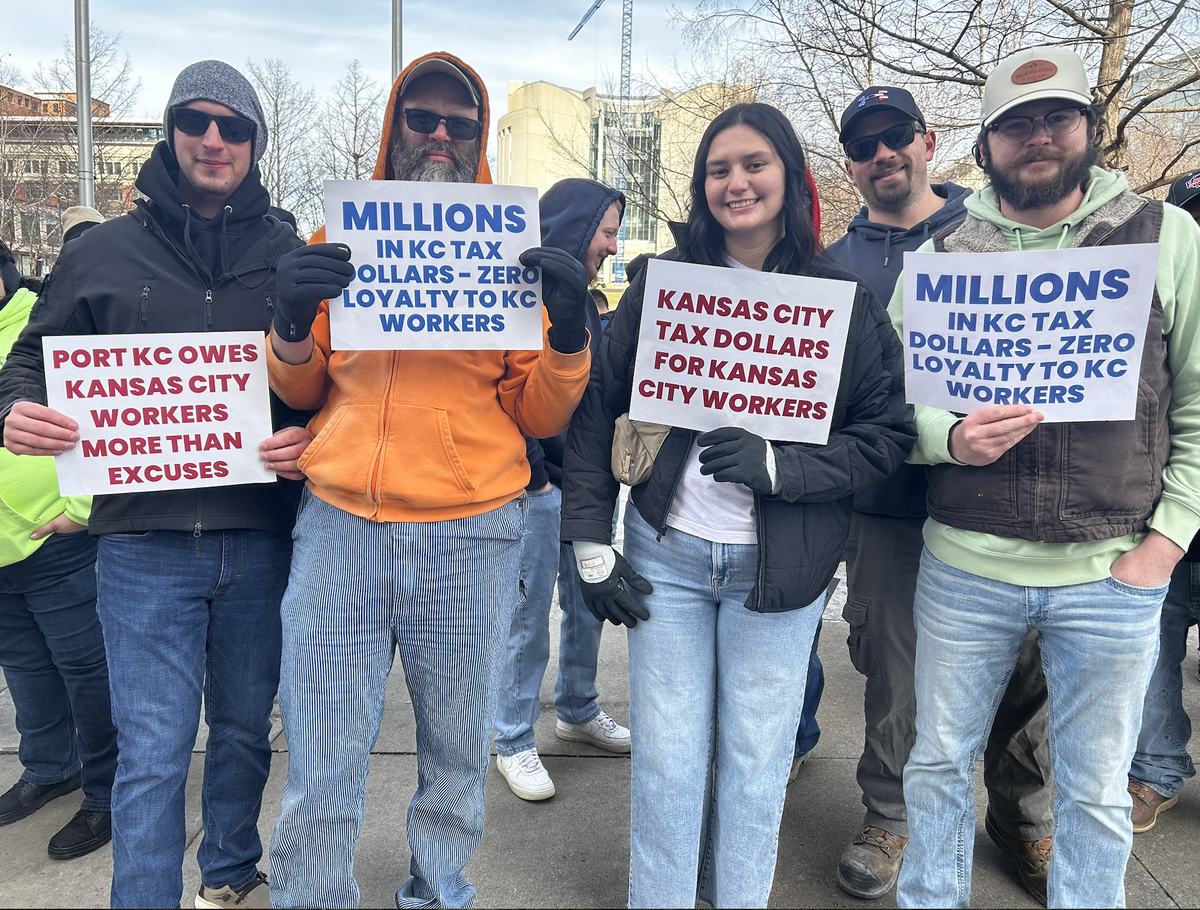
I didn’t make it into Mayor Quinton Lucas’s State of the City address yesterday. Meant to, but I got waylaid by about 150 guys in hard hats and high-vis vests on the sidewalk outside City Hall.
They were calling for the head of the president of the Port Authority of Kansas City.
“Hey hey, ho ho, Jon Stephens has got to go!”
The gathered masses were members of the Greater Kansas City Building and Construction Trades Council — a coalition of seventeen local trade unions. Electricians, ironworkers, bricklayers, pipe fitters. The crews who build the city.
Presidents of quasi-governmental finance agencies do not, as a general rule, inspire street protests. But Stephens has been in the news a lot more than he probably would like lately. He’s in some ways a victim of his own success — all the biggest and most controversial projects in Kansas City keep running through Port KC: the Country Club Plaza overhaul, a potential downtown Royals stadium, a $100 billion data center out by KCI, the Platform Ventures warehouse sale to ICE in south KC.
A normal question a person might ask about this is: Why is a port authority involved in all these deals that have nothing to do with the riverfront?
The simple answer is: That’s where the subsidies are.
The more complicated answer is that Port KC isn’t mainly about barges and grain terminals anymore. It’s one of the city’s most powerful development-finance shops. Under state law, it can issue bonds, grant decadeslong property tax abatements, exempt construction materials from sales tax and structure the standard lease-back deal that makes all of that possible. It can do this anywhere in KC city limits.
Port KC also has a superpower.
Kansas City has a small constellation of agencies designed to help developers close the financial gap on big projects. They have names only a bureaucrat could love: The Land Clearance for Redevelopment Authority (LCRA), the Planned Industrial Expansion Authority (PIEA), the Tax Increment Financing (TIF) Commission. All can grant tax breaks. But most of their incentives eventually have to pass through the City Council for approval, which means hearings, votes, and occasional political drama.
Not so for Port KC. Its seven-member board — appointed by the mayor — can approve tax abatements and bond packages without that same final council vote and the hassles that can come with it.
So developers do what you would expect them to do. They move like water in a river, avoiding the rocks and following the channel of least resistance. In Kansas City, at least for now, that channel is Port KC.
The trades revolt
There is a labor angle here, too.
When the biggest subsidized projects in town all run through one agency, that agency ends up shaping who gets hired and how they get paid.
At Port KC, the same setup that lets its board approve incentive packages without a council vote also means wage and apprenticeship standards aren’t automatically attached the way they are on LCRA, PIEA or TIF-backed deals. They can be negotiated. But they aren’t guaranteed.
The leaders of the Greater Kansas City Building & Construction Trades Council says that’s exactly what they thought they had done last year. In August 2025, the group says it reached an agreement with Port KC that construction projects on port property or using port incentives would be subject to Missouri’s prevailing wage and minimum apprenticeship standards. The goal, they say, was to make sure public subsidies also produced trained local workers and career pathways.
They argue that commitment hasn’t materialized.
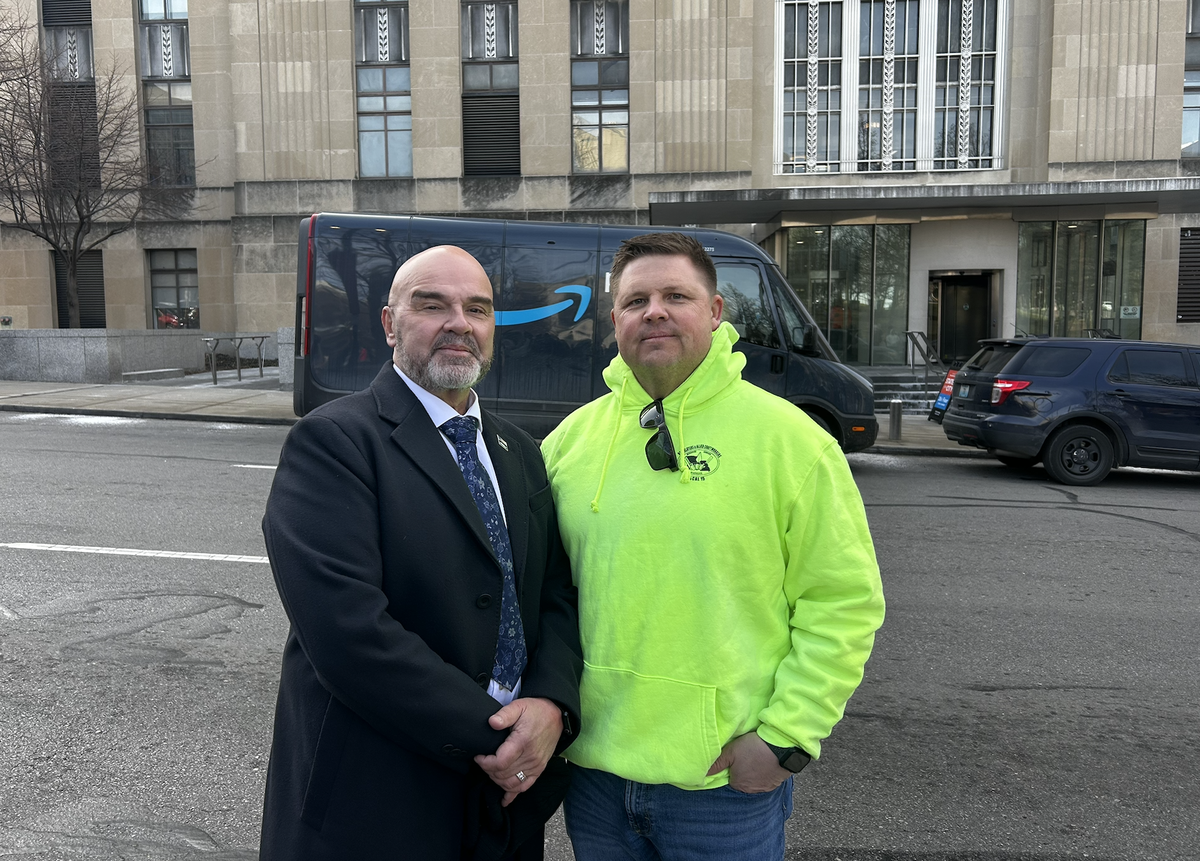
“So as a result, you have contractors working with the port who bring their own guys up from the South and pay them $13 an hour instead of the $54 an hour that local workers should be getting for a publicly financed project,” said Ralph Oropeza, manager of the GKCBCTC.
“It lowers area standards,” said Bo Moreno, manager of the International Brotherhood of Electrical Workers Local 124. “These projects should be training and paying the workers in this community, not unskilled workers brought in from Texas or Oklahoma.”
Oropeza said the stakes go beyond wages. He said the trades council last year documented what it believed were off-the-books payments on a port-connected project along the Berkley Riverfront, where some undocumented workers were allegedly paid through a single intermediary who then distributed the money. “The city loses out,” Oropeza said, “because it doesn’t get paid any earnings taxes on that.”
The group, he said, gathered video and other documentation and brought it to Port KC, and was preparing to stage a protest at the final Kansas City Current home game in November before being asked to hold off while the situation was addressed.
They did. Then they waited. Nothing from the port.
“Brother, we’re getting ready to start another season here in March,” Oropeza said. “And we still haven’t gotten this done.”
Port KC responds
Stephens pushed back on the unions’ account, calling their claims “misleading and unnecessarily inflammatory.”
In a statement, he said Port KC has drafted two policies addressing prevailing wage, apprenticeship and workforce standards and plans to bring them before the board for a vote at its Feb. 23 meeting. He described the proposals as “transformative and broadly beneficial” for labor and workforce development.
I read that comment to Oropeza and Moreno.
“That statement he gave you is more than we’ve heard from Jon Stephens in months,” Oropeza said.
He said the trades had met with the mayor on Monday and made clear they believe the port has failed to honor its commitment to local workers. Oropeza said Lucas told them he was aware of the concerns but doesn’t like to “put his thumb on the scale with people he appoints.”
“So we told him plainly: We’d like to see Jon Stephens removed,” Oropeza said. “That was our message. I told the mayor I’d try to shield him a little bit, but at the end of the day, that’s your guy. And if this doesn’t get fixed, you’re going to get called out on it too.”
Which is what happened Tuesday, where one of those chants from the trades workers was “Shame on Lucas.”
I asked the mayor’s office for its thoughts on the protest. Spokesperson Megan Strickland said Lucas “expects alignment with city policies supporting prevailing wage” from Port KC and “expects a plan to resolve the issues in dispute at the next regular Port KC meeting.”
Which sounds like the trades are probably going to get something close to what they’re asking for. Whether they should have had to trudge down to City Hall to demand it is another matter.
This story was originally published February 12, 2026 at 2:04 PM.