
Kansan’s trip to Hiroshima and Nagasaki deepened her understanding of the bombings | Opinion
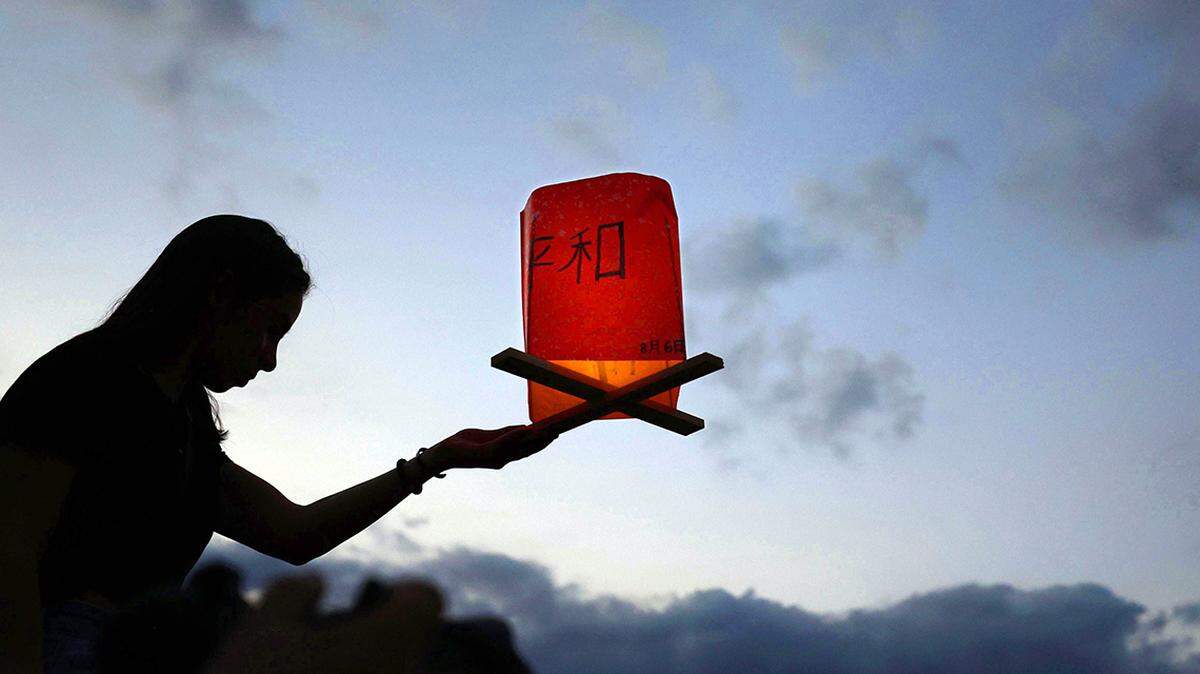
Scars endure
My recent journey to Hiroshima and Nagasaki, Japan, deepened my understanding of the atomic bombings, which once seemed distant and abstract. Walking where thousands perished in a blinding flash, it struck me: These were massive, solemn cemeteries — crematoriums that bear witness to the horrors of war.
The experience was reminiscent of my visit to a World War II concentration camp. In both places, the enormity of human suffering became palpable, visceral reminders of the horrors of war.
Meeting with survivors, known as the hibakusha, revealed lasting scars inflicted by the atomic bombs. We heard of unimaginable devastation and suffering wrought by the invention of our brilliant yet misguided scientific minds.
Our apology and pledge to advocate for the abolition of nuclear weapons was met with gratitude. Their forgiveness and resilience profoundly moved me. Despite enduring physical and psychological hardships, along with discrimination and fears for future generations, they harbored no hatred. Our shared commitment to oppose nuclear weapons, including the factory in Kansas City that builds parts for nuclear weapons, resonated deeply with them and gave them hope.
My journey was not merely a pilgrimage to historic sites, but a profound awakening to the human toll of war and the imperative to strive for a future free from nuclear annihilation.
- Ann Suellentrop, Kansas City, Kansas
What to ask
When I was in college — back when dinosaurs roamed the Earth, as my son would say — my science professor stressed that “If you want the right answer, be sure to ask the right question.” Much newsprint has been devoted to the steps traveled by the Chiefs, Royals and Jackson County government before the April 2 stadium vote and the results. Nobody is asking the right question.
Why did people vote against this proposition? What was their motivation? I believe you will find that a substantial number of people voted against the Crossroads baseball stadium not against improvements for Arrowhead Stadium, but because they would prefer renovations for Kauffman Stadium. The people love Kauffman, and Royals owner John Sherman should learn to live with that fact or sell the team to someone more in tune with the people who buy tickets.
Do the survey and find out whether I am right. Ask the right questions.
- Dixon H. Davenport, Lee’s Summit
Big picture
As important as a president is, it is worth remembering that the people who surround any president are nearly as important. And consider the kind of people with whom Donald Trump would surround himself if he were returned to office.
Imagine an opponent of NATO as secretary of defense. An architect of the heartless policy to separate immigrant children from their parents at Homeland Security. An election-denying lawyer as attorney general.
Think again of Trump’s previous administration, when departments such as Interior, EPA and Health and Human Services were led by millionaire executives of the very industries that those agencies are intended to regulate.
Now think about the supremely confident people who have surrounded President Joe Biden, whose administration has had almost zero turnover in Cabinet-level positions, and who would surround Vice President Kamala Harris if she wins in November. Think about prescription drug prices coming down. Recall how quickly this Transportation Department got a channel open in Baltimore Harbor after a cargo ship hit the Francis Scott Key Bridge. Think particularly about the tenacious diplomacy that has strengthened NATO in the face of naked Russian aggression.
Think long and hard before you vote. Because a presidency really is about much more than one person.
- Christopher Riley, Overland Park
Yes, constitutional
Recently, military installations named for those whose claim to fame is that they fought against the United States in the Civil War have been renamed. Such people do not deserve to be honored by the United States. Those who worked to preserve the Union deserve honor, but Patrick Tuohey apparently has forgotten this. In his July 26 commentary “’Unprecedented’ times are no reason for bad decisions,” (8A) he called President Abraham Lincoln’s suspension of the right of habeas corpus during the war an unconstitutional “power grab.”
Article 1, Section 9, Clause 2 of the Constitution states, “The privilege of the writ of habeas corpus shall not be suspended, unless when in cases of rebellion or invasion the public safety may require it.” The Civil War certainly counts as a rebellion. The section does not make it clear how the right is to be suspended, but the Habeas Corpus Suspension Act of 1863 authorized Lincoln to suspend the right.
Confused commentators, alas, aren’t unprecedented.
- Robert O’Rourke, Leavenworth