
At Mizzou, our class helps students turn American history into an equitable future
As university administrators deal with the COVID-19 crisis and how their communities will return to campus in the fall, they must also consider how students, staff and faculty are responding to yet another wave of racist violence and death recorded on video.
By the time students return to classrooms — in-person or remotely — they will still be reeling from the killings of Ahmaud Arbery, Breonna Taylor and George Floyd, as well as the protests their deaths have fueled. These recent events are painful reopenings of the same old scab that has been torn away time and again throughout our nation’s history.
What is an appropriate response within higher education? This is a question my colleagues and I grappled with at the University of Missouri in Columbia during the student movement of 2015. That moment was almost identical to this one. Between the many deaths of Black men and women (Trayvon Martin, Mike Brown, Rekia Boyd, Sandra Bland, Tamir Rice, Eric Garner and so many others) and the frequent instances of racism on campus and in the college town, the university community was asking the administration to intervene, interrogate and heal those scabs in a way that felt generative and meaningful.
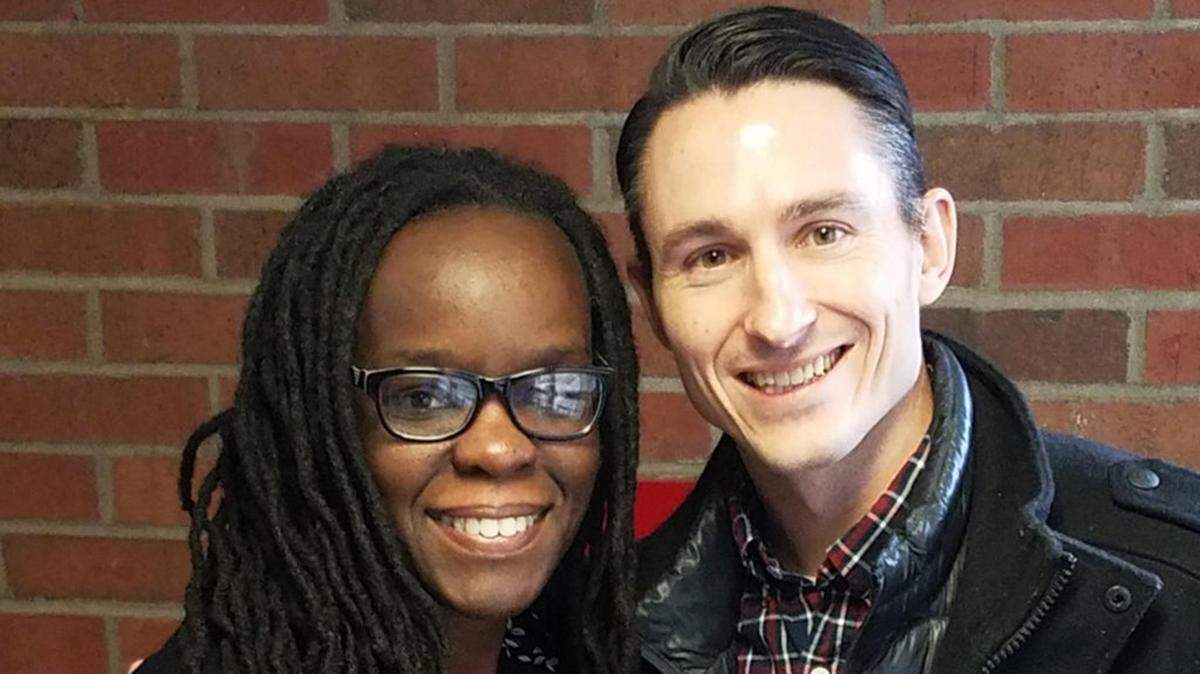
Universities, by their very nature, are not comfortable dealing with these types of demands. They are built for the inertia of tradition, not the responsiveness of innovation. But many of us were moved by our students and what they were going through. Among the various ideas and interventions that emanated from an engaged group of faculty and staff members, I collaborated with my colleague Adam Seagrave, a professor in political science and associate director of the Kinder Institute for Constitutional Democracy at Mizzou.
As the two of us sat down within the fragile walls of the ivory tower, we recognized the valuable bridge we had built between our own different backgrounds and political views. We decided to use that as a model to design a pedagogical experiment that would get to the heart of racism — one that would shake tradition in search of a healing balm for the old wound. We called our class “Race and the American Story,“ and we have been teaching it at three different institutions since 2017, along with several other colleagues. We both feel it is the most fulfilling teaching endeavor we have undertaken in a long time.
Each spring semester, diverse groups of students are invited to read and respond to a carefully curated list of primary source readings that frame the American story. In essence, we infuse contemporary stories of racism and state violence with context and meaning. For instance, we consider the Declaration of Independence and the Constitution, and sit with the ideals expressed in those documents to assess whether they were conceived to truly incorporate all Americans. We explore Alexis de Tocqueville, Ida B. Wells, Frances Harper, the Dred Scott decisions and Abraham Lincoln, as well as speeches and writings of Martin Luther King Jr., Malcolm X and others. These forays into American historical discourse help build an understanding of the systemic nature of the problem.
Throughout the semester, students in three different state universities interact, listen, read and debate, and then meet at an annual symposium to imagine a more just system and society. We now have an inaugural group of 10 undergraduate summer engagement fellows who have conceived and kicked off conversations among their peers. We also have an online book club that has attracted a wider audience. Our classrooms and learning community, built on respect and mutual understanding, are microcosms that we hope will transform society around us.
I encourage university colleagues across the country — administrators and faculty members— to be attentive to the trauma and pain that students will bring back to campus. Remember too that the fact that COVID-19 fatalities have affected more Black people than any other group means that the pain will be palpable. We cannot leave all the work to a diversity office tucked away in the corner of an administration building. We have to be creative. What works for those of us who teach this course is that we are an interdisciplinary team of faculty; we are committed; and we recognize that we can learn tremendously from the journeys of our students through the canonical texts we use, as well as the fresh, contemporary interpretations they produce along the way.
And, by the way, you don’t even have to be African American to do the work. As interdisciplinary scholars of disparate backgrounds, Adam and I have undertaken this important intellectual journey to do our part in interceding, interpreting and interrupting the continuing presence of racism in this epochal, evolving American story.
Stephanie Shonekan is a professor and associate dean of the College of Arts and Science at the University of Missouri.