
Oppression demands resistance. We must rethink policing in Kansas City
So much of the discussion surrounding police violence has justly focused on the fact that police officers, who are supposed to protect and serve and are authorized to use deadly force, often instead use their privileged position in society to terrorize and oppress the Black community.
Some police departments terrorize and oppress to generate a stream of revenue, as was revealed in the Justice Department’s report on the Ferguson, Missouri, police force after the murder of Michael Brown. Of course, we have since discovered that it is a widespread practice for law enforcement to generate revenue through its power to impose fines. In one instance, the report cited a woman who was arrested twice, put in jail for six days and forced to pay $550 in court fees for a single parking violation — newly learned, but not surprising.
And, since there has been documented evidence of white supremacists planning to infiltrate law enforcement, terrorism and oppression are also planned events of anti-Black racism. For example, a U.S. district judge in California identified a “neo-Nazi, white supremacist gang” called the Vikings that had formed among deputies of the Los Angles County sheriff’s department. Again, newly learned, but not surprising.
A natural response to oppression is resistance.
In a past era, the mode of resistance to police violence against the Black community was to call for police reform. Primarily, the reform agenda has called for some type of community policing, where police return to “walking the beat” and building relationships and trust with community members.
Another part of the reform agenda has been civilian oversight of police, with community members sitting on boards empowered to hear cases of police violence. However, these boards typically have no authority to reprimand, even in the slightest way, officers who have been found guilty of engaging in such violence. The usual method of effecting change in both of these reform agenda items has been through the retraining of guilty officers.
This has not worked. And that era is not this era. Modest calls for community reform have been met with refusals by police departments to take any responsibility for the actions of their officers, or to turn over even the smallest bit of oversight to communities.
Frederick Douglass wrote: “Give (a man) a bad master and he aspires to a good master; give him a good master, and he wishes to become his own master.” Reform calls for the police to be a “good master.” The police have refused even that. The logic of that statement, coupled with the refusal of police departments to respond positively to a reform agenda leads to the conclusion that reform of the police is not enough. Communities seek — no, demand — to be in full control of those in positions of deadly authority.
What communities demand in this era is community control — not community oversight, but control, where people have the right and authority to protect and serve themselves, and do so in a way that values the lives of members of the community as they value the lives of members of their own family. Because they are family.
Calls to “defund the police” are not simply demands to reduce police funding, nor to abolish law enforcement. They are calls to completely restructure the police-community relationship in a way that turns police officers from an occupying force into true protectors and servants of the community.
This demand can be met with community police. Read this carefully: not community policing, but community police. People who have such deadly authority must be actual members of the communities they protect and serve. This doesn’t mean having new officers move into the neighborhoods they patrol — another reform agenda item — but having people who already live there protect and serve their communities’ families.
This is true structural change, not a tinkering-around-the-edges reform. Let’s get to it.
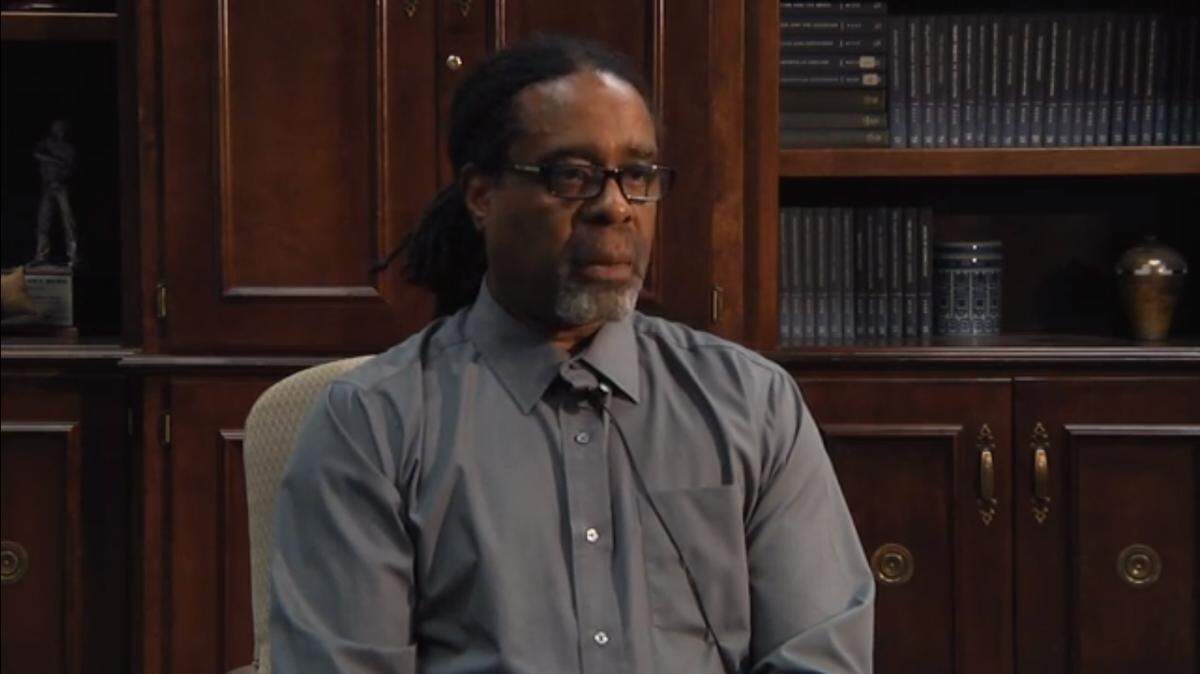
Linwood Tauheed is an associate professor of economics at the University of Missouri-Kansas City and president of the National Economics Association.