
Thank God for my Black mother, who taught me I could become anything with hard work
It’s been at least 16 years, so I know I should be over it. And in the larger scheme of things, the incident would seem minuscule compared to everything I’ve been through in my life. Yet it still sticks with me and still makes me cringe every time I think about it.
I’ve always tried to be cordial and accommodating when working any job — including at Banana Republic on the Country Club Plaza. I knew most people would question an attorney working part-time at a retail store, but the discount was too much to give up. I got the opportunity to work with young people and the diversity of the staff was encouraging.
As one of the older employees, I should not have been surprised by anything that came out of the mouths of the young white men working there. But one comment has always stood out as being offensive and reeking of white privilege.
Out of the blue, a young, white male employee emphatically told me how “lucky” I was because I was able to “work with him.” His ill-placed statement made my blood boil. His white privilege showed even before the term was popular. He really intimated that I was “luckier” than my parents’ generation simply because I — a Black woman with a journalism degree from the famed University of Missouri School of Journalism, a law degree and law license — was able to work beside a pissant white kid who had barely graduated from a substandard college.
I went off. I was forced to explain to him that while integration has many benefits for both whites and African Americans, Black people definitely lose out in our mission to be accepted and treated with respect. I educated him about my mother’s high school class of 1948, which, before Brown v. Board of Education, saw 100% of its students graduate. I shared with him the stories my parents told me about how when Black people were forced to live among each other, buy from each other and be social, we were actually more supportive of each other and had thriving neighborhoods.
I shared with him the story of 18th & Vine beyond the jazz and barbecue, Tulsa’s Black Wall Street, historically Black colleges and universities and the genius of Black inventors. I had to point out that without Black people, he might not have had his cotton shirt, ironed his clothes that morning, or driven safely with traffic lights. And I taught him that my ancestors didn’t fight to work with the likes of him because he was white — they fought for integration to be treated fairly.
I was never taught that white is right and Black is wrong. My mother didn’t teach me that to be successful in life, I had to assimilate and forget my own Black heritage. On the contrary: I, raised by a single Black mother who was the product of a mixed-race father and Black mother, was taught that I could be anything with hard work. Thank God I had a mother who had proven just that. A mother who, despite not attending college, managed to become one of the of the first Black women COBOL computer programmers for AT&T in the late 1950s. A mother who bought her first home at 22 and became a beacon in our neighborhood by forcing all of us to look inside ourselves and find strength.
I’m glad that same mother taught me to be proud of my Black heritage and respect my white heritage too — but to realize my grandfather’s white background did not surpass his Black blood.
So no, I wasn’t lucky to work with this young man. We were lucky to work with each other. Being lucky to work while Black is a misnomer. I’m lucky just to be Black, but disillusioned that in 2020 we are still defending ourselves because of the color of our skin.
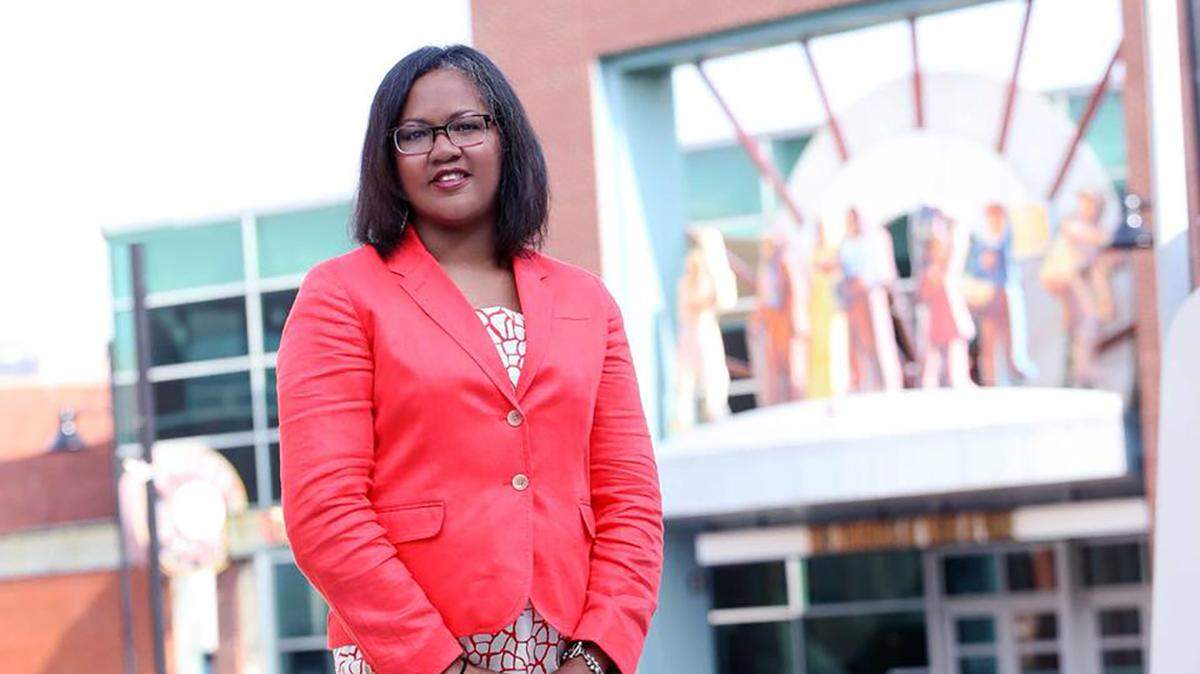
Barbara Anne Washington represents District 23 in the Missouri House of Representatives.