
Kansas City deserves an efficient water line replacement plan
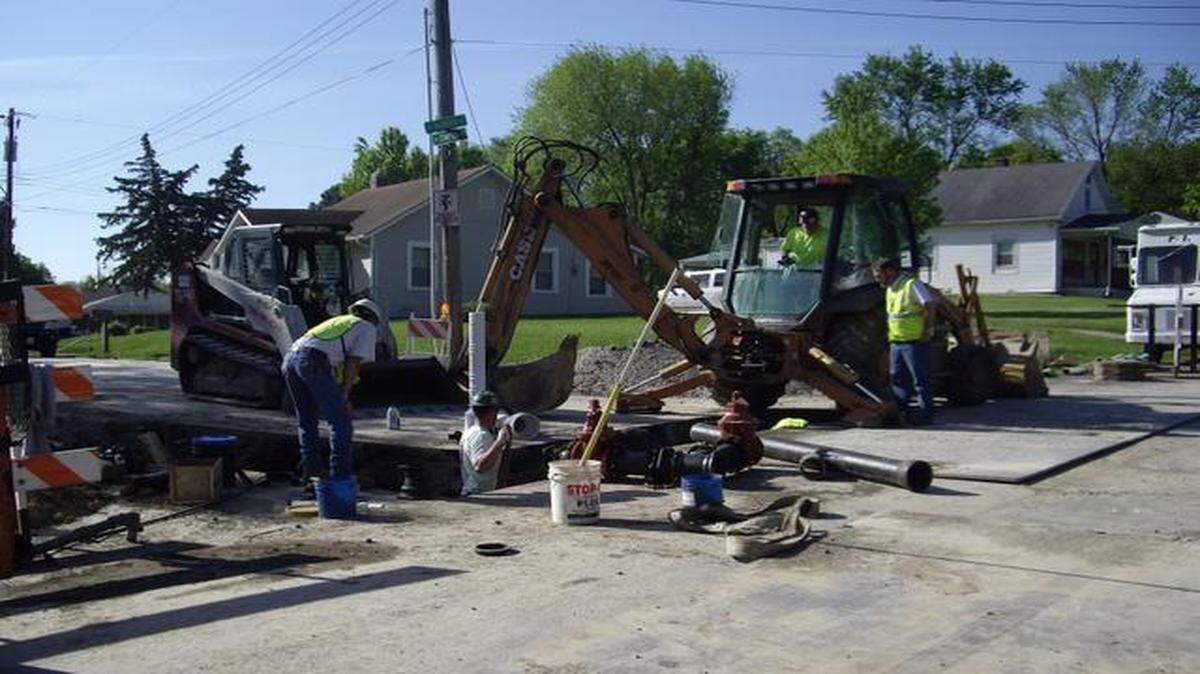
Kansas Citians expect — and usually get — free-flowing water at their houses. But when a water line breaks, residents also expect the fix to be quick and the street outside to be back in good condition as fast as possible.
A report from 2014 shows the city has had some success in making speedier repairs, and it is getting a thumbs-up from more Kansas Citians in satisfaction surveys.
However, the report also shows the Water Services Department does not yet often enough hit its expected rates of repairs for water-line problems. More progress is needed on a basic and essential public service.
For the long run, the city has developed a plan designed to replace break-prone pipes. Water officials must stay tightly focused on two noteworthy goals.
▪ First, make it a priority to replace pipes that have the highest probabilities of failure and consequences for residents, businesses and traffic.
The most recent city report put 19.1 miles in the worst-of-the-worst category and 37.6 miles in the next category on a nine-level chart. Overall, the city has about 2,800 miles of pipe in its distribution system.
▪ Then, stay on track to replace 28 miles of pipe each year.
After finishing just 19 miles in the prior fiscal year, the city expects to reach the 28-mile replacement goal by the end of this fiscal year on April 30. The city must maintain that pace — at an average cost of $30 million annually — to replace all existing lines over 100 years. That’s a long time, but it appears realistic based on failure rates of pipe now in the ground.
However, the program isn’t cheap for customers. The water-only portion of an average monthly residential bill has jumped 50 percent in four years, from $30.50 to almost $45.
In a bit of good news, water rates are projected to rise only 3 percent annually over the next five years, boosting the average charge to $51.63 a month by 2019.
By contrast, as The Star Editorial Board noted last month, the average residential sewer charge has almost doubled in the last five years, to $46.60 a month. The City Council is expected this year and for the following five years to approve annual 13 percent increases. In 2020, the sewer portion of the residential bill could reach $97.02 a month.
Those revenues will support a 25-year plan to fix Kansas City’s aging sewer and stormwater systems.
Water Services Department director Terry Leeds noted last week that his agency faces a lot of unknowns as it pursues the water line replacement schedule.
“Water is a rising cost industry,” he said, acknowledging that soaring monthly bills will affect many customers.
The city will have to deal with the costs of electricity to run pumping stations and keep an eye on how much it spends to repair its single, large treatment plant — or even build a new one in the coming decades.
Other city programs are getting renewed attention, such as making sure hundreds upon hundreds of water valves work properly. If not, they are being replaced. This plan helps workers more efficiently shut down service after water-line breaks, then more quickly restore services after repairs.
The long-beleaguered Water Services Department reached its nadir during a stretch from 2007 to 2011, when one director lasted barely a year and three acting directors were in charge at various points. Leeds was named permanent director about three years ago, and has given the agency more stability.
Still, as it carries out the expensive 100-year water line replacement program and the even more costly overflow stormwater control plan, the department must make steadier progress delivering on its promises of improved service.
This story was originally published February 7, 2015 at 9:00 AM.