
As the Nelson-Atkins aims to connect with neighbors, an intriguing plan to grow the lure of art is in the works
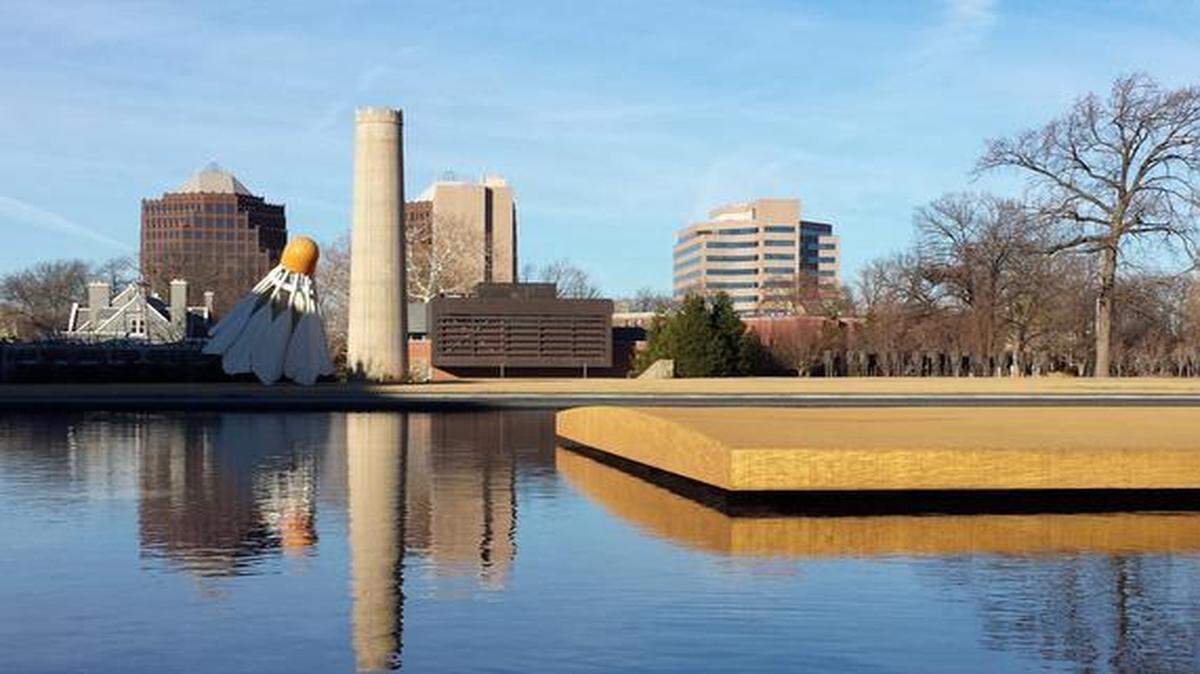
When the Nelson-Atkins Museum of Art revealed last summer a design concept for invigorating its surroundings and better connecting with its neighbors, it began a surprising but welcome conversation about the future of the institution and its city.
It also created a bit of confusion. Neighbors and others wondered just what this plan would involve and began to fear another bout of institutional encroachment on some of the city’s most historic and formally attractive residential districts.
Part of that confusion stems from the Nelson seizing an opportunity to plan for its own long-term future even as it promoted this separate idea of a “cultural district” that would highlight, enhance and prompt collaboration among nearby educational and cultural assets and attractions.
So first things first:
As an example of an enhanced district, imagine the emergence of a midtown people magnet that has the verve and vitality of Chicago’s Millennium Park, where sculpture selfies with Anish Kapoor’s mirror-surfaced “bean” have become iconic. That sort of park makeover could be one piece of this project as the conversation focuses on revitalizing Theis Mall, just south of the Nelson’s long lawn and a walkable few blocks from the Country Club Plaza.
The museum’s conversation so far has included talks with neighboring institutions and public events aimed at soliciting ideas and reactions. Later this week, the talk accelerates when the museum’s planning team conducts a design workshop, or charrette, over three days.
No conclusions or final details are expected to result from the weekend event, though the charrette may well lead to the contours of a proposal by summer, says Julián Zugazagoitia, the museum’s entrepreneurial director and CEO. “The opportunity here is to reveal in a brighter way many things that already exist,” Zugazagoitia told The Star’s editorial board.
The bigger ideas include enhancing the museum’s Donald J. Hall Sculpture Park and perhaps placing sculptures or art kiosks throughout the greater neighborhood to create “art walk” opportunities. Better wayfinding, signage, pedestrian-oriented links and perhaps even a regular jitney service would help connect the museum and nearby cultural institutions, such as the Kansas City Art Institute, the Kemper Museum, the University of Missouri-Kansas City, the Kauffman Foundation, Rockhurst University and the Plaza.
Should a pedestrian bridge be built over Cleaver Boulevard or Main Street? Can the museum plan help stitch a development web eastward to Troost Avenue and beyond? Such ideas have been much debated so far and serve to helpfully highlight typical conflicts that arise when grand planning brings together forces for neighborhood preservation, pedestrian values, urban revitalization and economic development.
“The priorities will be more clear after next weekend,” says Vicki Noteis, whose urban planning firm has been leading the local discussions.
Along with all of those possible external gestures, the Nelson’s leaders hope to tackle its needs for internal expansion, including office space that never got adequately addressed when the museum grew into the Bloch Building in 2007.
This is the part of the conversation that makes some neighbors nervous. The museum has its eye on replacing historic homes it owns on 45th street, directly to the north, with new buildings and perhaps a boutique hotel. The long-debated fate of the old stone Kirkwood mansion, the former Rockhill Tennis Club, also comes into play. The neighborhood and city have prevented the museum from converting that building to office use, though it’s conceivable — and advisable — that this process will help resolve the matter and lead everyone past the current impasse.
No one yet seems to know what to call this abstraction: It’s been touted as a “cultural district,” but Zugazagoitia seems to have tired of the vagueness of that label. The intent is not to compete with the Crossroads Arts District three miles to the north and its important cultural amenities. Rather there’s a logical notion to exploit the museum’s proximity to the Plaza; to extend its reach eastward to Troost Avenue, where a backshop, storage and community art outreach could be placed; and to ignite the imaginations and recreational passions of Kansas Citians and visitors alike.
“With no bold vision, nothing would have ever been accomplished,” says Shirley Helzberg, the Nelson’s board chair.
The plan has no budget attached though it’s easy to contemplate a project that spans decades and costs many millions of dollars. If the concept proves sound and the museum succeeds in creating a wildly popular proposal, then, of course, the money could flow and the city will be the better for it.
In the devilish details, we’d urge caution before the museum does anything to harm the historic nature of its surroundings, whose roots, of course, were planted by the founding publisher of this newspaper.
But by all means there is no inherent harm in thinking big and in sparking collaboration among community partners who share the vision and will work towards a greater good beyond their own doors.
This story was originally published January 31, 2015 at 9:00 AM.