
Gov. Sam Brownback embarks on unpromising Kansas tour about jobs and tax cuts
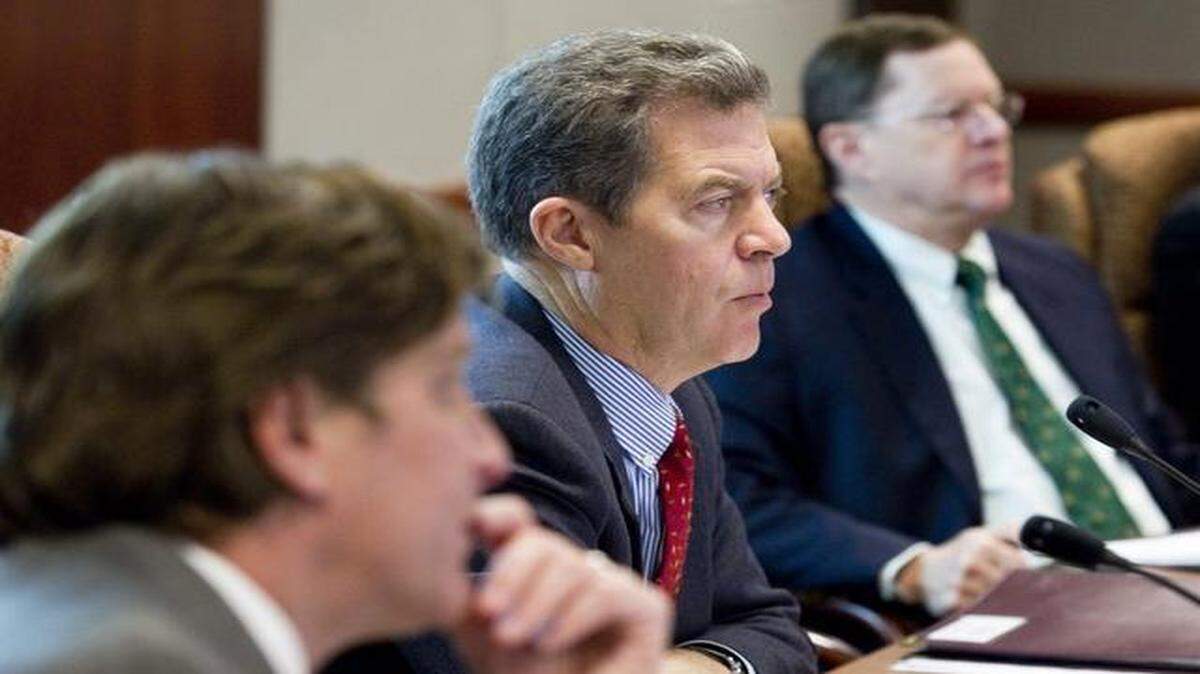
Gov. Sam Brownback is getting ready to go on a statewide tour to tout his pledge that Kansas can create 100,000 new private-sector jobs during his next four years in office.
The governor also recently reiterated his promise to continue the state’s “march to zero income taxes,” which he claims will help the state add to its employment rolls.
However, the 100,000 goal appears overly ambitious, based upon The Star’s review of job growth in Kansas and the rest of the country since Brownback took office in January 2011.
The figures also show that most states with the highest income tax rates in the nation have gained employment faster than Kansas has since steep income tax cuts went into effect in 2013.
Those reductions have drained the general fund of hundreds of millions of dollars. Brownback’s recently released budget contains proposed cuts to funding for education, road repairs and public employee pensions.
Here’s a closer look at the numbers:
▪ To reach 100,000 new private sector jobs over 48 months, Kansas would have to create almost 2,100 a month.
But Kansas has added only 59,400 of those jobs since Brownback took office — an increase of slightly fewer than 1,300 a month through last November.
Overall, state employment would have to surge almost 9 percent in the next four years. By contrast, Kansas’ 5.5 percent private sector job growth rate in Brownback’s first term trailed 33 other states and Washington, D.C.
The governor’s pledge appears to become more unrealistic after taking this into account: The state’s employment growth rate actually has fallen since the tax cuts went into place, with fewer than 1,250 private sector jobs added monthly in the last two years.
In that stretch, Kansas’ growth rate lagged 37 other states (including Missouri) and Washington, D.C.
▪ Since signing the tax cuts in 2012, Brownback continually has claimed that Kansas needs to join states without income taxes — such as Texas, Florida and Nevada — to make the most progress on the jobs front.
Critics of this approach rightly point out that these states have other sources of income, such as oil revenues, as well as different mixes of fees and sales and property tax rates to fund their public services.
The Star’s review showed that seven of the nine U.S. states without income taxes have had stronger private-sector job growth rates than Kansas since January 2011.
But The Star also looked at eight states with some of the highest income taxes in the nation: California, Hawaii, Iowa, Minnesota, New Jersey, New York, Oregon and Vermont.
Kansas is gaining jobs far more slowly than most of these states.
In fact, over the last two years — even with the Kansas income tax cuts in place — all the high-tax states except New Jersey have added jobs at a faster clip than the Sunflower State.
Even during a national boom in employment, Brownback’s tax-cut plan is not creating nearly as many jobs as its boosters once hoped.
Meanwhile, revenue for crucial public services for Kansans has been slashed. The Legislature must act responsibly and repeal the tax cuts to put the state on more solid financial footing.
This story was originally published January 25, 2015 at 6:00 AM.