
Nobody even knows how Leawood’s Negro Creek really got its name. Keeping it is wrong | Opinion
The committee recommending that Johnson County’s Negro Creek keep its name got it wrong. So, so wrong.
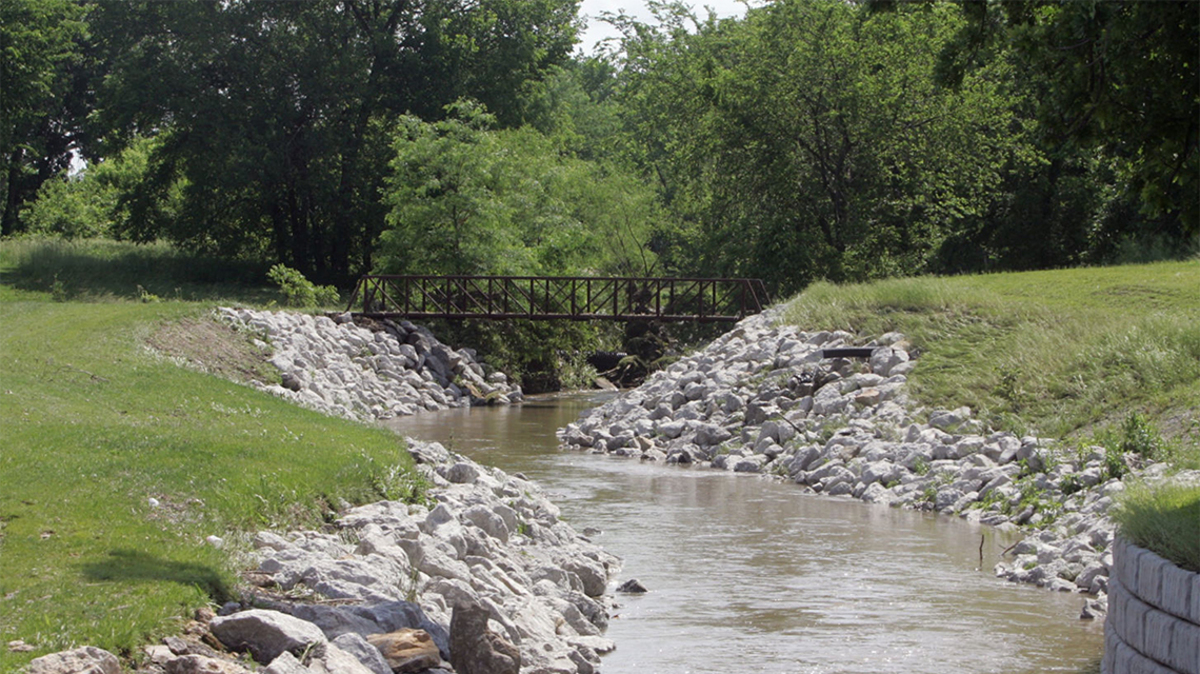
Researchers have not been able to pin down the origin of the name of the small tributary that flows through Ironhorse Golf Course, just south of 151st Street between Mission Road and Nall Avenue in Leawood.
That uncertainty is even more reason to replace the offensive word.
We know Negro Creek first appeared on a map of eastern Kansas in 1856 and continued to appear in other sources such as newspapers, according to local historians. A more derogatory name — yes, the vile epithet derived from “Negro” — appeared other places throughout this period, including on a U.S. Geological Survey map in 1956.
Isn’t that enough?
It’s not, according to Jay Holbert, president of the Johnson County chapter of the NAACP. Keeping the creek’s name as is will help the community understand the history of the area, he told reporters last week. We take exception to that assessment.
Renaming Negro Creek is the right thing to do. And while we respect and honor the commitment of the Johnson County committee tasked with studying the issue, its members simply erred.
The coalition, made up of Holbert and other NAACP representatives, Johnson County Commissioner Becky Fast, the Advocacy and Awareness Group of Johnson County and other community stakeholders studied the issue for two years. We recognize the scope of that exhaustive work. But we cannot excuse the recommendation to stand pat.
Incredibly, the group voted unanimously to keep the name and create signs to place along the creek to explain its history and cultural importance. Our suggestion: Yes, document the creek’s ugly past. But the highly offensive name should not remain on a stream in one of the state’s most affluent counties.
“If we don’t keep in mind … some of the bad things that we went through, you are destined to start repeating it,” Holbert told The Washington Post. He was way off base.
In recent years, other cities have stripped the same derogatory term from bodies of water. Savannah, Georiga’s Runaway Negro Creek was renamed Freedom Creek. And following a naming contest conducted by local high school students, Colorado’s Negro Creek was rebranded as Clay Creek.
We don’t anticipate slavery being forgotten or repeated in those areas.
And where does that leave the state of Kansas? At least six other geographical features and one oil field in the Sunflower State reference the word “Negro.” “There are no active proposals pending before the U.S. Board of Geographic Names (BGN) to change any ‘Negro’ names in Kansas,” U.S. Geological Survey’s Gina Anderson wrote in an email.
Johnson County could have set the template for change. Instead, it punted.
Older local Black leaders wanted to keep the name as some sort of reminder of the past, Holbert told The Star. But the name is too offensive to remain in place, younger Black activists argue. They’re right.
“What happened there, as far as we can track down the history, we need to know it so that people don’t grow up and forget history,” Holbert said. “There’s too much stuff going on right now where people want to rewrite history.”
But what parts of the past are we at risk of forgetting? The origins of the Negro Creek moniker aren’t close to certain. But one story seems more likely than others, historians say: that it was named after an enslaved man who ran away from a well-known yet notoriously violent Missouri family. He supposedly chose to take his own life in the free state of Kansas rather than return to a life of captivity across the state line.
We don’t know how much, if any of that story is true. But we do know that history provides plenty of examples of society recognizing wrongs and rectifying injustice. Johnson County has the chance to remove an ugly, unnecessary slur with murky origins. Why would anyone want to lock it in place for the future?