
Royals ‘listening session’ was a start, but KC needs more details on a downtown stadium
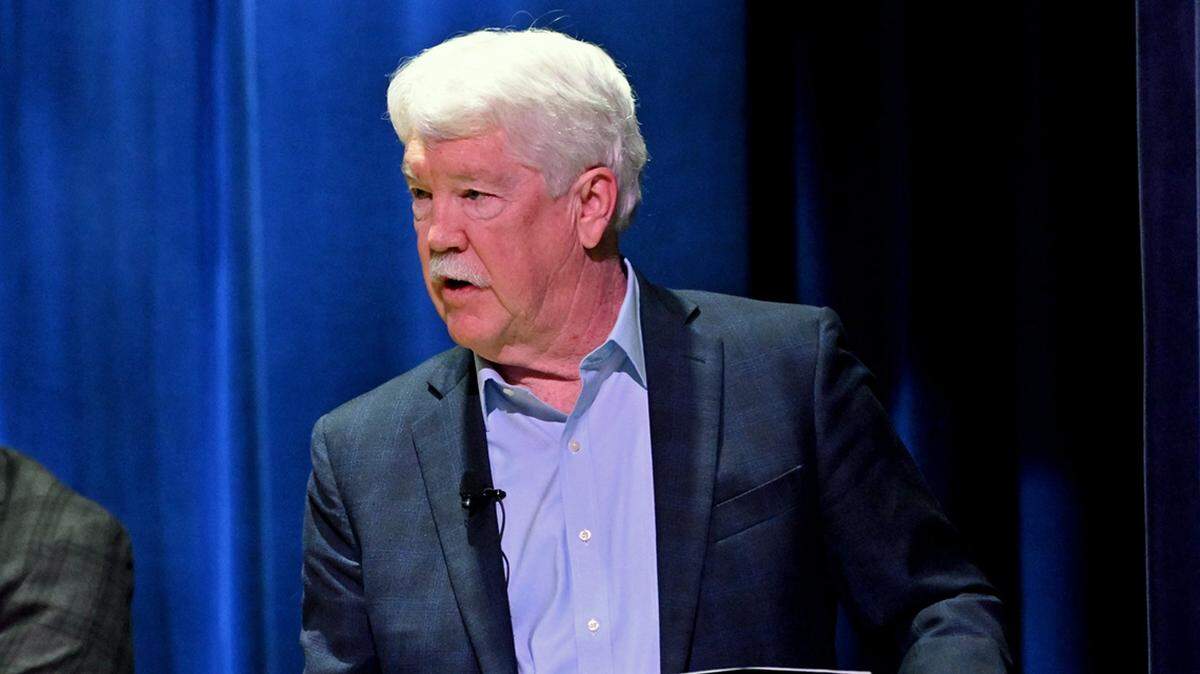
The Kansas City Royals have held their first “listening session” to explain plans for a downtown baseball stadium and a nearby village of shops and restaurants.
The $2 billion stadium district would include $1 billion for the ballpark, and another $1 billion for an adjacent entertainment venue.
Questions were submitted on notecards, and screened. Audience members had to register before attending. That isn’t the best way to conduct a town hall, although that’s a quibble: By the time the plan goes to voters (if it goes to voters) there will be plenty of opportunity for the public to make its voice heard in ways the team can’t control.
We applaud the Royals’ decision to begin talking with the community about their plans. At the same time, important new questions and concerns about the downtown stadium remain unanswered. They must be addressed before voters give any consideration to tax dollars for the project.
A real need to replace Kauffman Stadium?
The Royals said the new stadium would cost $1 billion, which they said would be cheaper than renovating Kauffman Stadium. We’re skeptical.
In March 2022, Burns & McDonnell released its annual survey of conditions at the Royals’ current home. “In general, Kauffman Stadium and the immediate environs were observed to be in satisfactory condition,” the firm said.
“Minor physical deficiencies were observed … Such deficiencies are expected in such a large facility and typical of a high-use facility,” it continued. “Most deficiencies can be easily addressed by the Kansas City Royals through standard maintenance procedures.”
That hardly seems like a $1 billion disaster.
We’d like to hear more about this issue from the Jackson County Sports Authority. Voters should also know if the Chiefs believe they need $1 billion for repairs at Arrowhead Stadium, which is just as old as Kauffman and presumably has similar problems.
Tax breaks and subsidies likely
Royals owner John Sherman said “private capital” would pay to build the surrounding village, at an estimated cost of $1 billion. Voters should be careful: A village will likely require tax breaks and subsidies, including tax increment financing or TIFs, abatements and other developer goodies. Those incentives should be thoroughly understood before any vote.
One source close to the stadiums said the Royals should provide a “capital stack”: a list of where the money is coming from, and where it is going. We don’t have that yet.
Voters should also understand the real impact a stadium and new entertainment venue would have on the Power & Light District. Kansas City taxpayers are still paying on borrowing for that development, and its revenue would likely slump if a new baseball venue opens.
Attendance at other cities with new ballparks
Sherman also said downtown stadiums have opened in other cities in recent years, and have shown to be catalysts for “transformational” community improvements.
Reality is more complicated. Atlanta moved its baseball stadium out of downtown in order to construct an entertainment venue and new housing. The land outside the St. Louis Cardinals’ stadium sat vacant for years until the Cordish Companies stepped forward to build the Ballpark Village bar and restaurant district.
Other cities with relatively new stadiums — Minnesota, Cleveland, Baltimore, Detroit — finished in the lower half of MLB attendance in 2022. Who led the league in attendance? The Los Angeles Dodgers, whose stadium is 11 years older than Kauffman.
Final cost to Jackson County taxpayers
When it comes to taxpayer cost, the math is pretty simple: The Royals have said they won’t ask voters to approve any new taxes for the project. Instead, they’ll likely ask voters to extend the 3/8-cent sales tax approved at the polls in Jackson County in 2006.
Extending the tax would yield roughly $600 million to $700 million in construction funds. But that money would almost certainly have to be split with the Chiefs, who have their own stadium concerns. That means between $300 million and $350 million might be available to the Royals.
That’s far less than $1 billion. And it doesn’t account for ongoing maintenance costs for either stadium. That will have to be negotiated — in fact, lease agreements with both the Royals and Chiefs must be rewritten before voters have their say.
Sherman said private funders might make up the difference in the stadium’s cost. We still haven’t seen hard numbers to clarify that promise.
And who would actually own the new stadium? That will have to be settled before voters go to the polls. And what do the Chiefs want? Voters must have the full picture before casting ballots, which could come as early as August.
In Tuesday’s town hall, Sherman was asked if he will promise to keep the Royals in Kansas City. To his credit, he said yes. But let’s be clear: The team would have to sign a new lease agreement before voters would consider any tax for a new stadium.
Already, some groups are organizing against the stadium proposal. While we still lack the details to make a recommendation on the project, we think voters in the region will need firm answers before committing to a downtown ballpark.
Tuesday’s town hall was a start. But it was only a start.
This story was originally published December 17, 2022 at 7:30 AM.