
Missouri and Kansas kids’ test scores dipped. That’s no reason to attack public schools
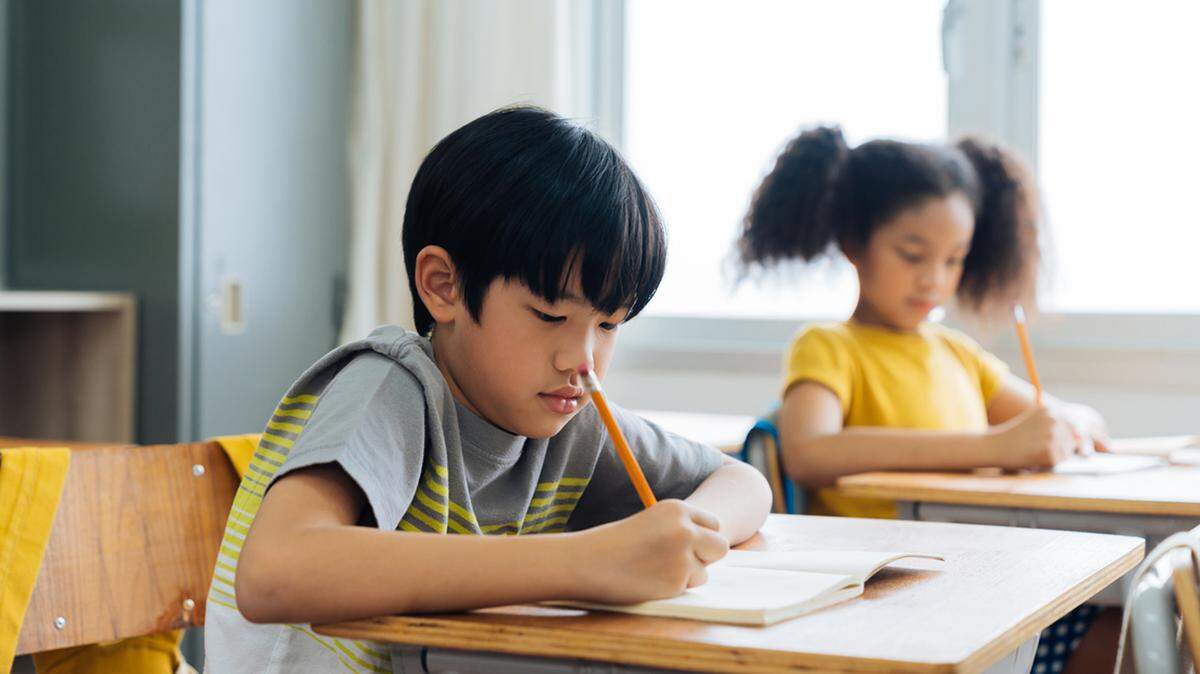
A recent report from the National Assessment of Educational Progress shows a major dip in math and reading test scores, including in Kansas and Missouri, for fourth and eighth grade students.
It’s time to panic.
By that, we mean a good panic: We must focus urgently on understanding the reasons for the decline, including school closures during the COVID-19 pandemic. We must then quickly repair the learning gap, including extra study, remedial classes if necessary, tutoring, perhaps renewed attention to math and reading skills.
What we must avoid is a bad panic. The dip in test scores is not a reason to toss aside public education, which remains one of this nation’s greatest and most important inventions. A guaranteed free public education provides all American children with an opportunity to learn, to succeed — and to understand, and engage with, government.
The nation’s founders, surrounded by a haphazard system of private schooling, understood this. “Preach, my dear Sir, a crusade against ignorance; establish and improve the law for educating the common people,” Thomas Jefferson wrote a friend in 1786.
By the mid-1800s, the common public school movement dipped into every corner of the nation. “Education … beyond all other devices of human origin, is the great equalizer of the conditions of men, the balance-wheel of the social machinery,” common school pioneer Horace Mann wrote.
Public schools are embedded in the constitutions in Missouri and Kansas. “The General Assembly shall establish and maintain free public schools,” Missouri’s document says.
In Kansas, “the Legislature shall provide for intellectual, educational, vocational and scientific improvement by establishing and maintaining public schools.”
“Public schools remain one of our most powerful institutions for maintaining a democratic society and fostering common understanding among our people,” National Education Association President Becky Pringle said last year.
America has the tools to protect public education, at the local school board, the local school building, the local classroom. We should use those tools. The endless, repetitive focus by a tiny minority on culture wars in the classroom is deeply harmful, and a major distraction. It must end.
Teachers must teach, so students can learn.
COVID-19 pandemic not the only cause
Make no mistake: The decline in test scores is real. Kansas fourth graders scored 235 points on the standardized math test, down from 239.5 points in 2019 (on a 0-500 scale). Missouri’s fourth grade math results dropped too, from 238.4 in 2019 to 232.4.
Eighth graders’ math scores slumped in both states.
Yet the drops are roughly consistent with the declines nationally, despite widely disparate COVID-19 policies among states. Equally important, the nation’s scores in most cases are still higher in 2022 than they were in 1992, when the NAEP program was first developed.
In fact, many experts now think the 2022 test score drop is part of a decadelong pattern, exacerbated by the pandemic but not totally caused by it. “From the late 1990s through the early 2000s, there was a decade of educational progress,” Harvard education professor Andrew Ho told The Harvard Gazette.
“Then from the late 2000s through the 2010s, there was, on average, an apparent leveling off of that trend,” he said.
It’s a small comfort, of course, to know test scores were lower 30 years ago than they are today. Kids are in school now, and they need to learn now, or face a lifetime of potential struggle.
That’s particularly true in the current environment, when new technologies swirl around students on a daily basis. It is no longer good enough to merely keep up — to stand still is to fall behind, perhaps forever.
But it is helpful to know test scores can be lifted again, as they were in late 1990s, through the concerted efforts of school boards, students, teachers and parents. That could mean extending the school year, which is still built around the 19th century agricultural model. It could mean extra classes, or catch-up study.
Improved testing that wrests less control of the curriculum away from teachers. More parental attention. The way students are taught reading may need review.
It will almost certainly mean paying quality teachers more.
Most American Rescue Plan money unspent
There is money available. According to Department of Education figures, Kansas was awarded $831 million in American Rescue Plan school funds. Through August, almost 98% of those funds remain unspent. Missouri has spent just 20% of its ARP grant of nearly $2 billion.
Missouri has received more than $3 billion in pandemic-related education funding from Washington. It has spent less than half that money.
Governors in both states, and legislators, must begin now to develop a plan to help students recover from the recent slump. They must spend the money it takes to bring scores up, including retention bonuses and raises for poorly-paid educators.
What they cannot do is use the crisis as an excuse to further damage public education, either through misspending, ill-conceived private school voucher programs, or by getting distracted by hot-button issues in the culture wars, such as transgender youth athletes, book banning and curricular concerns about nonexistent lessons on so-called “critical race theory.”
While adults argue endlessly over books in the library, our kids are forgetting how to read, or add two numbers. It’s a generation-bending mistake.
We can and should discuss the wisdom of the COVID-19 school closings, and the success or failures of remote digital learning. That discussion should be based on facts, not conjecture. We need to be ready for the next pandemic.
But the discussion should be part of a larger conversation about what we must do to help students today. That means a focus on quality public education, not blowing it up because test scores have dipped.
A free public education is our greatest gift to our children. If it stumbles, we must work to make it better. We should not abandon it — or them — until that work is done.