
John Wood quitting Senate race shows Missouri isn’t ready for independent candidates
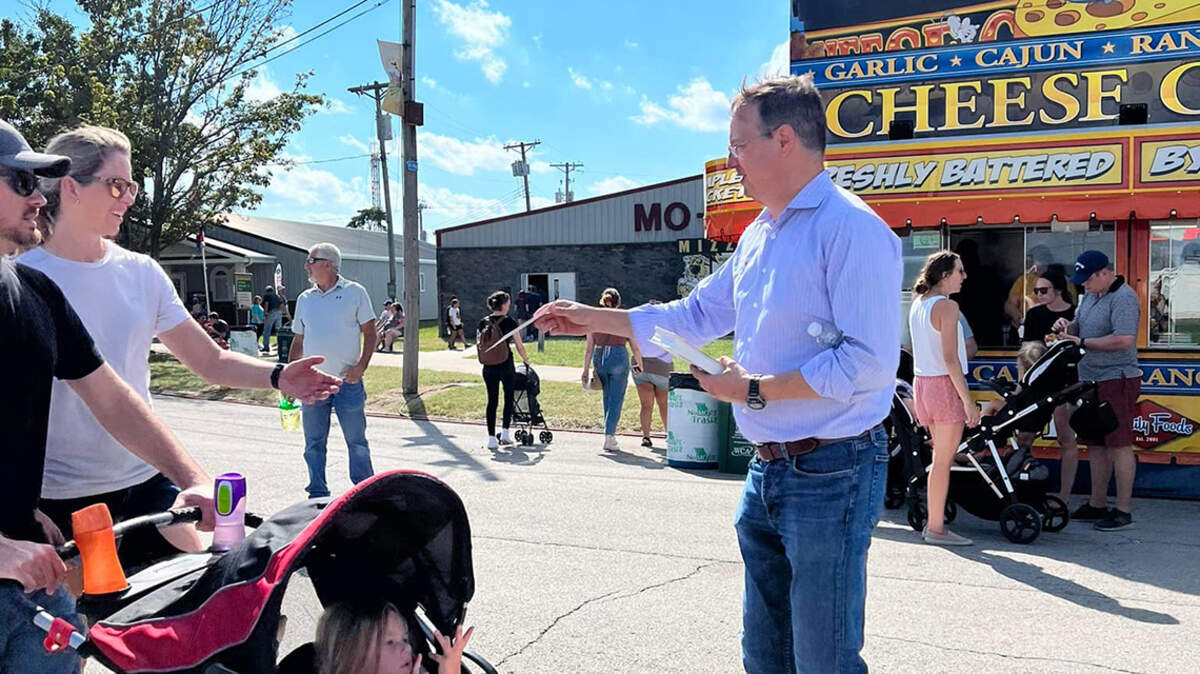
John Wood’s decision to withdraw from the Missouri Senate race, announced Tuesday, is regrettable.
Missourians did not get enough time to judge Wood’s qualifications for the job, or his positions on significant issues. He might have been a disappointment. He might have been a breath of fresh air. We’ll never know.
We do know a Wood candidacy might have tugged the major party candidates closer to the middle, where he promised to stand. His departure increases the chances for a mud-slinging, truth-free, Republican-versus-Democrat slap fight this fall.
Wood’s champion and recruiter, former Sen. Jack Danforth, hoped for something different. Voters, he said, should have an alternative to Republican Eric Schmitt’s silly right-wingism, or Democrat Trudy Busch Valentine’s lack of political experience.
Money was raised. Petition signatures were gathered. Thudding TV commercials aired, featuring Danforth, not Wood. The race was on. Until Tuesday, when it wasn’t.
For his part, Wood seemed less interested in running once disgraced former Gov. Eric Greitens lost the GOP primary. A Greitens candidacy “would have been unacceptable, embarrassing, and dangerous for my party, my state and my country,” he said in an email.
There may have been other reasons for Wood’s abrupt decision, however. Hard-core conservatives recently howled about Wood’s apparent lack of Missouri connections (a standard we hope they maintain with, say, Sen. Josh Hawley in 2024.)
Trumpists were upset with Wood’s work for the Jan. 6 investigating committee. Statewide campaigning in Missouri is arduous, and Wood may have lacked a real passion for a difficult race. There were lots of reasons to quit, and not many to keep running.
Which is why Wood’s decision, while regrettable, was also highly predictable.
Americans say they dislike the two-party system, and the polarization that comes with it. In a recent poll almost half of those surveyed between the ages of 18 and 49 said they wanted more choices than offered by just two parties.
Yet real-world experience doesn’t reflect that view very often. There’s an independent senator from Maine, Angus King, and one from Vermont, Bernie Sanders. Both usually vote with Democrats. Every other U.S. senator is an R or a D.
No voting House member is considered an independent. No state legislator in Missouri or Kansas stands outside the two-party structure. Statewide offices are held by Republicans and Democrats.
Eight years ago, an independent named Greg Orman ran for the Senate in Kansas, as an independent, against incumbent Sen. Pat Roberts. The Democratic nominee even quit the race that year to give Orman a path. He still lost by more than 10 points.
Four years later, Orman ran again as an independent, this time for governor. Crushed. Third-party campaigns, or independent campaigns, are exceedingly difficult, a fact Kansas state Sen. Dennis Pyle may discover in the weeks ahead.
Attempts to open the ballot to independent candidates are gaining a foothold in some states, but not here, and not nationally. Voters distrust the major parties but cast ballots for their candidates. They like spoilers, until they don’t.
Wood would not have won the race had he stayed in it. He might have changed its tone, and its subject matter. That’s why his departure is lamentable, something Missourians will appreciate when the ads hit the airwaves a few weeks from now.
This story was originally published August 24, 2022 at 9:29 AM.