
Redacted: Kansas City needs to see KCPD’s break-in policy, but website is blanked out
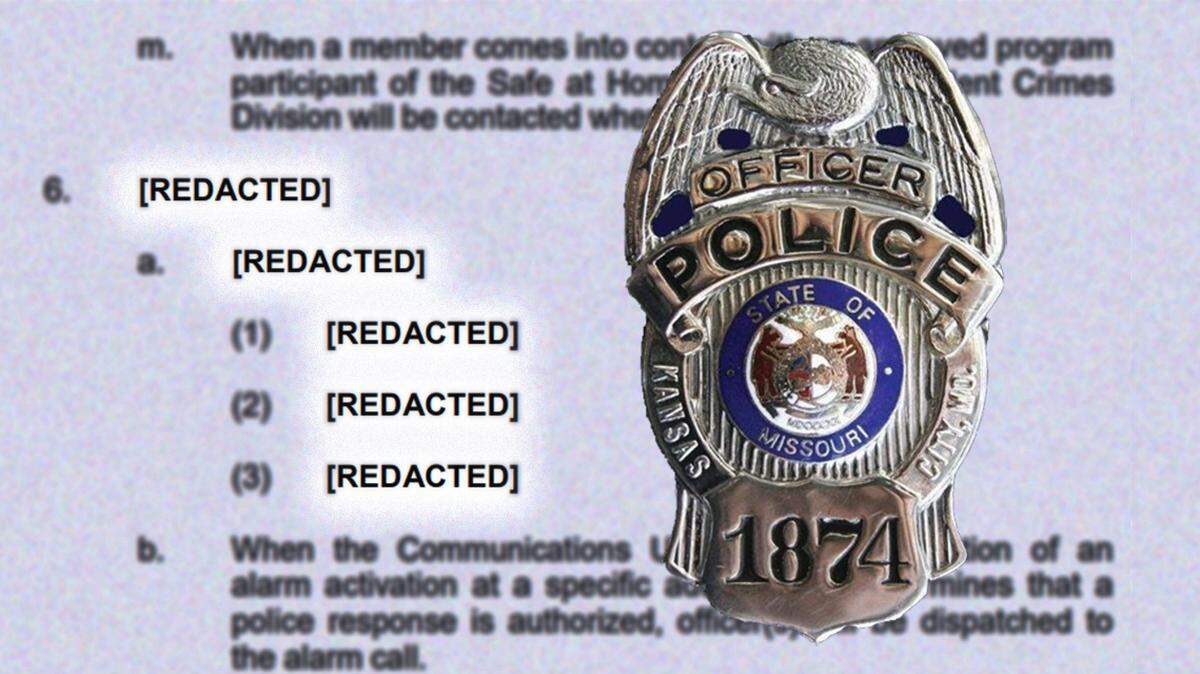
A Kansas City resident has raised important questions after accusing police of refusing to investigate home break-ins without a warrant — a change that, if true, was made in secret by the police.
Daniel Fox claims in a lawsuit filed Aug. 12 that a Kansas City police captain told him that the department now requires a warrant for home searches, a change made after the conviction in March of police detective Eric DeValkenaere in the fatal shooting of a Black man at his home.
Fox says he was told that that policy change was why officers left without entering his neighbor’s home after Fox called to report what appeared to be a break-in in progress.
Claims made in a lawsuit are one-sided, and need to be vetted. But in this case, the police department has made it difficult to know whether the policy change Fox claims he was told about has been made or not. That’s due to the department’s indefensible decision to redact large portions of the policy addressing those circumstances.
That policy is listed on the department’s website, but go ahead and try to make sense of it. You’ll quickly find that large chunks are redacted. A spokeswoman for the police said such redactions are made in accordance with the Missouri Sunshine Law, and are sometimes made by the department’s lawyers.
That shouldn’t happen. At least one member of the police board, Kansas City Mayor Quinton Lucas, agrees.
“Why post a policy and then redact it?“ asked Lucas, who is one of five members of the police commission. “It’s disappointing.”
Last week, Jackson County Prosecutor Jean Peters Baker tried to clear things up by saying the officer misstated police policy. But Baker also acknowledged she doesn’t know how widespread the misinformation is within the police department and has heard it come up in some instances.
Even if the policy hasn’t officially changed — something that the public shouldn’t be left to guess about — it’s possible officers were reacting to guidance provided by department attorneys following the DeValkenaere case.
That’s precisely what KMBC reported this past week, when the KCPD told them that after the DeValkenaere decision police employees were told to read a legal bulletin concealed under a litigation exception provision in the state’s open records law.
Police spokesperson Donna Drake said in an email to the editorial board that legal bulletins are “completely closed” to the public by Missouri Sunshine Law.
She’s right that the provision protects communications between lawyers and the police commission involving litigation. But it’s not designed to provide a cloak for policy memos intended for rank and file police, even if they are disguised as “legal work product.”
If it’s true that official policy hasn’t changed, but officers are acting on the guidance from the department’s lawyers, then the public is entitled to know that.
As for the redactions to the policy, we asked St. Louis civil rights attorney Elad Gross, an expert in government transparency, whether that makes any sense at all. “A policy is not a privileged communication between the governmental body and its attorneys,” Gross said. “It is a document produced for police officers to follow.”
Such policy needs to be widely accessible, so the public knows what to expect from officers when they call on them for help. If the department is hiding any of that information, it should stop.
Interim Police Chief Joseph Mabin told The Star last week he was “always concerned when a citizen’s perception of our actions do not inspire trust.”
He should be concerned. Fortunately, this problem has a simple fix. If police change a significant policy — such as how officers respond to calls on crime — they should let the public in on the secret. The policy changes should be made available on the department’s website. For that matter, so should the gist of the lawyers’ advice when that advice serves as the basis for policy.