
If Kansas City must build a downtown highway park, help our neighbors to the east
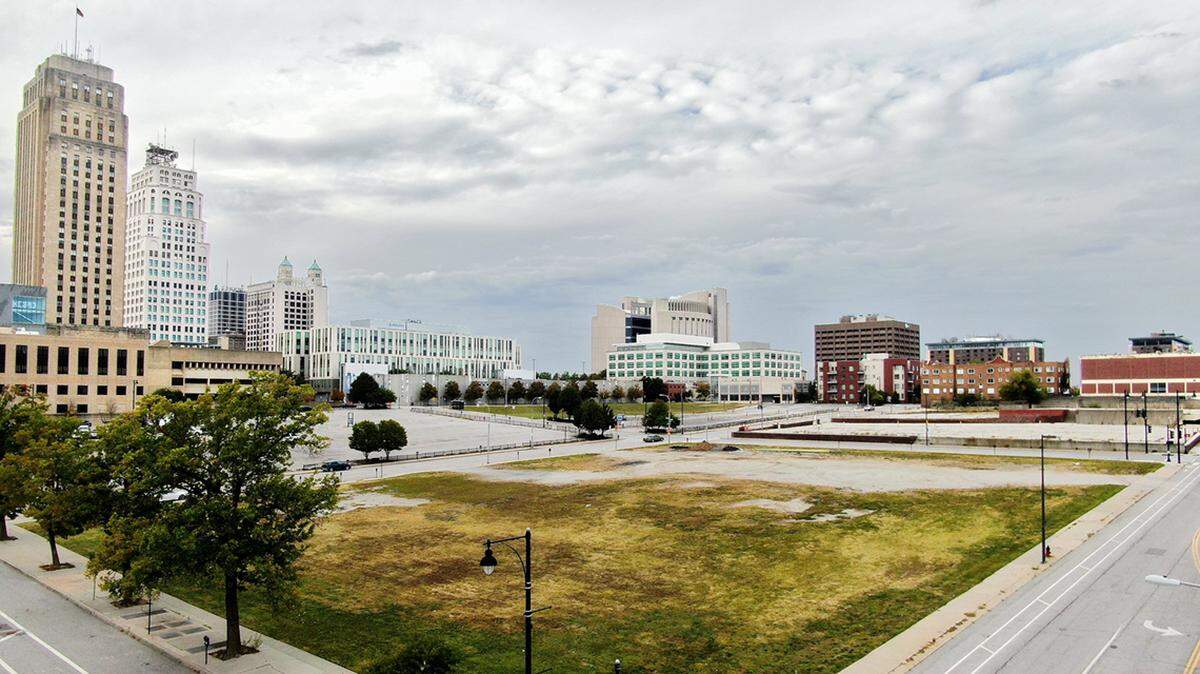
Kansas City leaders continue to push for a cap over part of Interstate 670 south of downtown, at the low-low cost of $160 million or so.
We’re skeptical. Kansas City faces enormous problems — violent crime, wobbly public schools, trash, potholes — where committing even a fraction of $160 million would make an enormous difference.
Creating a new park over I-670 would not change the lives of most Kansas Citians.
The plan also raises questions about security, programming and maintenance. While the federal government would presumably pay much of the construction cost, recurring expenses would be a local responsibility. Taxpayers already subsidize the Power & Light District, and adding to that cost is hard to justify.
At the same time, we are sympathetic to the general complaint that the downtown loop was a mistake. It severed downtown from nearby neighborhoods, which is why residents and planners north of the loop also want the highway capped, or scrapped.
What we don’t hear often enough is a discussion about a highway cap that might really make a difference: on the east side of downtown, from Charlotte to Harrison streets, perhaps, and from Eighth to 10th streets.
This omission is curious, and needs to change. If Kansas City is serious about capping any part of the interstate downtown, it must explore an option to the east, or explain why residents of this area are being scorned, yet again.
A cap over the highway on downtown’s east side would link older neighborhoods with the so-called East Village, roughly eight city blocks inside the loop. Today, those blocks are an ungainly combination of parking lots, aging buildings and a few offices and apartments.
Kansas City’s shelves are packed with studies and proposals for rebuilding the East Village. Those studies include affordable housing units, shops, parks, performance spaces — there’s even talk of putting a downtown baseball stadium in the East Village.
When Royals owner John Sherman and others talk about using a stadium as a catalyst for helping the broader community, they are likely talking about an East Village plan.
But a rebuilt East Village would still be inside the loop. The interstate would still cut off connections between new development and older homes and businesses near Troost Avenue and The Paseo, along Eighth and 10th streets, and even farther south.
That’s why a highway cap might be useful. A seamless link between a rebuilt East Village and neighborhoods outside the loop might encourage development projects everywhere on the east and northeast sides of Kansas City, places that have dealt with disinvestment and official neglect for decades.
How much would a highway cap across the east loop cost? It isn’t clear. It might be more than $160 million. The costs of maintenance and security would still be an issue. And the city’s priorities might still get in the way.
But if Kansas City is to spend that kind of money, where would it be better spent: a link between luxury apartments and Union Station, or a link between a rebuilt East Village and low-income neighborhoods desperate for rebirth?
We think the answer deserves discussion. The streetcar extension, now under construction, travels from north to south. The new Buck O’Neil Bridge, and a repurposed old bridge, are north-south endeavors. So is the cap over I-670.
The East Side, and the Northeast area, are literally on the outside, looking in.
Kansas City has turned its back on the East Side for far too long. If it wants to spend millions putting a lid on the interstate — still a big “if” — it should think seriously about helping the people and neighborhoods who need help the most.