
Kansas won’t be free from blackmail like Putin’s until we break up with fossil fuels
President Joe Biden’s announcement that the U.S. will ban Russian oil imports is an important symbolic step. Russian dictator Vladimir Putin’s war against civilians and children in Ukraine is a crime the world cannot and should not excuse, or forget.
The images of Ukrainian sacrifice make our own complaints about $4.25 gas seem ridiculous. If rising prices at the pump force Putin to withdraw from Ukraine, the pain will be worth it.
The impact may not be that dramatic. Despite what you may have heard, the U.S. doesn’t import that much oil from Russia — less than 5% of all imported crude.
We do import refined petroleum products from Russia, which should also be banned.
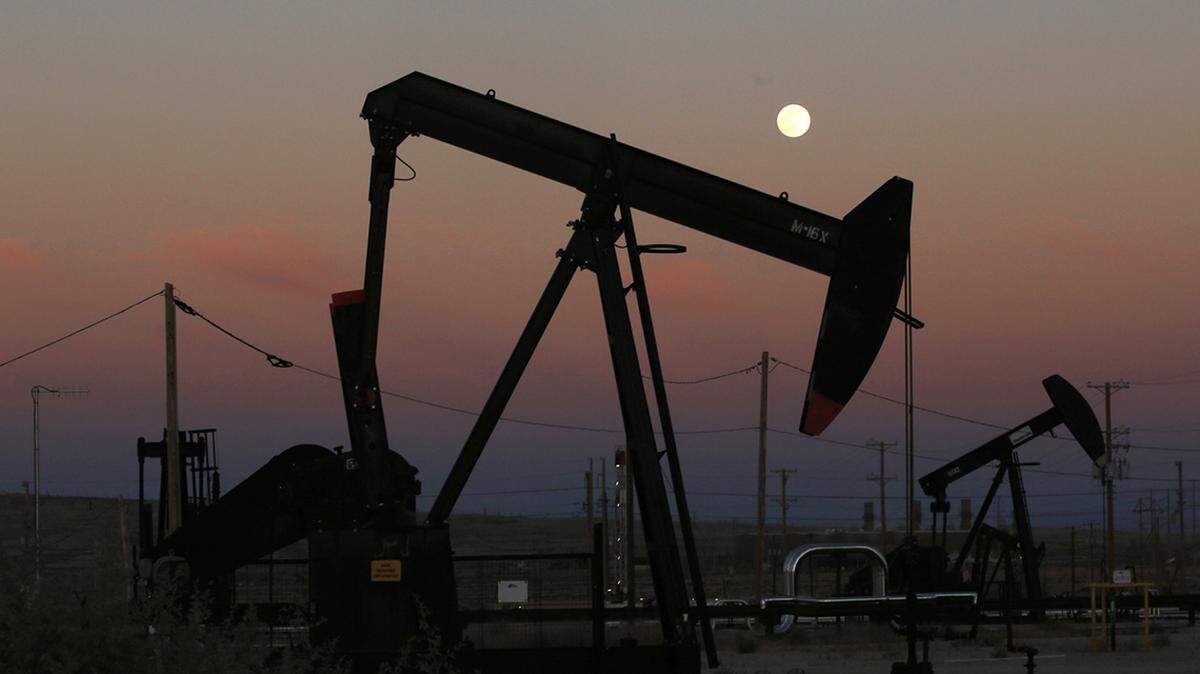
Yet the escalating battle over energy production and sales is an important reminder that America must work much harder to reduce its use of fossil fuels for power. America will not be immune from foreign blackmail until it moves away from gas-powered cars and natural gas-powered electricity generation.
That means using more wind power and solar energy. It means decentralized energy production and consumption: Massive power plants must give way to energy generated at the neighborhood or household level. It means conservation and efficiency.
It means better electric cars and more mass transit.
Sadly, Republicans (and some Democrats) have responded to the prospect of a Russian energy embargo by demanding more domestic production of fossil-fuel-based energy. “Drill baby drill,” says Missouri Attorney General Eric Schmitt, a candidate for the U.S. Senate.
You can find similar comments from other elected officials everywhere you look.
These sentiments are misguided on their own terms. The U.S. already produces more oil than any country in the world, including Saudi Arabia and Russia. Increasing that production would take months, with little immediate impact on the price of gasoline.
Restoring the Keystone XL pipeline, as others have urged, wouldn’t affect gas prices either.
But producing more oil and natural gas here is also a long-term concern because it only focuses on the supply side of the energy equation. It misses the point: The best way to drive down the cost of gasoline and home heating bills is to use less fossil fuel energy, not extract more of it.
Two years ago, the price of oil plummeted to roughly $15 a barrel, compared to the $125 a barrel today. Gas prices tumbled into the $2 range.
Why? Because people stopped driving when the COVID-19 pandemic began. When fossil fuel demand goes down, prices go down.
And collapsing energy prices are far more dangerous for Putin than any oil embargo. If we want to crater the Russian economy — and we do — reducing fossil-fuel energy consumption, and returning to $15 oil, is the way to do it.
Oh: Did we mention reducing fossil fuel consumption is also essential for limiting the damage from climate change?
This winter, Kansas state Sen. Mike Thompson has waged war on wind energy production in his state. He proposed so-called “poison pill” legislation that would cripple expansion of wind power.
“Shut off coal, gas and nuclear power and see how much power you get from wind,” he wrote a year ago. “And solar is laughable.” (Note to the senator: In 2020, renewable energy provided nearly half of Kansas’ in-state electricity.)
But we now know additional use of fossil fuels is a direct subsidy to the Russian economy, because it keeps the cost of that energy high. That’s right: To be anti-wind is to be pro-Russian.
There will be disagreements in the days ahead over the oil embargo, and additional measures that might be taken to punish Russia for its aggression. But let’s be clear: Over the long term, reducing the need for fossil fuel energy is the best way for the U.S., and the world, to stop subsidizing Putin’s war machine.