
Why drop masks after Thanksgiving in Johnson County schools when COVID cases are up?
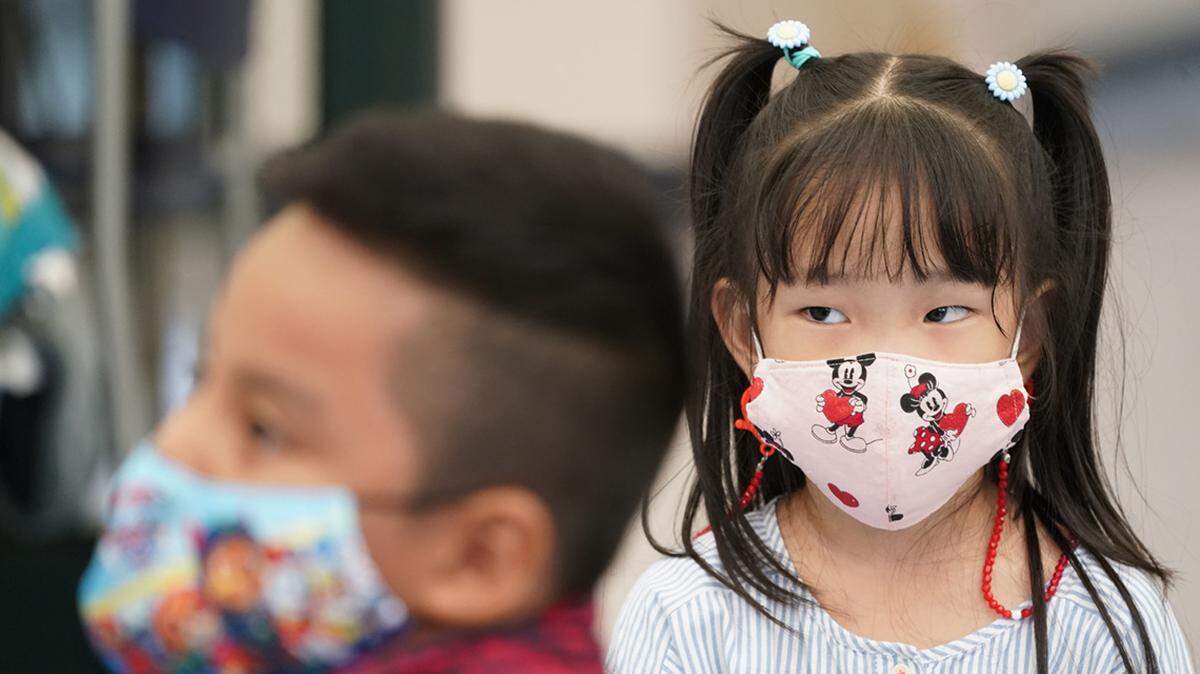
COVID-19 is one holiday spread you should avoid like the plague that it is. But some area school districts are basically inviting the virus to the table by ending their high school mask mandates — in at least two districts on the Monday right after Thanksgiving.
Some districts, such as DeSoto and Lee’s Summit, will have already ended their mandates by then. But Olathe and Blue Valley districts have bizarrely chosen to end theirs on Nov. 29.
Why would they do that? They know full well that holiday COVID spikes are real, as families and friends gather together — often without regard to vaccination status or personal safety protocols. To then allow high school students to return from such gatherings without masks is to invite illness and death into the schools.
Indeed, cases have risen slightly since Halloween parties and trick-or-treating. Missouri’s positivity rate has risen back to 8.3% after having dipped. In Blue Valley, cases tripled last week, and state Sen. Cindy Holscher, Democrat of Overland Park, said 24 of the district’s 35 buildings reported cases.
“So now we’re going to have people getting together at Thanksgiving, and then potentially coming back to school buildings without masks,” Holscher says. “That increases the likelihood of spread.
“Really, this just does not seem like the right time at all to remove masks.”
The Johnson County Department of Health and Environment is similarly concerned about the risks. In a Facebook post Monday, the department said the county is back at “high” community risk and warned, “more of us will be gathering indoors, which is the perfect environment for COVID-19 and flu to spread.”
While masks will still be optional, wearing them might increase the chance of bullying while reducing the risk of COVID-19. You shouldn’t put that kind of pressure on students. As for optional mask wearing, Holscher says, “I think we all recognize that that’s probably not going to happen to an extent to make a big enough difference.”
Park Hill schools’ Dec. 22 mask mandate end is much smarter. It gets students and staff more safely to the substantial winter break, while also giving COVID-19 vaccines time to better protect younger students for whom the shots are only now becoming available.
Sadly, one has to suspect that school board members, administrators and even teachers have felt significant heat from anti-mask parents and patrons. But these decisions cannot be made based on politics. Only science.
“I know everybody’s fatigued, and school board members have been harassed and threatened,” Holscher says. “But giving into the anti-science crowd likely only empowers them.”
Studies show that masks absolutely do slow the spread of COVID-19 in schools. One such study of a year ago in Wisconsin found a 37% lower incidence in masked-up schools versus in the community at large. In Utah, extensive masking was credited with keeping school spread to under 1% amid a surge in the community.
“The science clearly shows us that masking is an effective strategy to prevent within-school transmission when COVID-19 is circulating and when vaccination is not yet available for all children,” says a statement by Dr. Kanecia Zimmerman, co-chair of the ABC Science Collaborative, Duke University school of Medicine’s COVID collaborative of scientists, doctors and school and community leaders.
Blue Valley officials may have consulted such sources, or local health officials, but Holscher says no evidence of such research was presented at the school board meeting where the mask mandate was ended as of Nov. 29: “It felt like the decision had already been made, honestly, prior to that night.”
Blessedly, the countywide mask mandate for elementary schools runs until the end of school in the spring, though it can be revisited before then.
The Blue Valley board’s decision was made just prior to new data indicating the tripling of cases in the district. In the board discussion prior to the vote, one board member yearned for a decision “that each of us can live with.”
Better to make a decision that students and staff can live with.