
The Kansas City Council’s district boundaries will be redrawn. Here’s what’s at stake
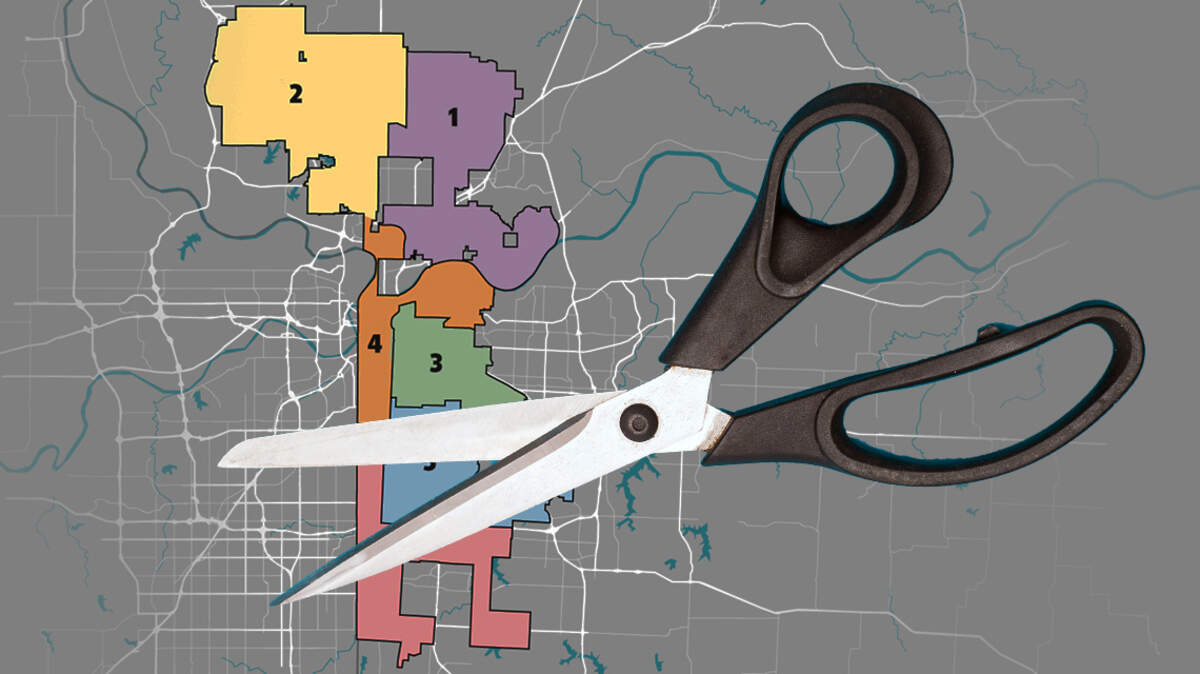
The critical job of drawing new lines for Kansas City’s six City Council districts will begin in earnest this week. Mayor Quinton Lucas is expected to name a seven-person committee to recommend new districts to the council, which starts the clock ticking.
The city’s charter requires new districts by the end of the year, even though elections won’t be held until 2023. That gives the current City Council about 16 weeks to finish this important work.
Transparency, inclusion and fairness are crucial. The way the city divides itself into districts has a major political impact on decisions such as police funding, sales tax spending, infrastructure repair and other public concerns.
Anyone interested in Kansas City’s future should pay attention as the lines are drawn.
The districts approved this year will likely be in place for three city elections — 2023, 2027 and 2031. Every Kansas Citian deserves fair and equal representation at 12th and Oak over the next decade, and accurate and inclusive districts are how they get it.
There was once talk of changing the way the city elects its council members — ending at-large seats, for example, and simply electing 12 in-district council members instead. COVID-19 disrupted those discussions. True City Council reform will have to wait.
For now, at least, Kansas Citians will continue to elect six in-district council members, and six at-large representatives. That means drawing six new districts by Jan. 1.
This project should be fully open to the public. The mayor’s commission should take and consider testimony before making any recommendations. It should publish proposed maps well in advance of any City Council consideration.
And the commission should begin its work with broad themes in mind: keeping common-interest neighborhoods together, ensuring inclusion and diverse representation, and drawing understandable districts without gerrymandering.
The current 4th District, for example, is a mess. It stretches from 59th Street and State Line Road on the south to Front Street and Interstate 435 in the northeast, while taking in a piece of Briarcliff north of the river. It’s hard to see common interests in such a poorly-shaped district, and the city suffers as a result.
At the same time, trends are unmistakable: Kansas City is growing north of the river. That means Kansas Citians living in the Northland have every reason to expect their influence at City Hall to grow.
The Northland now has two full districts. Based on preliminary numbers, it seems likely the 4th District will have to expand farther north, while losing residents south of the river. Expanding the 4th District north of the river will make more Northlanders eligible for those seats, and may encourage more people to run.
As the 4th District shrinks, the districts south of the river — the 3rd, 5th, and 6th — will have to grow. The mayor’s commission must fully understand how that will change the city’s political dynamics throughout the 2020s before it recommends changes.
There are currently 4 Black council members, not counting Mayor Lucas. That roughly coincides with the city’s Black population, a balance that the commission should recognize. At the same time, the City Council has lacked Latino representation for a generation. The commission must take notice of that as well.
Finally, there is always a temptation to draw new districts based on individual candidates’ residences, or potential matchups between candidates, or preserving seats. That should play no role in the process.
Special interests — we’re looking at you, Fraternal Order of Police — must also avoid trying to influence the commission, and the City Council.
We continue to believe Kansas City should reexamine the way it divides the city for democracy. It’s possible the six-district, at-large and in-district system is outdated and nonrepresentative. After new districts are drawn, the City Council should revisit that issue, perhaps after the 2023 elections.
For now, though, let’s keep a close eye on the new districts. They’ll define Kansas City politics for years to come.