
War against terror enters Syria as U.S. steps on the pedal
For the last dozen years or more, the U.S. has been waging war in Afghanistan and Iraq. The latter conflict especially was an enormous blunder with consequences still playing out in the region.
In his campaign to succeed George W. Bush in the Oval Office, Barack Obama in 2008 vowed to end the war in Iraq as soon as possible, a decision that has brought him relentless and misguided political broadsides from those who think the U.S. should constantly remind the world that it carries the largest hammer.
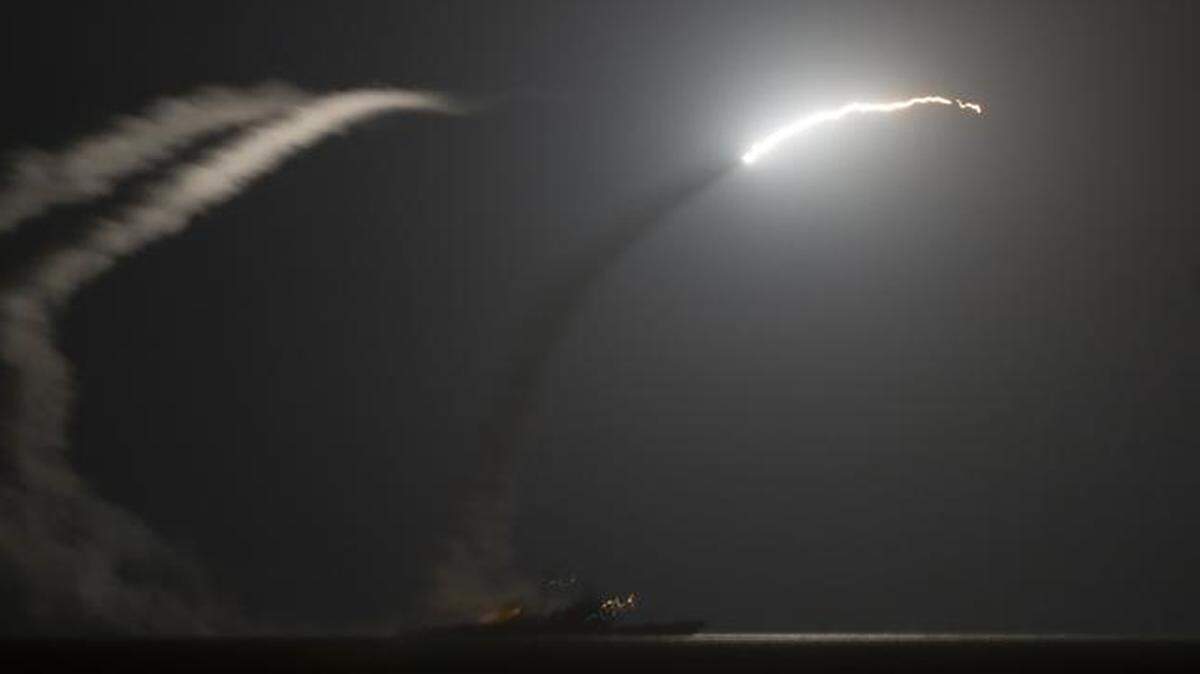
On Monday night, after correctly resisting military involvement in Syria’s messy and fractured civil war for the last three years — yes, we know there was a red line and a U-turn — Obama paved the way for U.S. aircraft to strike numerous targets in the fight against emerging and longstanding terrorist threats.
Welcome back to war, American style.
Though some people want to measure America’s military commitment by the clichéd counting of “boots on the ground,” it is clear the new way of ongoing covert and overt war remains upon us and will continue to define our national project to protect our interests and our people in the years to come.
The airstrikes in Syria, Lt. Gen. William Mayville emphasized in his Pentagon briefing on Tuesday, “were only the beginning ... of a sustained campaign.”
Monday’s attacks were two-pronged and involved two significant surprises.
In the first of three waves of airborne missile strikes, the U.S. apparently defanged an al-Qaida splinter group, Khorasan, which, the president and his war planners announced, was on the verge of carrying out terror attacks in Europe and the U.S.
The attack on Khorasan bases and training grounds might have confused the American public, who’ve been led to believe that another al-Qaida splinter group — the grisly barbarians known as the Islamic State, ISIS and ISIL — represented a serious threat against the homeland. That may or may not be true, but the Islamic State clearly has been disrupting its region, taking over huge swaths of Iraq and Syria in a divide-and-conquer campaign funded largely by ill-gotten oil revenues.
The effort against the Islamic State presented surprise number two: In two waves of airstrikes against ISIL targets in Syria, an array of U.S. aircraft were joined by forces from at least five of the region’s Sunni nations.
The partners, who have their own reasons to fear the extremist and deranged Sunnis who make up the Islamic State, included Saudi Arabia, Bahrain, the United Arab Emirates, Qatar and Jordan. That is welcome news, which speaks to Obama’s insistence that the war against ISIL — yes, indeed, it’s war — “is not America’s fight alone.”
The Middle East — its blood rivalries, its oil-patch addictions, its violent eruptions — has been our troubling geo-political quagmire since the end of World War II. The United States certainly has considerable interests and should have a major role in helping to stabilize the region.
But the rise of terrorizing forces, aided by their increasingly sophisticated marketing campaigns and increasingly horrendous displays of vicious revenge, has unfortunately made stability something of a mirage.
This nation has been pulled into new and uncharted directions. The delicate building of a coalition is gratifying. The longterm “optics,” scenarios and war footings will require fortitude, patience and healthy skepticism.
The Pentagon pronounced Monday’s precision attacks from the air to be successful. The American people may even have found some confidence in the effort. It’s our great hope that the uncertain future of this war leads to something positive and not to the needless loss of more American lives.
This story was originally published September 23, 2014 at 1:55 PM.