
Now Mayor Sly James wants us to talk about race? Well, at least it’s a start
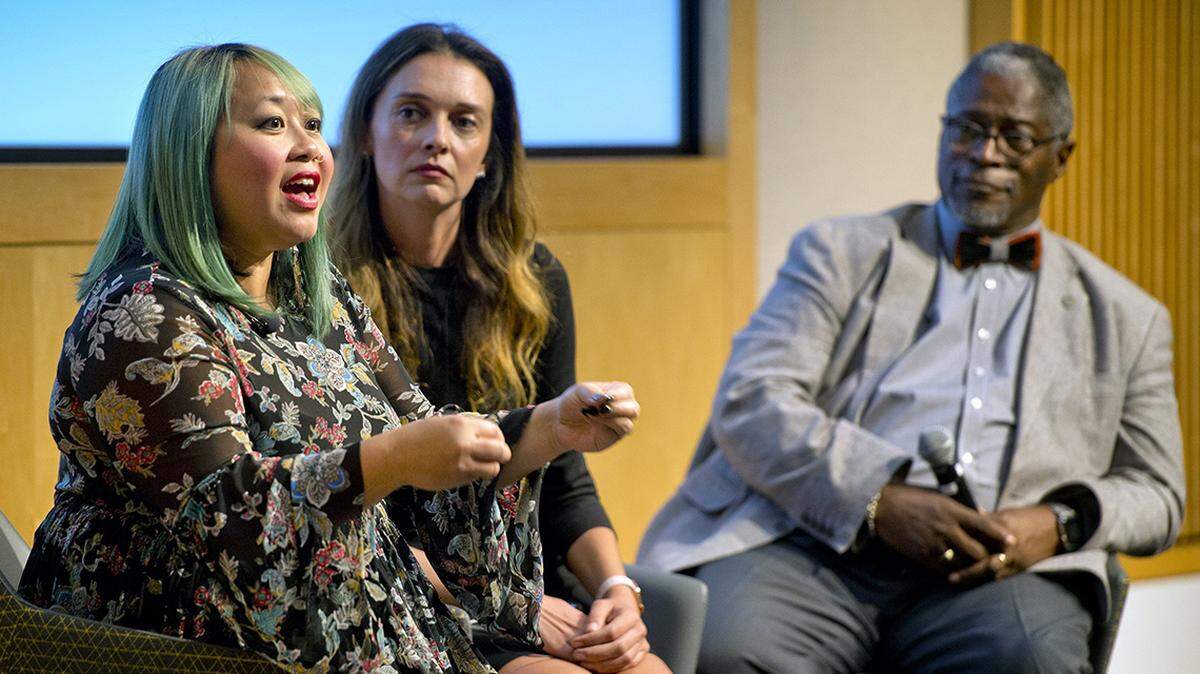
Yes, Mayor Sly James could have kicked off a conversation about racial inequality last year, or the year before that.
At any time in our country’s history, for that matter, we would have had plenty to regret, to discuss and to learn.
Still, we welcome the mayor’s invitation, in his final year in office, to join the series of public dialogues about race that he launched this week. “Get out of your comfort zone,” he urged all Kansas Citians. “See something you haven’t seen, do something you haven’t done with people you don’t normally do it with.”
The project’s goals are so big, broad and daunting — how institutions perpetuate racism, and what we can do about that in our own neighborhoods and jobs — that James began with a disclaimer: “I do not think we are going to solve the problem of racial inequality in the next 90 minutes,” he said at the first session of the Race and Inequity Initiative on Wednesday night.
But, “the main thing is that you showed up. That’s what really matters.”
You could argue that the 300 or so who did show up at the Kauffman Foundation Conference Center might be those least in need of a primer on how inequality shortens lives and compounds risks to maternal health for women of color.
But the starting point to any conversation that counts has got to be an agreed-upon starting point. One that’s based on facts like those Kansas City’s deputy health director, Sarah Martin, pointed to on a map of the city that shows average life expectancy broken out by ZIP code. In a seven-minute drive from west to east on 63rd Street, she said, longevity declines from 80-83 years on average to 70-72 years. Another bleak reality: Black women in Missouri have a mortality rate of 65 deaths per 100,000 live births, compared to 28 deaths per 100,000 births for white women.
The clearest fact of all is that words alone won’t alter any of this: “I think it was a good academic overview so people can have a shared understanding,” Councilwoman Alissia Canady, who is running to succeed James, told The Star. But change, she said, will require more economic development in Kansas City ZIP codes where life expectancy lags: “We have to intentionally invest in those communities like we invest in downtown.”
We’re not sure how the city’s new “Race Equity Action Teams,” which are supposed to disrupt racism embedded in public policy, will work. But as Canady suggests, investing in communities beyond those that need it least is a must.