
What Kansas Sens. Pat Roberts and Jerry Moran should learn from John McCain’s legacy
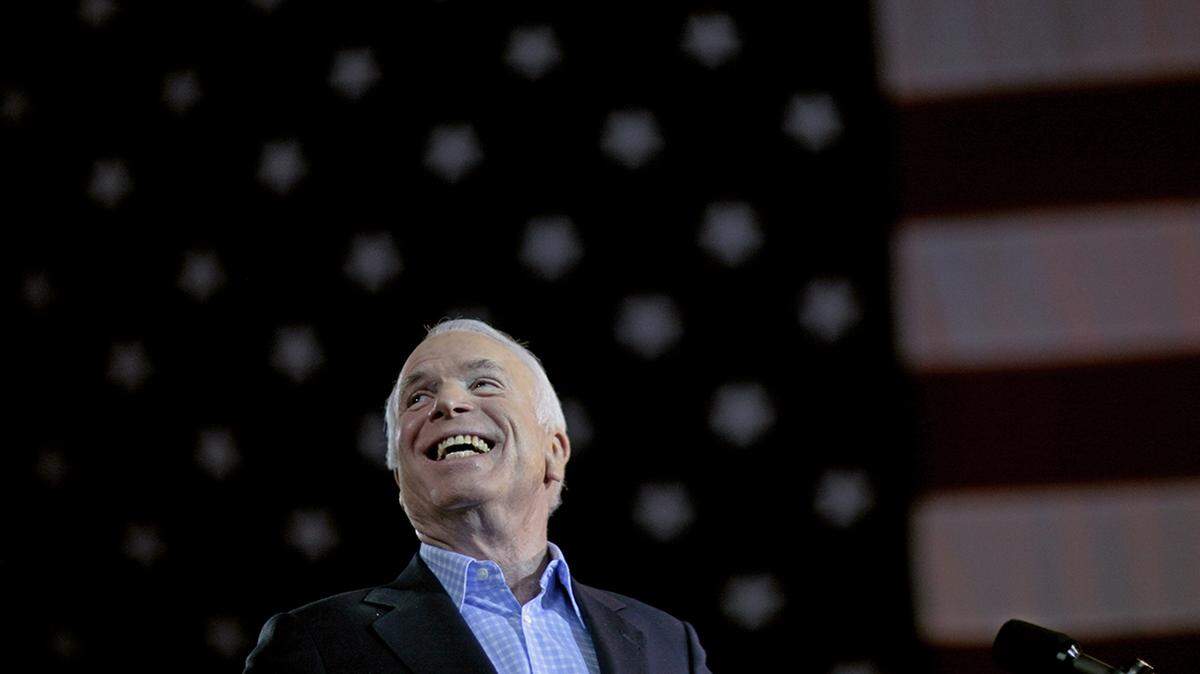
The enduring image so many of us have of Sen. John McCain will be of that middle-of-the-night vote in 2017 when he stared down the Republican establishment and the president and voted against repealing the Affordable Care Act.
Recently diagnosed with brain cancer, face scarred from surgery, McCain strode into the Senate chamber at 1:29 a.m. and raised his right arm. There’s no question about what happened next. McCain paused as if he was seeking to galvanize the attention of the entire nation, waved his hand to get the attention of the Senate clerk, and then in a quick gesture, flashed a thumbs-down.
There were gasps in that storied chamber. McCain’s vote saved what’s left of President Barack Obama’s signature law. Even though the Senate was firmly in Republican hands, Obamacare survived and President Donald Trump was denied a significant victory.
That moment was both amazing and consequential for any number of reasons. Among them, McCain solidified his standing as a singular force and a contrarian unafraid to buck the same party that had nominated him to be its presidential candidate in 2008.
What’s also notable is how rare it is to see other senators, including those who hold seats still safer than even the relatively safe seat McCain occupied for more than 30 years, doing anything similar. Quick now: Name a bold, career-defining stroke from either of Kansas’ two veteran senators during their long stints in Washington.
To be sure, Sens. Pat Roberts and Jerry Moran have waged their battles. But when it comes to independent thinking, challenging authority and having the political courage to stake out new paths, the cupboard is mostly bare. That’s a shame, especially because the two Republicans hail from one of the union’s reddest states.
Bob Dole, of course, was able to turn Kansas into a springboard to national leadership. He banked on his job security to make food stamps more accessible in the 1970s, rescue Social Security and pass the Martin Luther King Jr. holiday in the 1980s and defeat Democratic proposals, such as President Clinton’s health care plan, in the 1990s. These were significant moves that had an impact on people’s lives.
They weren’t always popular with his Republican base. But Dole persevered much the way McCain did for so many years. It was a Democrat, Joe Biden, who so succinctly captured McCain’s spirit. “He never quits,” Biden said in 2015.
Chastened by his involvement in the Keating Five scandal in the 1980s, McCain bounced back by engaging with a Democrat, Russ Feingold, in pursuing ambitious campaign finance reform. That effort won him few friends among his fellow senators. And Republicans again were unhappy when he pushed for fuel-efficiency standards with Democratic Sen. John Kerry and funding for embryonic stem cell research.
It’s not that McCain often strayed from the GOP reservation. His composite National Journal score from 2012, for instance, showed a liberal rating of 27 percent and a conservative score of 73 percent. Roberts and Moran received almost identical scores.
But McCain made it count when he did diverge from his fellow Republicans. More recently, he proved to be a powerful intra-party check on a president who needs constant checking whether the issue is Russia, torture, health care or immigration. It was McCain who once said of immigration, one of the most intractable issues of this era, “The truth is, border enforcement alone does not work.” Perhaps his biggest act of heresy was sponsoring, with former Democratic Sen. Edward Kennedy, a bipartisan immigration bill that gave illegal immigrants a road map to legalization.
This, mind you, from a senator whose state shares a border with Mexico.
“Some Americans believe we must find all these millions, round them up, and send them back to the countries they came from,” he once said. “I don’t know how you do that. And I don’t know why you would want to.”
No party has a stranglehold on all the good ideas. No president does, either. John McCain showed an all-too-rare willingness to stand up when the moment called for it. He paid a steep price for that independence but was richly rewarded as well. To many, he was a national hero.
Other senators should learn from his legacy and try to emulate it from time to time.
This story was originally published August 27, 2018 at 5:08 PM.