
Activists raised questions about a state agency. Now, the Kansas AG is investigating them
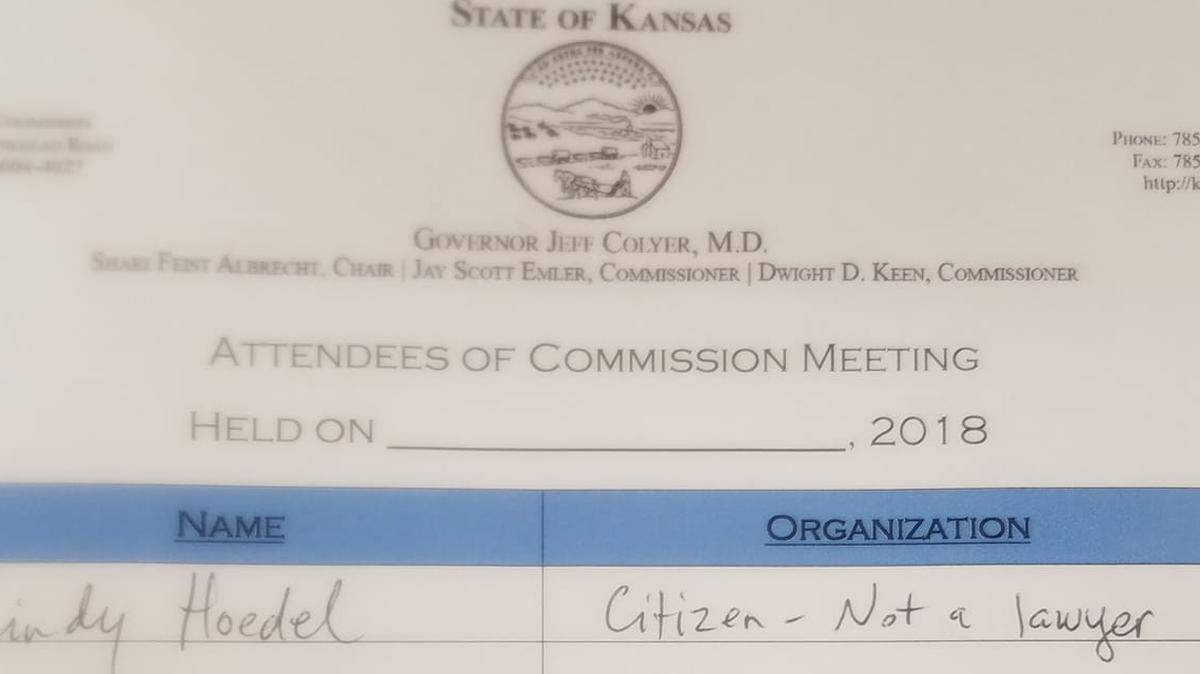
There’s no question that Flint Hills resident Cindy Hoedel asked lots of tough questions of staff at the utility-regulating Kansas Corporation Commission.
A former journalist at The Kansas City Star, Hoedel was trained to do just that. In fact, she uncovered the unsettling fact that the agency failed to properly permit hundreds of injection wells in 79 of Kansas’ 105 counties.
She brought that to the attention of lawmakers, including 21 who signed a letter to the KCC concluding that the agency’s actions amounted to a “broad and alarming pattern of regulatory non-compliance by industry and by the KCC.”
That led to an internal KCC investigation and raised the possibility that wells could be shuttered. The existence of the wells is a big deal. No less an authority than the U.S. Geological Survey has concluded that injection wells cause so many of the earthquakes that Hoedel and other Kansans have experienced recently.
Kansas used to endure just two or three a year. Now, Hoedel says, the number is in the hundreds and includes some of the most severe in state history.
The KCC apparently has had enough of Hoedel’s questions and those of another gadfly, Scott Yeargain, a retired philosophy professor who lives near Ottawa. Yeargain is outspoken about his concern that injection wells also pose risks to water supplies.
The agency has interpreted their activism as practicing law without a license. The state attorney general’s office notified the pair that an inquiry would be conducted. The activists now face the possibility of jail time and fines.
Both Hoedel and Yeargain insist they’ve not represented anybody in a legal capacity and claim the KCC is in retaliation mode. They appear to have some basis for that. Dustin Kirk, a former KCC attorney who accused the two of breaking the law, is no longer with the agency.
“He resigned effective August 10,” KCC spokeswoman Linda Berry said in an email to The Star. Berry also appeared to distance the agency from Kirk’s accusations. “The agency is not aware of the details of that complaint nor do we have a copy of it,” she wrote, adding that any attorney can file such an accusation.
She declined further comment.
Still, the attorney general’s office continues its investigation. It’s not hard to imagine the chilling effect that such charges can have on those questioning the agency. In fact, the KCC has a well-earned reputation for making disagreement difficult, having imposed a series of requirements on citizens who seek nothing more than to object to agency actions.
Protestors like Hoedel have long concluded that the agency appears to favor industry interests over Kansas residents. Hoedel discovered that the KCC had approved more than 2,000 injection wells based on a 15-day public-notice period when 30 days is the requirement.
She called that discovery a big headache for the KCC — and embarrassing, too.
“I assume that’s why the KCC is intent on silencing me,” she said.
The state of Kansas has no business going out of its way to silence well-intentioned critics like Hoedel. That’s not what this country is about. The state should back off and focus on the real concern here, which is how much damage injection wells are causing.
This story was originally published August 22, 2018 at 11:26 AM.