
Why is voting in Missouri so hard? Secretary of State Jay Ashcroft could change that
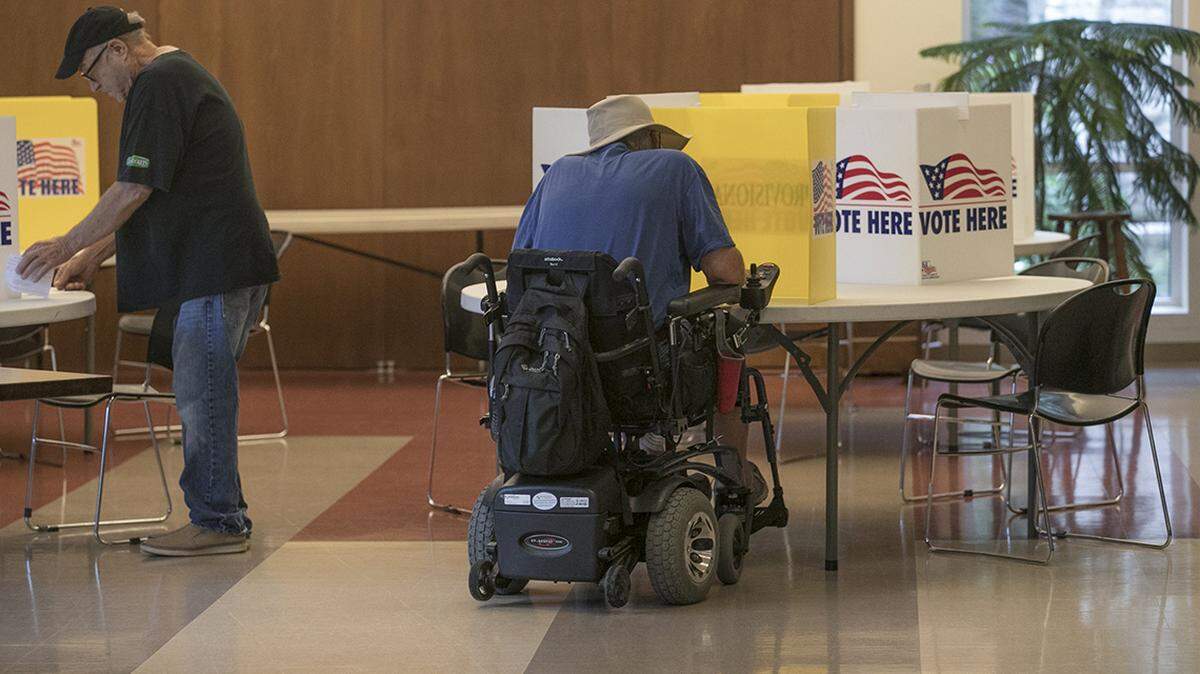
Robert Epsten gets it. Too bad Missouri Secretary of State Jay Ashcroft does not.
When Epsten voted in last week’s Missouri primary at Country Club United Methodist Church, 400 W. 57th St., he faced only a short wait.
Still, Epsten is puzzled by Missouri’s reluctance to allow for advance voting as nearly 40 other states, including Kansas, do. To him, such an option only makes sense.
“When they can vote at their convenience, they’re more apt to vote,” he said.
Epsten, actually, may be wrong about that. Studies are mixed, but one recent survey suggested that early voting didn’t result in more people going to the polls in the 2016 presidential election. It merely changed the time when some people voted.
Doesn’t make sense, does it? Ashcroft, a Republican, said that’s why he’s not advocating it. In fact, Ashcroft is the first Missouri secretary of state in years to not support it. Secretaries of state from both parties have.
Ashcroft should understand that advance voting isn’t only about increasing turnout. There’s a convenience factor that can’t be overlooked. And convenience matters as we’re living through an era of low turnouts.
In last week’s Missouri primary, only about one-third of registered voters made it to the polls. True, the turnout was the largest primary election show of force in more than a decade. But it still means that two of three registered voters sat it out.
Kansas didn’t do even that well despite intriguing primary elections for governor in both major parties. In fact, Secretary of State Kris Kobach was off by only about 1,000 voters when he forecast that 26 percent of the state’s 1.8 million registered voters would turn out — a 10-year high. Still, that means almost three in four Kansas voters opted out, and Kansas offers early voting.
Across the country, the vote for president continues to slip-slide away. Even the white-hot 2016 race between Donald Trump and Hillary Clinton failed to elevate turnout. The 55 percent of voting-age citizens who took part was the lowest in a presidential election since 1996.
Clearly more needs to be done, and fortunately, several interesting options exist. But in a visit with The Star’s Editorial Board last week, Ashcroft offered no ideas, convinced as he is that voting is convenient now and nothing more is needed.
One idea is same-day registration now in place in 17 states. The proposal might be met with howls of concern over security. But those concerns can be overcome. Same-day voting registrants would still have to show identification as any voter would.
Maybe a better idea: Automatic voter registration when eligible citizens interact with government offices. Advocates say the process saves money, cleans up voter rolls and has the potential of enfranchising millions of more Americans.
Another idea: We don’t have to vote on Tuesdays just because that day was easier for farmers back in the 1800s.
Ashcroft knows that democracy is government by the people, and he knows that people register their preferences in a democracy by casting votes. In our pell-mell world, that process should be as easy and, yes, as secure as possible. That Republicans continue to stand in the way suggests another motive, and that is the fear that higher turnouts favor Democrats.
This story was originally published August 16, 2018 at 1:54 PM.