
On Labor Day, a call to raise up part-time workers
On the day set aside to celebrate work and workers, some Americans will wake up wondering whether they’ll be working their shift.
Some have already begged off from the family picnic, explaining they’re scheduled to staff a store, a hotel or a restaurant, although that doesn’t mean they’ll actually work and be paid. But some will get a call before they leave home, explaining that they’re not needed after all. Others will get themselves ready and travel to their jobs, only to learn that, according to the all-knowing computer, customer traffic that day won’t be heavy enough to justify their shift and salary.
Welcome to the “just in time” work world. It is swiftly making life more difficult for people who already struggle to provide for their families and to find a toehold in the post-recession economy.
Computer programs now tell employers how many workers will be needed on any given day, or even a given hour. That leaves schedules — and paychecks — in constant flux.
People who work at or near the minimum wage are finding it harder than ever to get ahead. Scheduling uncertainty makes it difficult to find child care, attend school or take a second job.
A nation that claims to value work should not treat workers so disrespectfully.
Smart companies understand that employees are their greatest resources, not disposable units. In that vein, Starbucks recently ordered schedules to be prepared a week in advance, after a New York Times story detailed the chaotic life of a San Diego mother who struggled constantly to find people to watch her 4-year-old son while she worked erratic hours as a barista. Starbucks also banned back-to-back closing and opening shifts, and said workers who must travel more than an hour to get to their jobs can be transferred to a shop at a closer location.
But if businesses won’t act, then states and/or Congress must step in.
For many Americans, part-time work is not a choice. It is the only work they are able to find. Nearly 8 million people who desire full-time jobs are locked into the part-time workforce.
They deserve enough pay to make their labors worthwhile. The current federally mandated minimum wage of $7.25 an hour doesn’t rise to that threshold, and neither does Missouri’s slightly higher $7.50-an-hour minimum.
Part-time workers also deserve a guaranteed number of hours a week and fair compensation for their time if they show up for work and are sent home sooner than scheduled. They should not have to be on call round the clock for poorly paying jobs.
Legislation has been filed in Congress and some states to correct some of the abuses. Politicians who claim to value work should support these measures.
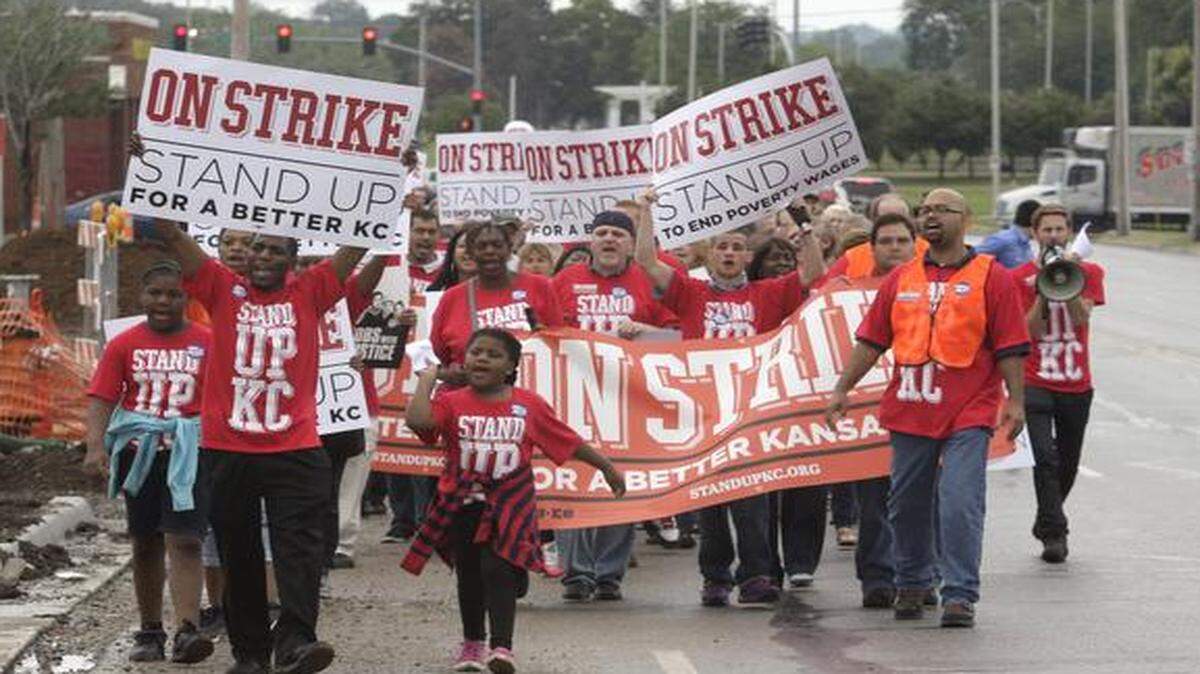
Today’s heroes on the labor front are the low-paid workers who are daring to speak up for better pay and better schedules, and the community-based movements in Kansas City and elsewhere that support them. Businesses and politicians should pay heed to their voices.
This story was originally published August 31, 2014 at 10:00 AM.