Data centers: Where do the Democratic candidates for Kansas governor stand | Hudnall?
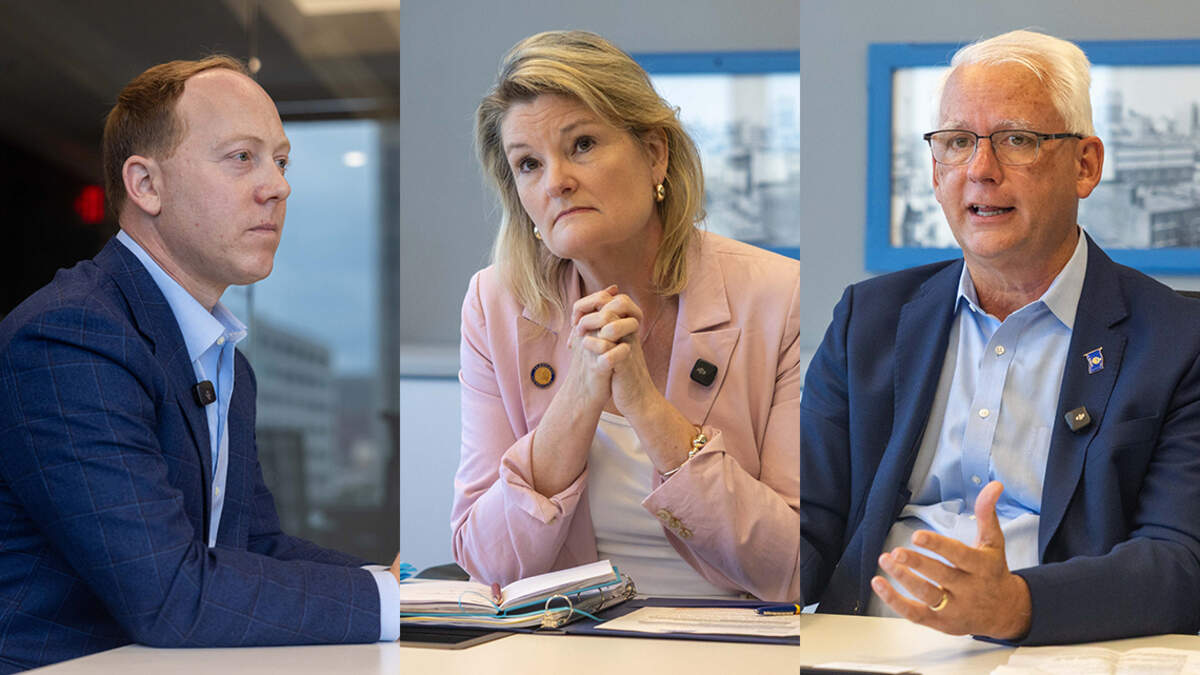
Editor's Note: The Kansas City Star Editorial Board has been meeting with candidates in this year’s Aug. 4 primary. Most recently, we met in person with the three Democratic candidates vying for Kansas governor: Kansas State Sens. Ethan Corson, Cindy Holscher and Overland Park Mayor Curt Skoog. Over the next few days, we will discuss main issues of importance to voters and candidates that came up during interviews. Today: data centers.
Data centers — the massive server farms that power artificial intelligence — have become one of the most contested land use issues in Kansas and across the country.
The fights are playing out all across the state. Supporters argue the projects offer a lifeline for financially strapped local governments. Opponents cite water use, electricity costs and proximity to homes, farms and schools as reasons they don’t want these developments in their communities.
In Emporia, a proposed so-called “hyperscale” data center campus known as the Flint Hills Digital Campus has divided the town since city commissioners voted in June to annex land for the project. Harvey County, Sedgwick County and El Dorado have all imposed some form of pause on new data center development while officials work out regulations, and Reno County commissioners have twice voted down proposed bans.
The issue is shaping up to be a defining issue in this year’s race for governor. The Star Editorial Board recently interviewed all three Democratic candidates for Kansas governor. Here’s where they stand.
Ethan Corson
State Sen. Ethan Corson, who represents Fairway, Prairie Village, Mission, Roeland Park and several other Johnson County cities, is not in favor of a statewide moratorium. He said Kansas should establish statewide regulations rather than halt development altogether.
Corson instead laid out a four-point plan:
- Require all new data centers to use closed-loop cooling systems that reduce water consumption.
- Enforce the Kansas Corporation Commission’s tariff requiring large users to pay the full cost of their electricity so those costs are not shifted to residential or small-business customers.
- Require a decommissioning agreement before construction begins so communities aren’t left with abandoned facilities.
- Have the state partner with communities to negotiate community benefit agreements before projects are approved.
He said the ultimate decision on whether to host a data center should remain with local communities. Asked whether he would support a statewide moratorium, Corson was unequivocal: “I would not support a statewide moratorium.”
Cindy Holscher
State Sen. Cindy Holscher, who represents Overland Park, has proposed a moratorium on new data centers in Kansas.
That view, she said, is informed by concerns she’s heard raised at dozens of town halls around Kansas during her campaign. She argued the state can’t rely on data center developers’ big promises, which she says haven’t materialized in other states.
“People have been told, oh, there’s going to be great economic benefits and jobs,” Holscher said. “But what we’ve seen unfold across the nation is these data centers suck up the water or pollute the water, jack up your utility rates and they don’t bring in the jobs.”
She added: “A lot of (other) states are in a catch-up position because they already have big data centers that are hurting their environment. We have to have guardrails in place first.”
Holscher’s conditions for lifting a pause would include efficient water and energy use requirements, and guarantees that construction jobs go to local, union labor at livable wages.
“A lot of these tech companies bring in their own crews from out of state,” she said. “And then once the thing is built, it’s not a ton of jobs. So, the economic benefit just hasn’t been there. I’m all about economic growth, but not at the expense of exploiting our people and our resources, which is absolutely what’s been happening with these.”
Curt Skoog
Overland Park Mayor Curt Skoog said he supports local communities that decide a data center is not the right fit for them, but argued the decision should remain local rather than be imposed statewide.
He described data centers as a new class of infrastructure alongside past technological shifts he witnessed on the Overland Park City Council, like cell towers and fiber optics.
“I see data centers as important infrastructure that we need to have to participate in this national and world economy,” Skoog said, “but they have to be in the right place, and they have to have the right infrastructure to serve them.”
Like Corson, Skoog said data centers should pay the full cost of the electricity they require under the Kansas Corporation Commission’s tariff for large users, and that the state should ensure companies honor those commitments.
Rather than impose statewide restrictions, he said he would create a team within the Kansas Department of Commerce to help communities evaluate proposed projects by examining issues such as water availability, electric infrastructure, traffic impacts and community benefits.