
World Cup is great for Kansas City’s exposure, but not all its businesses | Opinion
Kansas City should be proud that the world wants to come here. That does not mean hosting the World Cup is good for business. Those are different claims, and we should stop treating them as the same thing.
The public argument has been simple: Visitors will come, hotels will fill, restaurants and bars will be busy and the region will get global exposure. KC2026 projects roughly 650,000 visitors and more than $653 million in direct economic impact.
That sounds impressive. It also sounds incomplete.
For many businesses, the World Cup is not a windfall. It is a disruption. For many Kansas Citians, it is not an opportunity. It is higher costs, harder commutes, road restrictions and public resources redirected toward an event they might not attend and cannot afford.
I run Zeta Commercial Driving School, an accredited trade school in Kansas City. I believe in growth and ambition. But I also believe serious cities tell the truth about tradeoffs.
Mega-events usually create winners and losers. The winners are easy to see: hotels, restaurants near fan zones, bars, event vendors, short-term rental owners and tourism agencies. The losers are more spread out: small businesses outside the main tourist corridors, hourly workers fighting traffic, employers dealing with delays, families paying inflated prices and taxpayers carrying costs hard to trace.
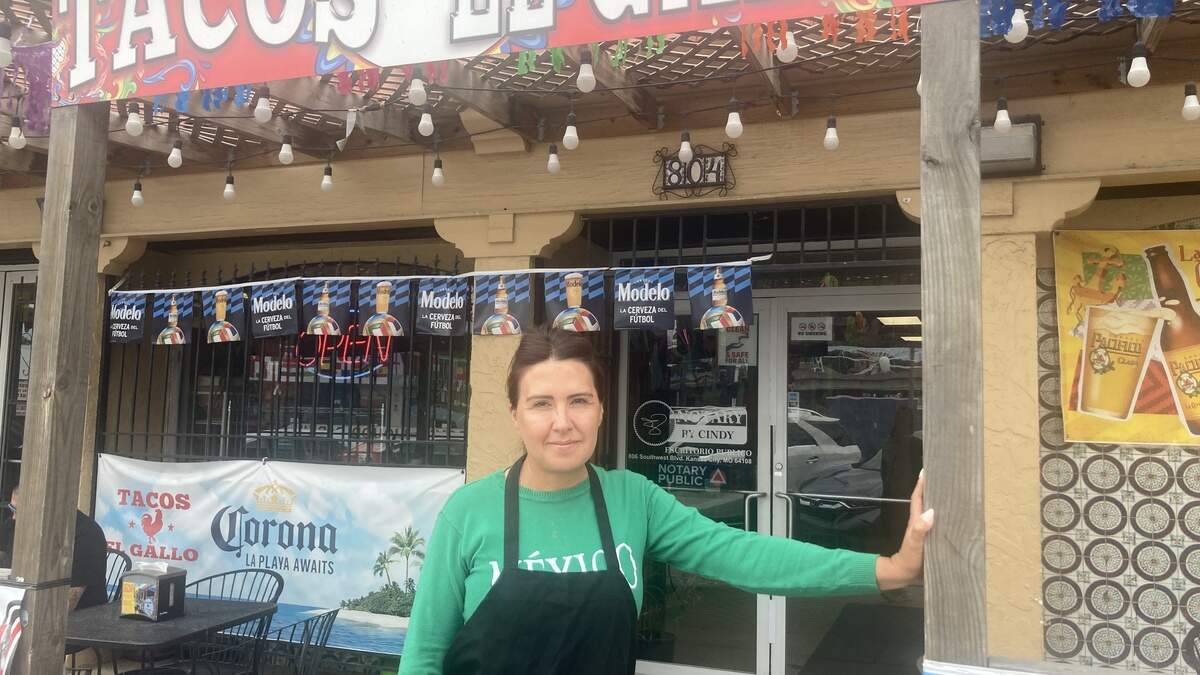
We are already seeing this pattern. Axios reported that the World Cup’s impact on local businesses has been mixed: some food and drink businesses in high-traffic areas seeing strong demand, while others outside the core zones, including LuLu’s Thai Noodle Shop and Cinder Block Brewery, reported downturns or weaker traffic. KCUR reported the same story: Some small businesses say the promised bump has not arrived, even after a year of preparation.
That is not surprising. Visitors do not spend evenly across a metropolitan area. They cluster around match schedules, fan zones and transit routes. The result is not a broad business boom. It is concentrated spending in a few sectors and neighborhoods.
Meanwhile, the costs are broader. Kansas City’s own guidance says the traffic plan around Arrowhead Stadium can be in place up to seven hours before match time, with permit-only areas and parking controls. Call it what it is: friction imposed on residents and businesses so visitors can move through the city.
Customers inconvenienced
We count visitor spending as economic gain, but we undercount displacement. A student does not experience the World Cup as “economic impact.” She experiences a 20-minute trip becoming an hour. A parent does not care that hotel occupancy is up if the usual $12 ride now costs $40. A small business owner does not celebrate global exposure when regular customers avoid the area because parking is gone and prices are up. These costs are real. They are just paid by people without a lobbyist or a glossy impact report.
Traffic is already part of the story. Automobiles stacked up before the Argentina-Algeria match, with some fans abandoning vehicles and walking to Arrowhead. Officials then said they wanted FIFA to fix it before the next match.
The public costs are real money. KSHB reported that Missouri is covering $74 million, Kansas $28 million, Kansas City $15 million and Johnson County $1.5 million. Some may fund useful improvements. But taxpayers deserve a clearer standard than “global exposure.” Exposure is not a balance sheet. It is not a wage increase. It is not a permanent customer base.
Economists have warned about this for decades. Research on the 1994 World Cup found host cities did not receive the promised boost. Economists Robert Baade and Victor Matheson estimated they underperformed projections, and another study found no significant employment impact across the nine U.S. host cities. “Some people made money” is not the same as “the city made money.”
We can welcome visitors and still question the subsidy model, celebrate soccer and still ask whether the benefits are broad or narrow.
A serious economic development strategy creates durable capacity: skilled workers, stronger employers, better infrastructure, higher wages, more housing and a tax base that remains after the event leaves. A short-term hospitality spike is not that.
When the final whistle blows, FIFA will leave. The visitors will leave. Kansas City will still be here, and so will the employers who were disrupted, the residents who absorbed the inconvenience and the taxpayers who funded the preparation.
That is the standard we should use — not whether it looked good on television, but whether it made Kansas City stronger after everyone went home.
Joshua Kleyman runs Zeta Commercial Driving School, an accredited trade school in Kansas City.