
Don’t let licensing regulations keep Missourians from working | Opinion
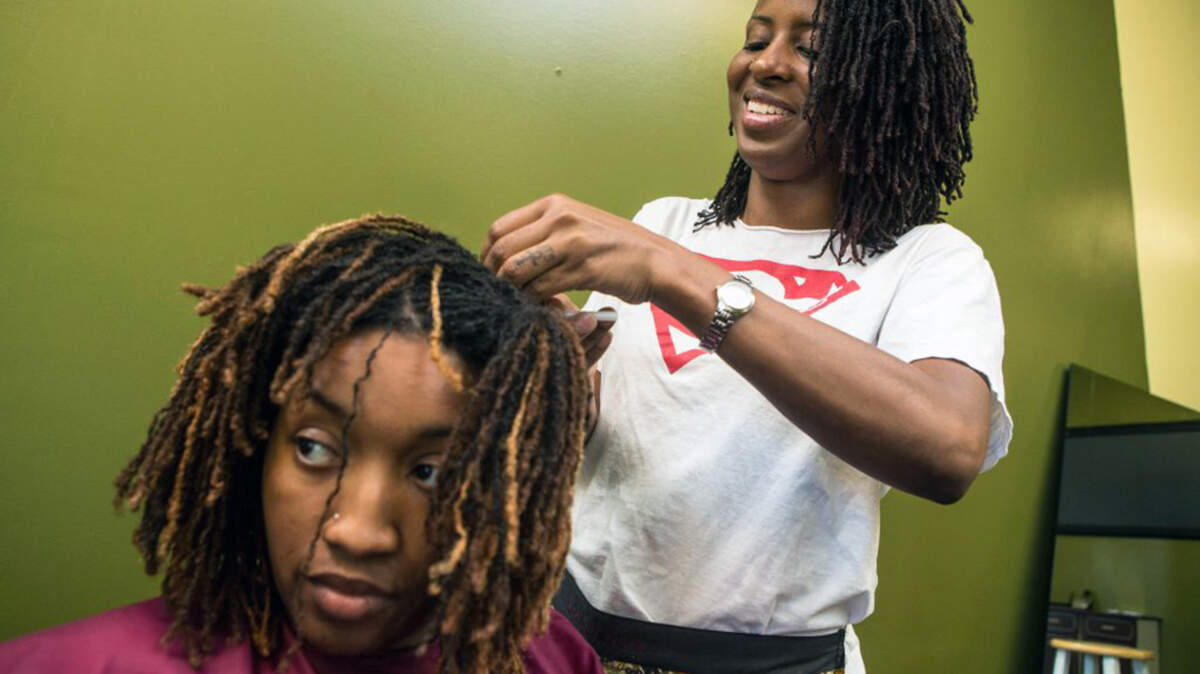
Tameka Stigers had a master’s degree in public health from Saint Louis University, specialized training in African hair braiding and a loyal client base. What she did not have was a cosmetology license — which Missouri once required before she could legally operate.
But here’s the catch: That license would require 1,500 hours of training — more time than it takes to become an emergency medical technician — and $15,000 in costs to learn how to apply nail polish, mix hair dye and perm hair, skills unrelated to her work.
That is the challenge occupational licensing presents across America today. More than 1 in 5 American workers hold an occupational license for their job. Licensing can play an important role in protecting public health and safety, especially in high-risk fields. But when requirements no longer reflect the skills needed for a job, they can unintentionally keep qualified people from working, limit choices for families and make it harder for local economies to grow.
At a time of persistent labor shortages in key sectors such as child care and health care, we need more workers willing to fill those roles. Removing licensing barriers clears the path — boosting family incomes and strengthening local economies. This is especially true for women, who disproportionately work in these licensed fields.
Research from United WE has found that licensing reform can help increase women’s workforce participation and improve career mobility by making it easier for qualified workers to enter, reenter and move between occupations without facing unnecessary barriers to employment. United WE also created a national task force to modernize occupational licensing for the artificial intelligence economy, bringing together leaders from research, policy and advocacy to identify evidence-based solutions to expand workforce participation, particularly for women, while maintaining appropriate protections for the public.
Licensing reform also tackles a hidden driver of high prices. When fewer providers can legally enter a field, competition drops and prices rise. In child care, for example, research shows that restrictive regulations more than double costs and reduce available slots for families.
As AI reshapes industries and displaces workers in other sectors, licensing reform becomes even more critical. Workers whose jobs are automated away will need the flexibility to pivot into new careers. Streamlining licensing makes those transitions more feasible.
In 2018, Missouri removed the full cosmetology license requirement for African-style hair braiders like Tameka. It has also adopted universal licensing recognition, helping qualified workers move into jobs faster. More recently, Missouri passed two significant bills that change how facilities are kept safe and how professionals get licensed. Senate Bill 1421 establishes a statewide fire and life-safety code for state-inspected buildings, easing compliance for facilities such as child care centers. Meanwhile, House Bill 2974 streamlines licensure for out-of-state professionals, including via telehealth, making it faster to enter or reenter Missouri’s workforce. Both bills have been sent to Gov. Mike Kehoe.
Missouri’s experience shows progress is possible.
Twenty-eight states have adopted some form of universal licensing recognition, according to the Archbridge Institute’s State Occupational Licensing Index. From Arizona and Colorado to Montana and Maryland, licensing reform is advancing in red, blue and purple states alike. The window for action is now.
The path forward should bring people together around a shared goal: making it easier for Americans to work, serve their communities and build stable futures. Licensing reform does not mean eliminating standards. It means making sure standards are smarter, more efficient and fairer.
Done right, reform can help workers, families, employers and communities move forward together.
Edward Timmons is vice president of Policy at the Archbridge Institute, an independent, nonpartisan 501(c)(3) public policy think tank based in Washington, D.C., focusing on promoting human flourishing and increasing economic mobility. He co-authored this with Wendy Doyle, president and CEO of United WE, a national nonpartisan 501(c)(3) think-and-do tank based in Kansas City, focused on advancing women’s economic and civic leadership to make meaningful change.